


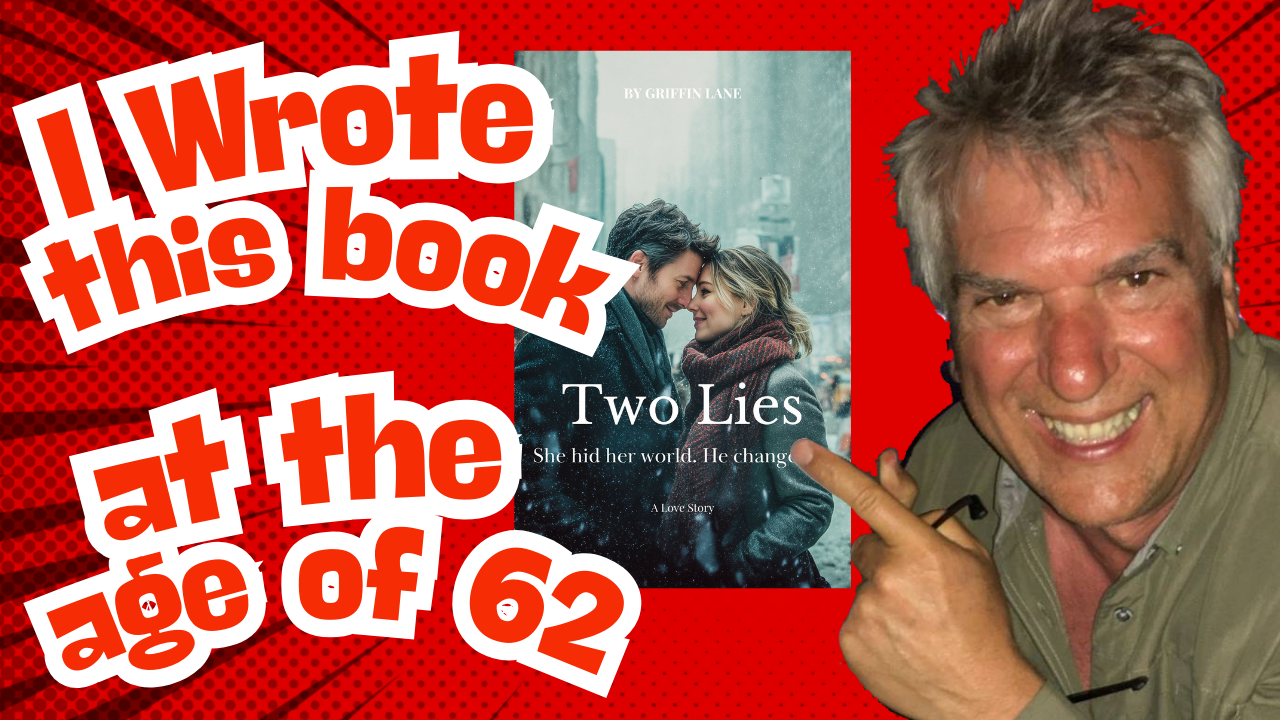
At 62 I wrote a RomCom
At 62, I finally finished and self-published my first fiction novel, Two Lies, a lighthearted NYC rom-com about two people hiding their true selves behind lies until love brings everything together, after letting it sit untouched for 12 years. The spark came during a Reiki session with my mom when an entire movie played in my head: full plot, characters, scenes.
Hey folks, at 62 I finally finished and self-published my first fiction novel, *Two Lies*, a fun NYC rom-com about two people hiding behind lies until love sorts it out. I started it 12 years earlier after a wild "movie-in-my-head" flash during a Reiki session with my mom, but it sat untouched for a decade because of self-doubt, zero fiction experience, and fear of what people would think. In 2025, after the success of my Tanzania photo book *Safari Encounters* and some encouragement from my girlfriend Linda, I decided enough was enough, life's too short to leave stories on the hard drive. My simple rule? One rough chapter per session: no editing, no polishing, just get the words out and end on a fresh page so starting next time feels easy. That bite-sized approach killed procrastination, built momentum, and turned doubt into a physical book I could hold. I used a pen name (Griffin Lane) to ease the terror of putting it out there, uploaded via Amazon KDP, and the moment the author's copy arrived was pure magic, proof that shipping beats perfection every time. Now it's a screenplay too, and the big lesson? Finishing is the win; rejection stings less than silence. If you've got a dusty project (book, film, photo series, whatever), make 2026 the year you ship it, start with 30 minutes today, build from there, and get those receipts. The world might just be waiting for what you've got in your head.
SOME Bullet Points FROM THE VIDEO
Introduction & The Big Win
Hello, I'm Terry Divyak, most of you know me as a travel photographer, but today I'm sharing something personal. At 62, I finally finished my first fiction novel, *Two Lies*, a lighthearted NYC rom-com about Sandra and Stephen hiding their true selves behind lies until love wins out. I started it 12 years ago with zero fiction experience (I'd barely read a rom-com), but a wild inspiration moment changed everything. This isn't just about the book—it's about overcoming mental blocks, fear of judgment, and finally shipping something that's been weighing on you, especially in your 60s when projects gather dust.
The "Movie in My Head" Spark
Back in sixth grade, I loved creative writing—sneakily swapping journal time for hours of free-flow ideas (still have those journals somewhere in my chaotic storage unit). Fast-forward: My mom, a Reiki master, offered a session. As soon as she reached my head, an entire movie played in my mind—the full plot, characters, scenes of *Two Lies*. I rushed home and typed it out until 2 a.m. to capture every detail. Then... nothing for 12 years.
What Finally Changed in 2025
After success with my Tanzania photo book *Safari Encounters* (proud of that one, links below), directing photography on a short western (*Shooting Starr*), and positive pushes from my girlfriend Linda, I revisited the file. The unfinished story felt heavier than ever. In my 60s, I realized: How many years left? In another 12, I'd be 74, did I want this heartwarming tale trapped on my computer? Doubt whispered "you're not a writer," but I'd proven I could finish creative work. Time to go all in.
One-Chapter-Per-Session Rule
The breakthrough rule: Write one rough chapter per session.
- Rough draft only, no editing, no adding context, no polishing.
- Just get thoughts out and finish the chapter.
- End each session so next time you start fresh—no staring at half-edited mess.
- Track progress by completed chapters, not hours spent.
This bite-sized approach made it manageable and killed perfectionism paralysis.
Rough Drafts, Shipping & Self-Publishing
Once done, I self-published via Amazon Kindle Direct Publishing (KDP), upload manuscript, design cover, order cheap author copies. The day the physical book arrived? Mind-blowin, holding proof it was real. Errors? Fix and update anytime (KDP lets you revise in 24 hours). Terrified of my real name, I used pen name Griffin Lane. Released April 2025, early reviews are all 5 stars (thank you!). Friends and family loved it; some said "this should be a movie." Publishing made it tangible; feedback (good or bad) beats hiding.
Next Steps: Screenplay & Future
Post-book, I adapted it to screenplay, learned formatting from Reddit/forums, used Arc Studio Pro for structure/dialogue. It's out for review (expect thrashing, but that's fine). Hallmark, if you're listening...! Looking ahead: AI tools could let authors direct their own films from a laptop in a few years, exciting option.
Closing Message & Call to Action
Key takeaway: Rejection isn't failure, silence is. Shipping is success. Don't wait to "feel" like a writer/photographer/filmmaker, become one with receipts: write the chapter, shoot the scene, edit the photo, put it out there. Make 2026 your year to finish that dusty project. Start today: Set a 30-minute timer and just begin, by month's end, you'll have real progress.
What's the one thing you've been putting off? Book, photo project, film, YouTube series? Drop it in the comments, I'm curious and rooting for you. Happy New Year—let's make it count. Thanks for watching and buy the book
Purchase Two Lies on Amazon
Purchase Safari Encounters
Street Photography Tips
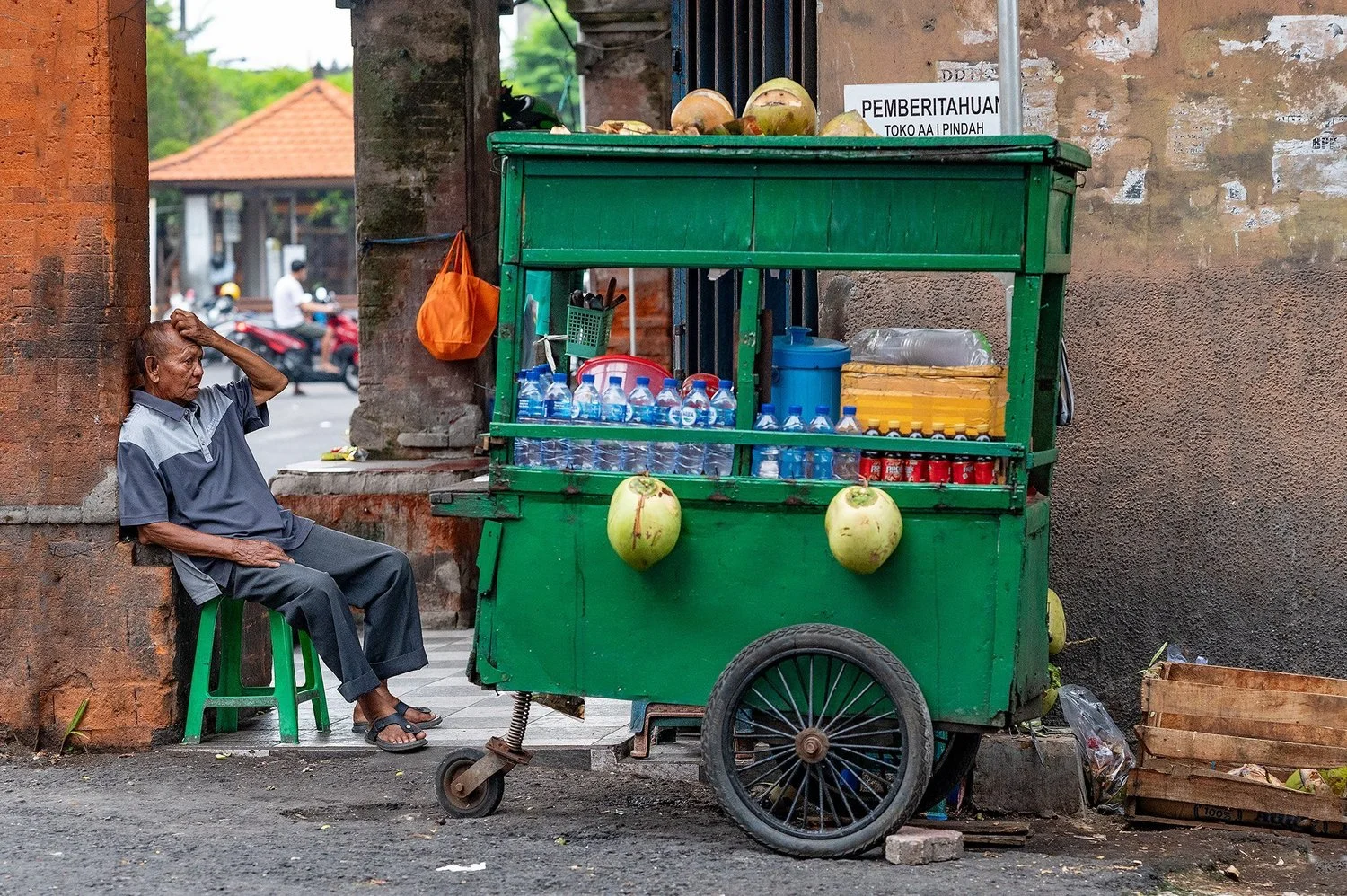
In this no-fluff street photography video, I share the timeless tips that have shaped my work over years of shooting in places like Bangkok, Istanbul, Tanzania, and Seattle, no gear hype, just practical mindset shifts that actually deliver stronger images.
Hey everyone, this is a solid, no-nonsense street photography video where I break down the core ideas that have worked for me over years of shooting on the streets and during travels around the world. No fancy gear talk, no trends, just timeless tips on seeing better, composing smarter, and capturing moments that matter. I share real examples from places like Tanzania, Istanbul, Bangkok, Seattle, and Amsterdam to show how these concepts play out in actual photos. It's about being present, patient, and decisive rather than chasing every shot
SOME Bullet Points FROM THE VIDEO
Introduction Hi, I'm Terry Divyak, a travel and street photographer with years of experience shooting in cities and remote spots worldwide. Today, I'm sharing about 10 core street photography ideas that work for me, simple, timeless principles, plus a couple of bonus tips at the end to really level up your work.
1. See the Photo Before You Take It Before lifting the camera, visualize the composition in your mind's eye. Ask yourself: What am I photographing here? How would the scene look if a subject walks through? Pre-frame using the rule of thirds or other elements. Once you see it clearly, the camera just finishes the job.
2. Never Wish a Photo Away Don't drive or walk past a moment thinking, "I wish I'd stopped." Act on it immediately
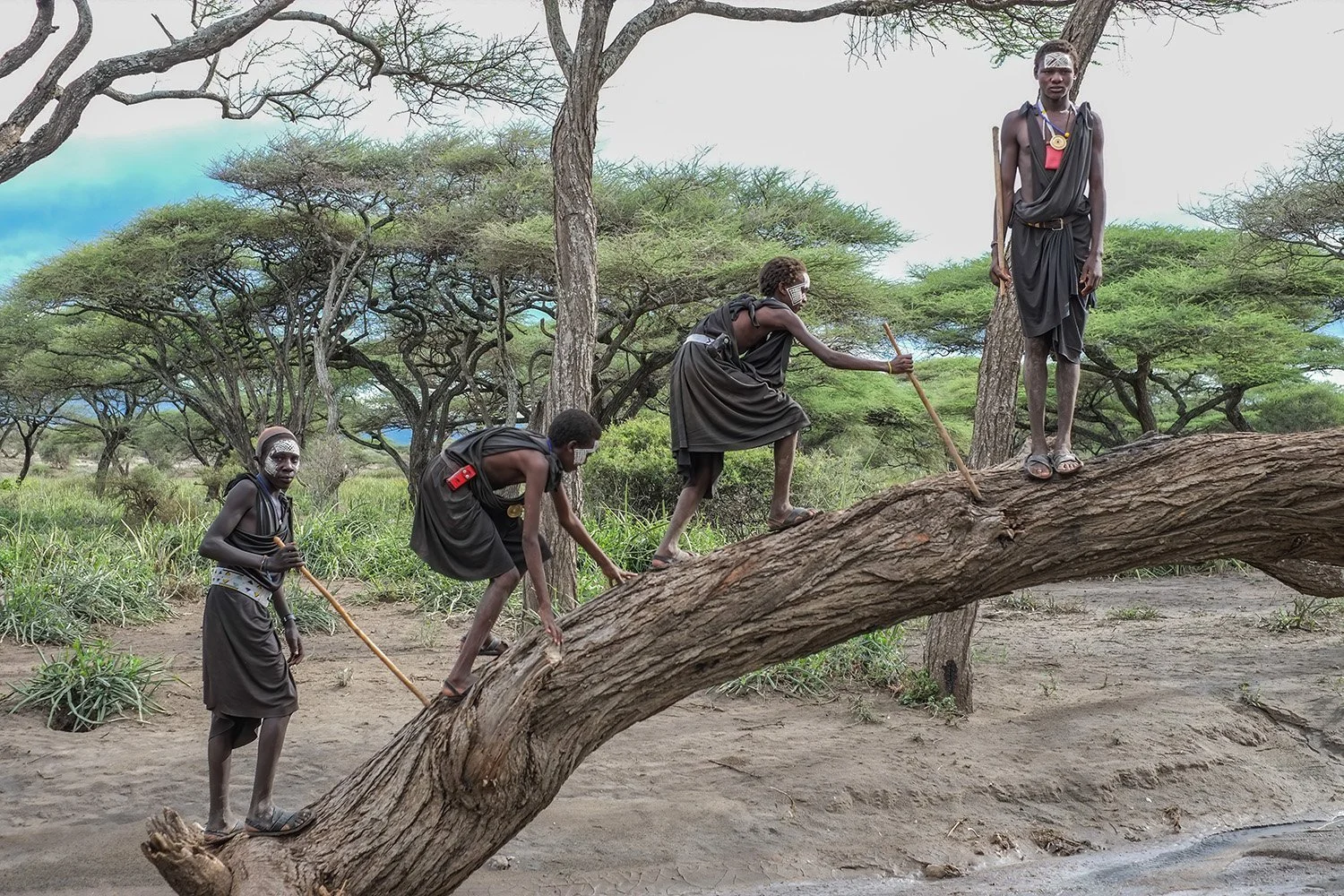
Example: Driving from Ngorongoro Crater to Serengeti in Tanzania, I spotted Maasai boys by the road. I asked the guide to stop, got an initial shot, then asked them to climb a tree. The "evolution" moment, boys walking up the branch—became the stronger photo. Stopping turned a missed opportunity into keepers.
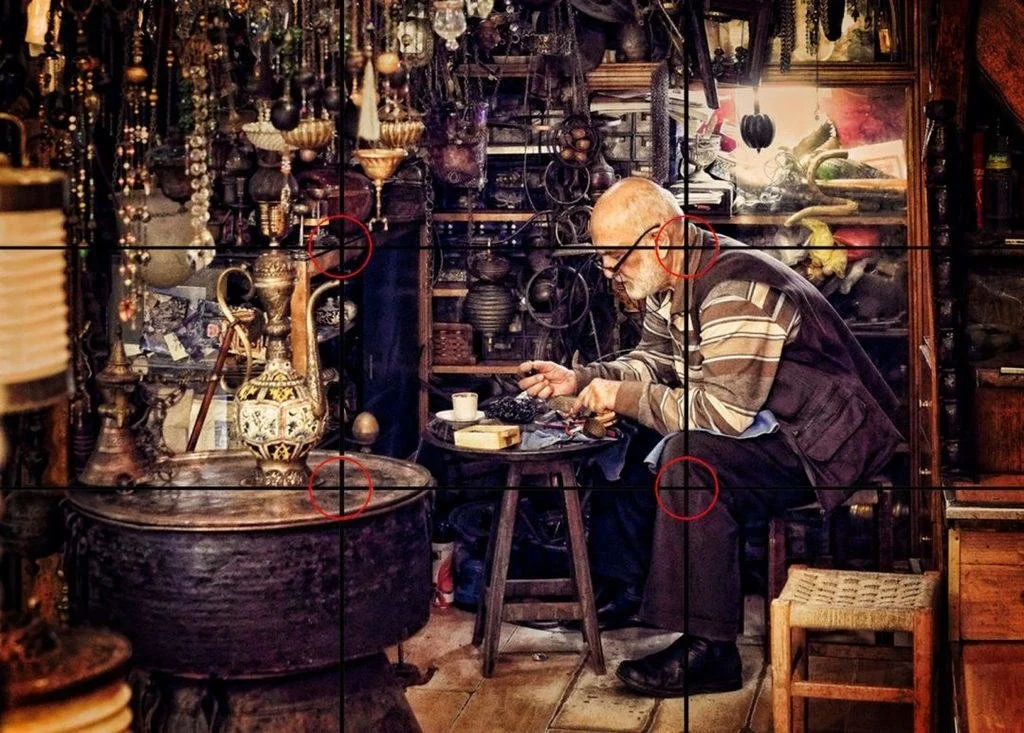
3. Use the Rule of Thirds (It's Not Outdated!) Place subjects along the intersecting grid lines for balanced, dynamic composition.
For motion (right to left): Position on the right vertical line with negative space ahead.
For gaze direction: Leave space where the subject is looking.
90% of my shots use this—it's simple but powerful.
Example: In Istanbul market, spotted a merchant eating lunch. In 2–3 seconds: Pre-framed with rule of thirds (body facing left, negative space right, coffee pot adding flow), raised camera, shot, and walked on. He never noticed.
4. Watch Your Backgrounds Messy or distracting backgrounds can ruin a shot, check them every time.
If cluttered (wires, garbage in foreign spots): Step left/right, lower angle, or raise camera high to exclude junk.
Use wider aperture to blur distractions if needed.
5. Work the Scene Don't take 1–2 shots and leave—stay longer to observe and capture variations.

Example: In Bangkok's Chinatown (Yaowarat Road), spent 30–45 minutes at one intersection. Focused on slow-shutter scooter motion (1/125s) for blur effects, plus windows on old red Isuzu buses.
One favorite: A woman in red shirt looking out, took ~50 shots, but this direct gaze became the keeper.
Bonus: Lingering makes you blend in, people stop noticing the camera.
6. Get Closer Than Feels Comfortable Zooming from afar often feels safer, but proximity creates impact.
Use standard lenses (24–120mm or 85mm for portraits).
Only one angry reaction in years, showed him the funny shot, he laughed, all good.
Technique: Shoot while walking past, keep camera to eye, don't chimp (review) immediately.
7. Anticipate, Don't Chase Watch patterns and rhythms—position yourself, wait for elements to align.
Example: Tattooed couple on sidewalk, waited as an elderly woman with phone hurried past. Side glances and interactions created the magic moment.

8. Take an Iconic Photo and Make It Yours Avoid the obvious tourist shot—find a fresh angle or story.
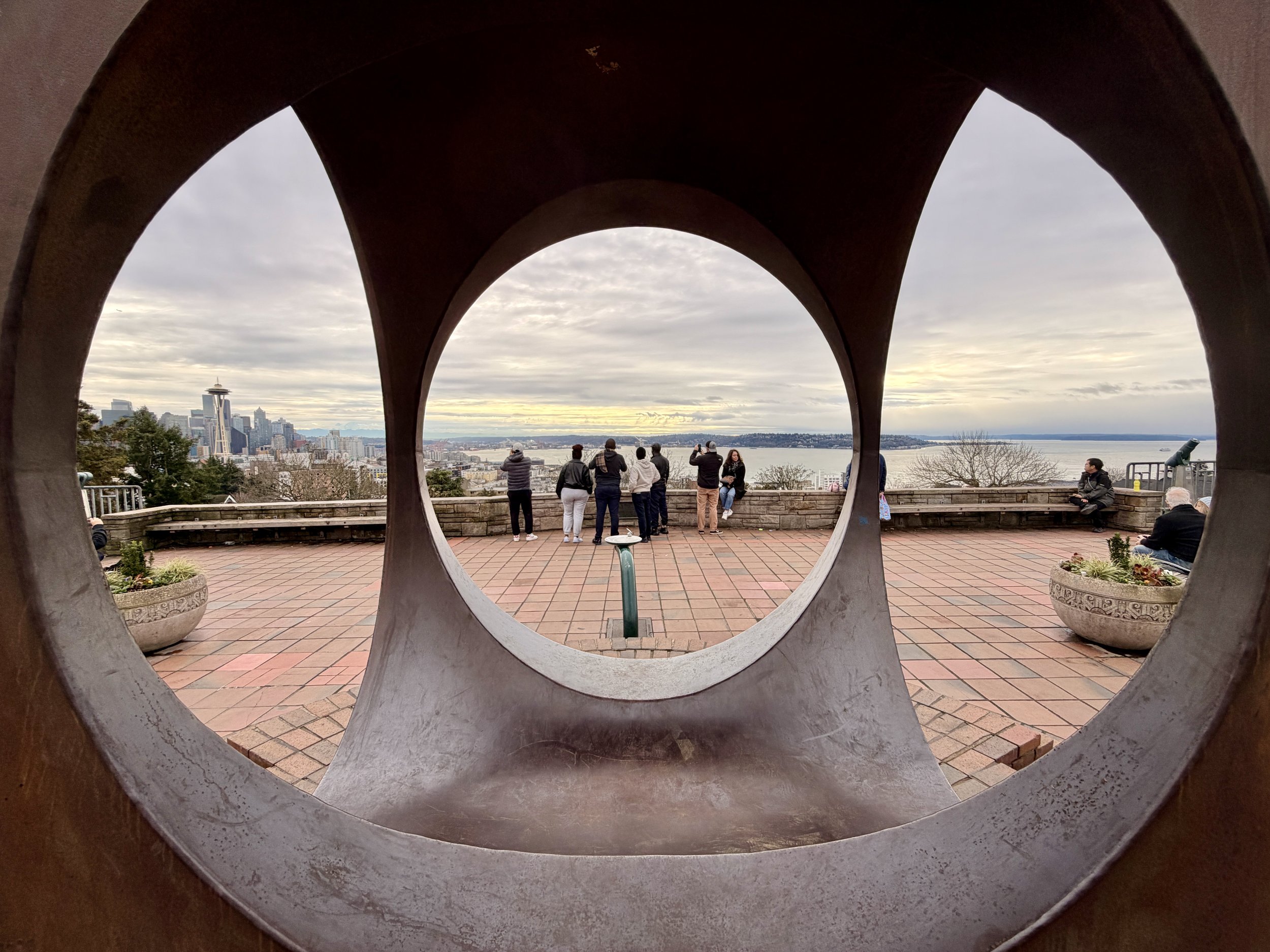
“Changing Form” at Kerry Park in Seattle
Kerry Park (Seattle): Framed Space Needle with modern art sculpture and people instead of standard skyline.
Gum Wall (Pike Place): Captured friends hoisting one up to stick gum high, fun, unique energy.
I Amsterdam sign: Shot from behind at golden hour, woman outstretched arms with sun starburst (f/22).
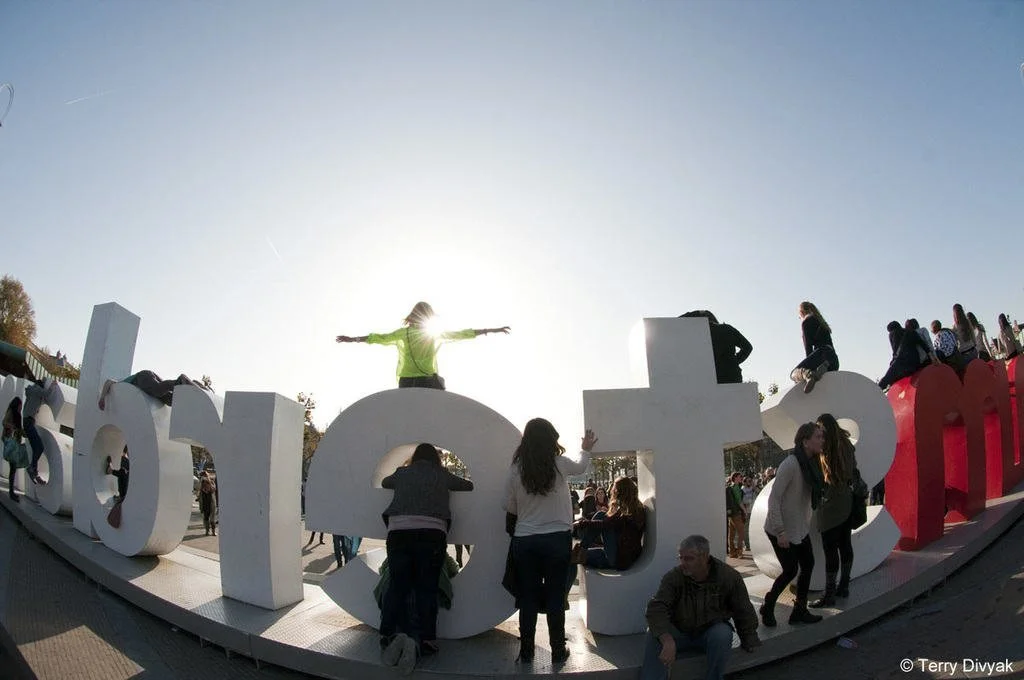
I Amsterdam sign: Shot from behind at golden hour, woman outstretched arms with sun starburst (f/22).
9. Edit Ruthlessly Cull hard, keep only photos worth lingering on (3+ seconds).
Ask: Would this stop me if I hadn't taken it? Does it raise questions or tell a story?
Fewer keepers make the strong ones stand out more.
Bonus: Create a Sense of Place + Tell a Story
Use signs, architecture, language for location (e.g., Thai script in Bangkok).
Add people, vehicles, food, activity for narrative.
Examples: Street vendor with colorful dishes; monk in golden robe amid Buddha statues—place + human element = story.
Closing Street photography isn't about speed, it's about presence. Learn to see first, and the photos find you. Check the show notes for linked POV street videos from Thailand and Vietnam. Happy Shooting
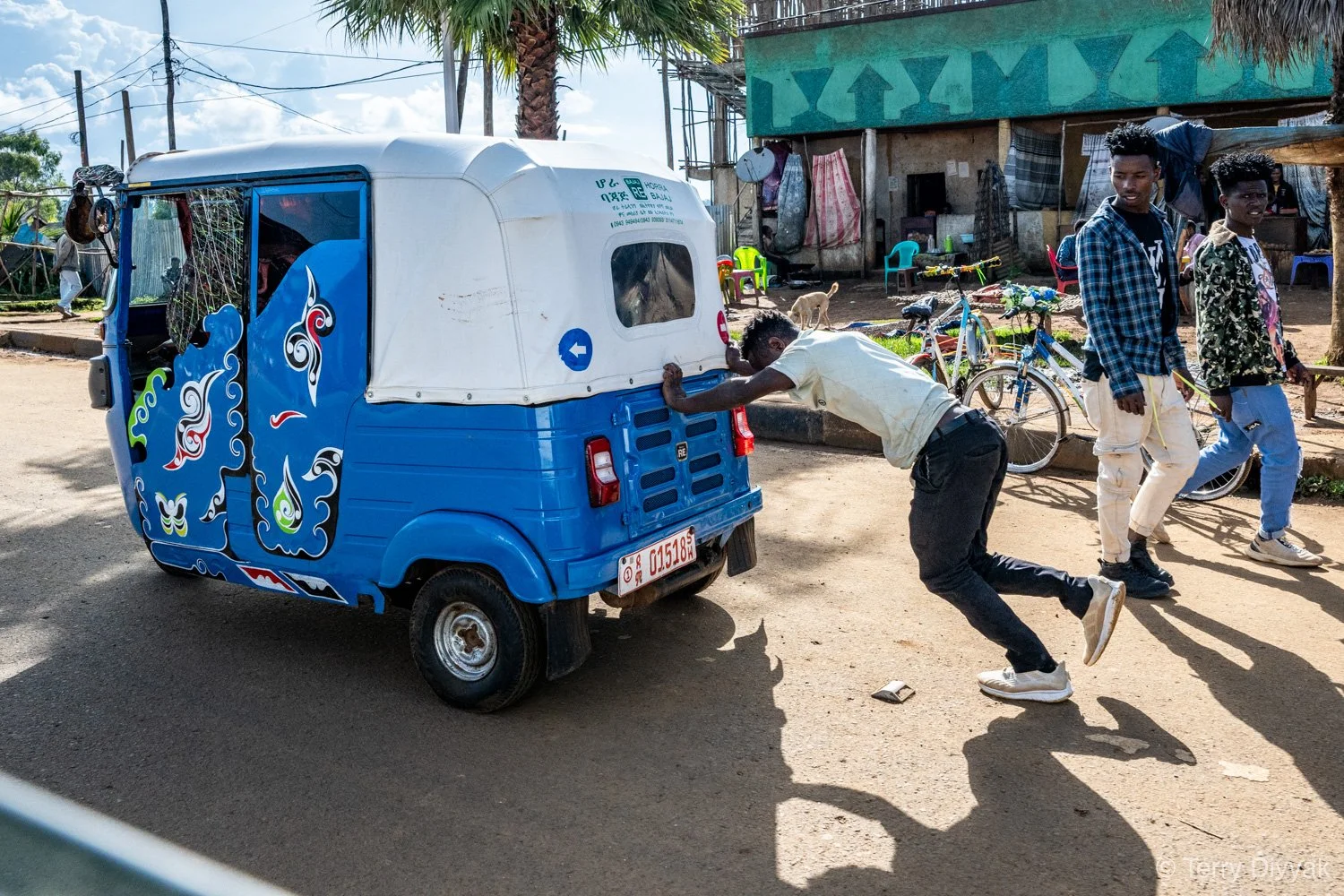
Ethiopia-Where every image has a story
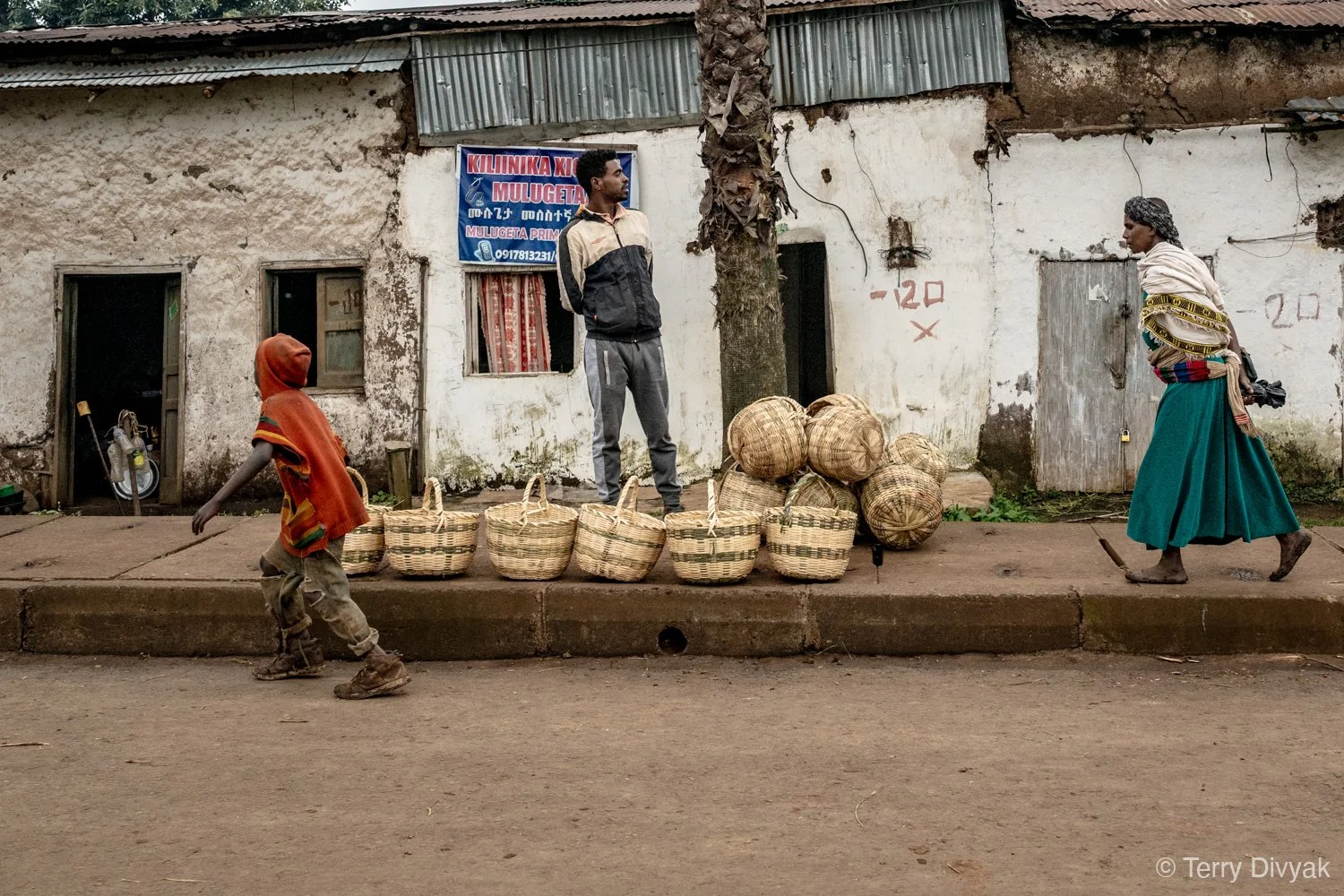
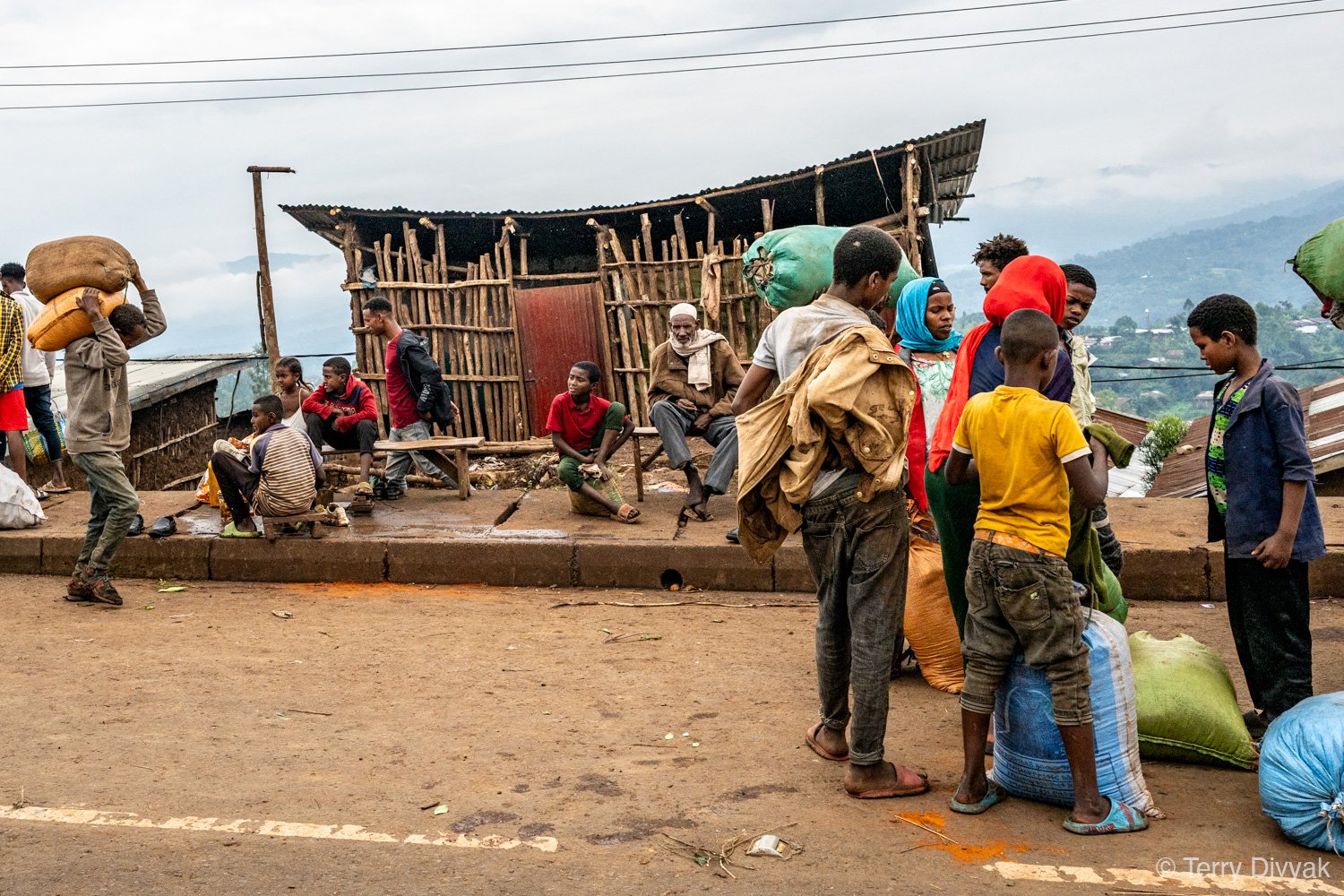
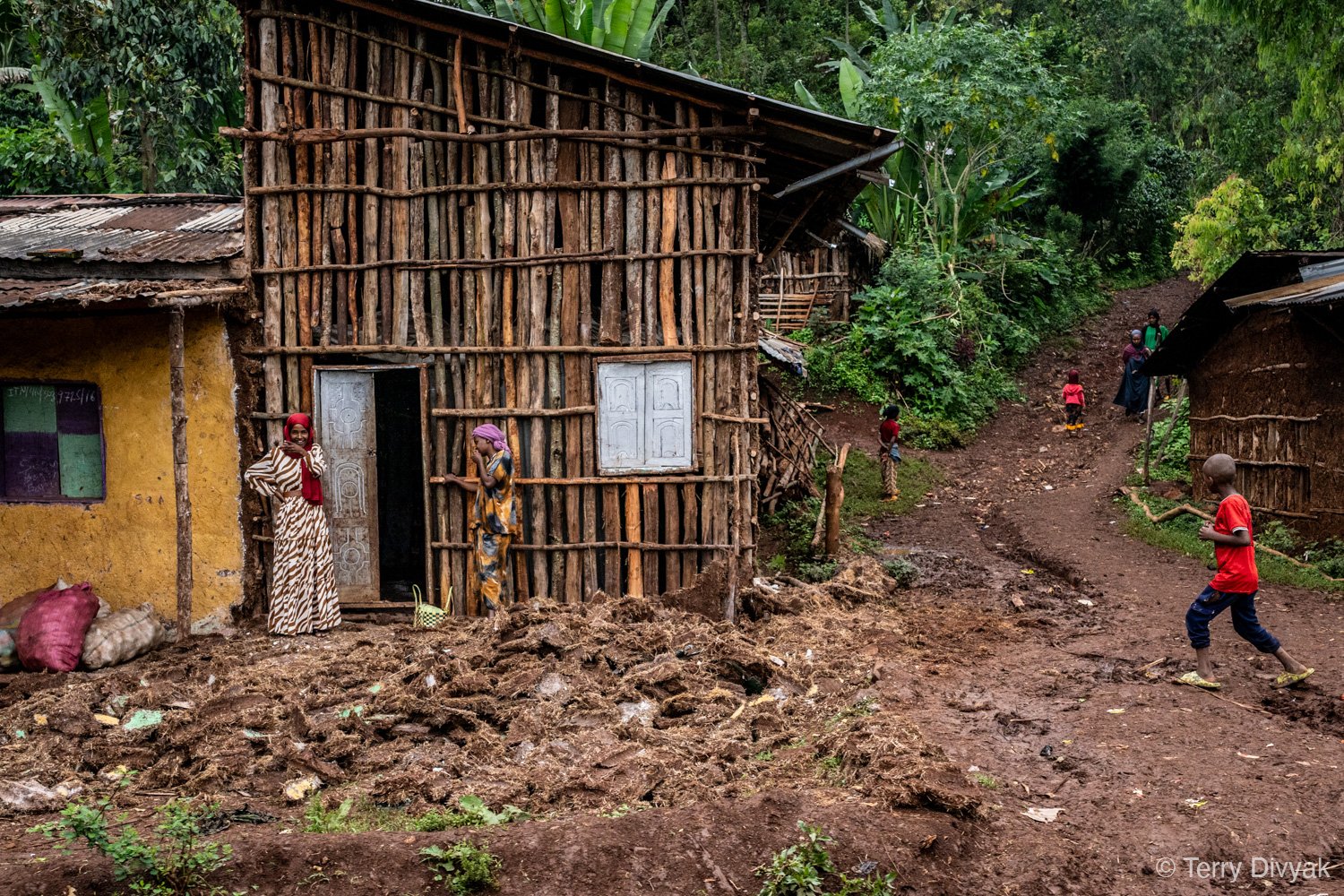
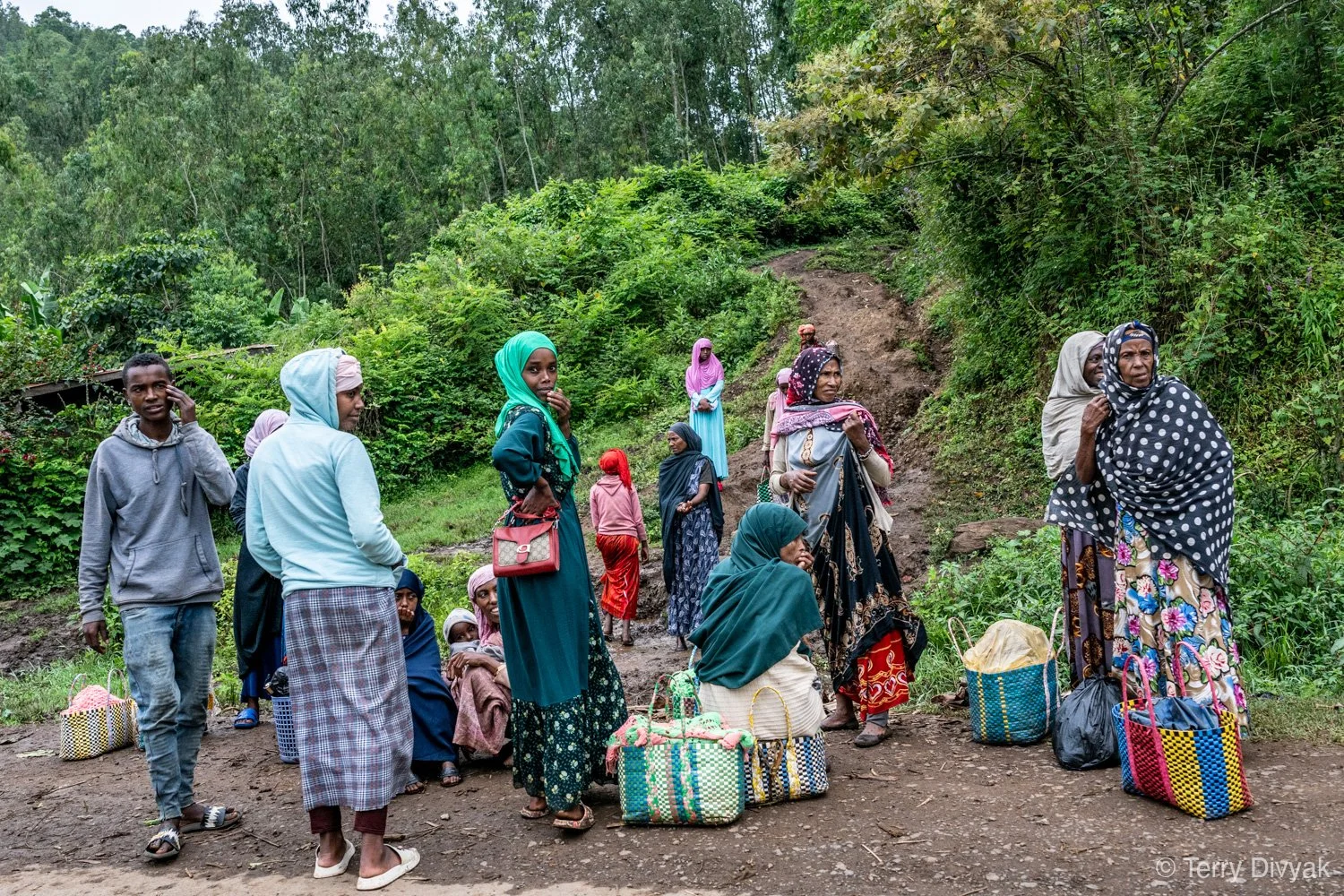
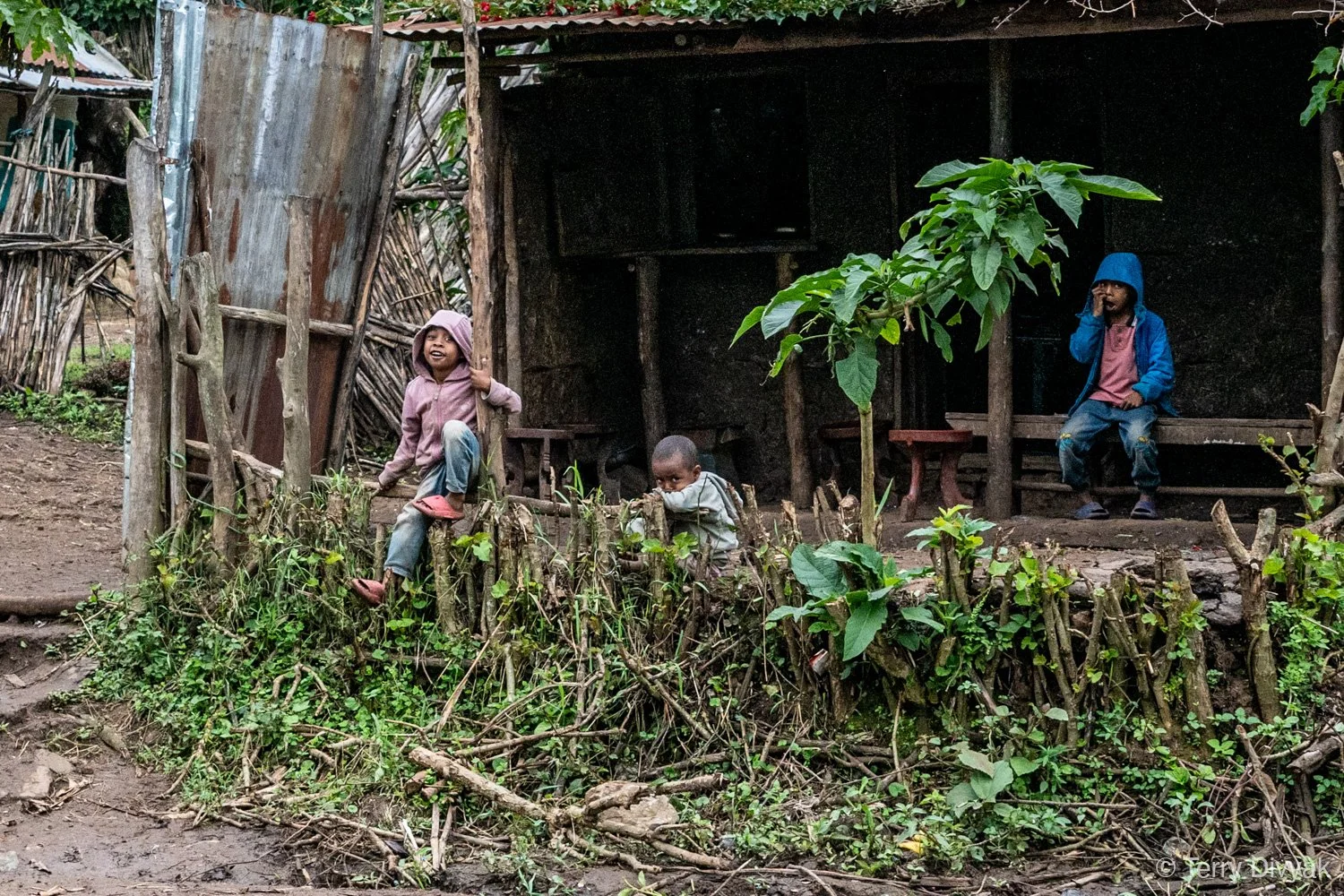
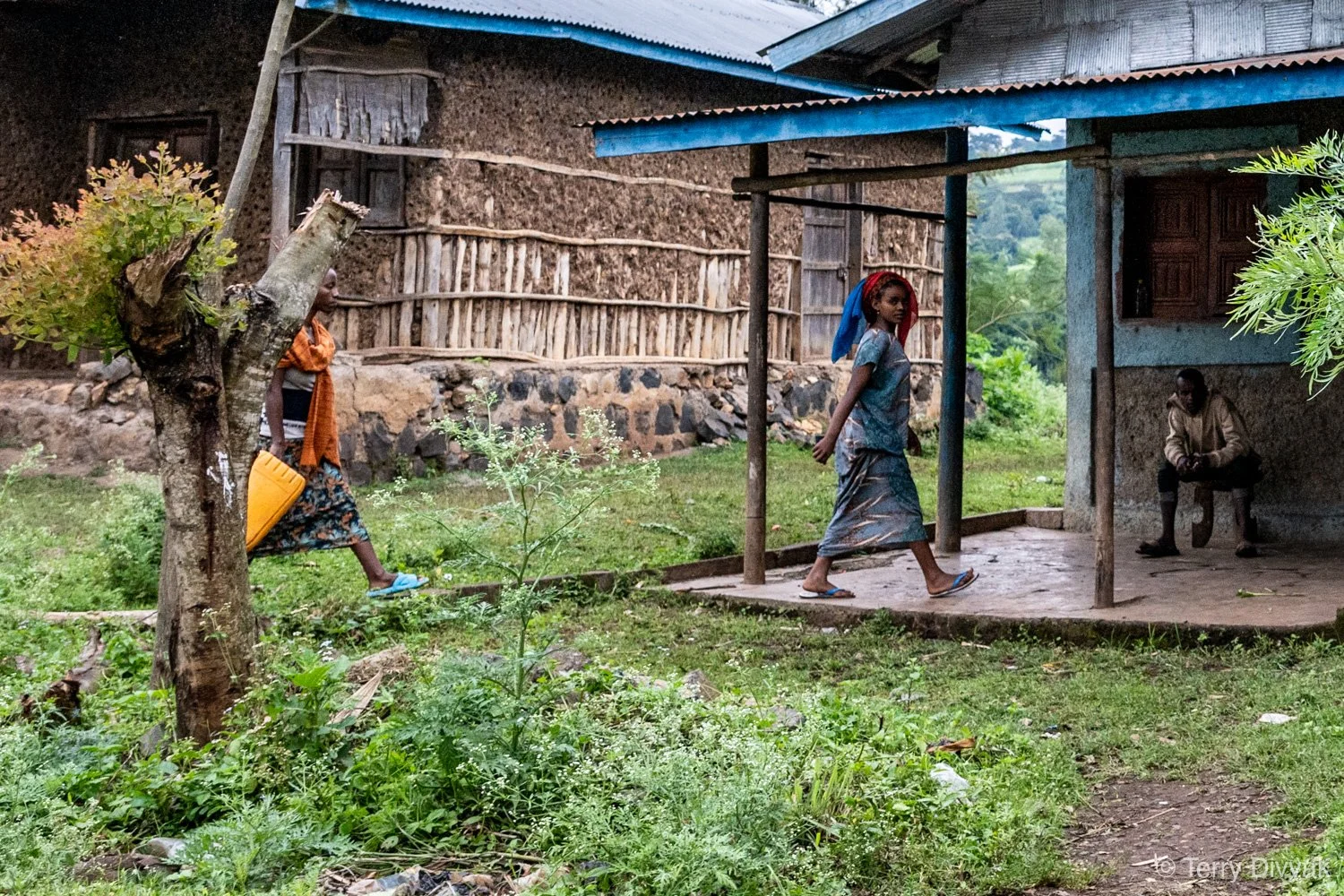
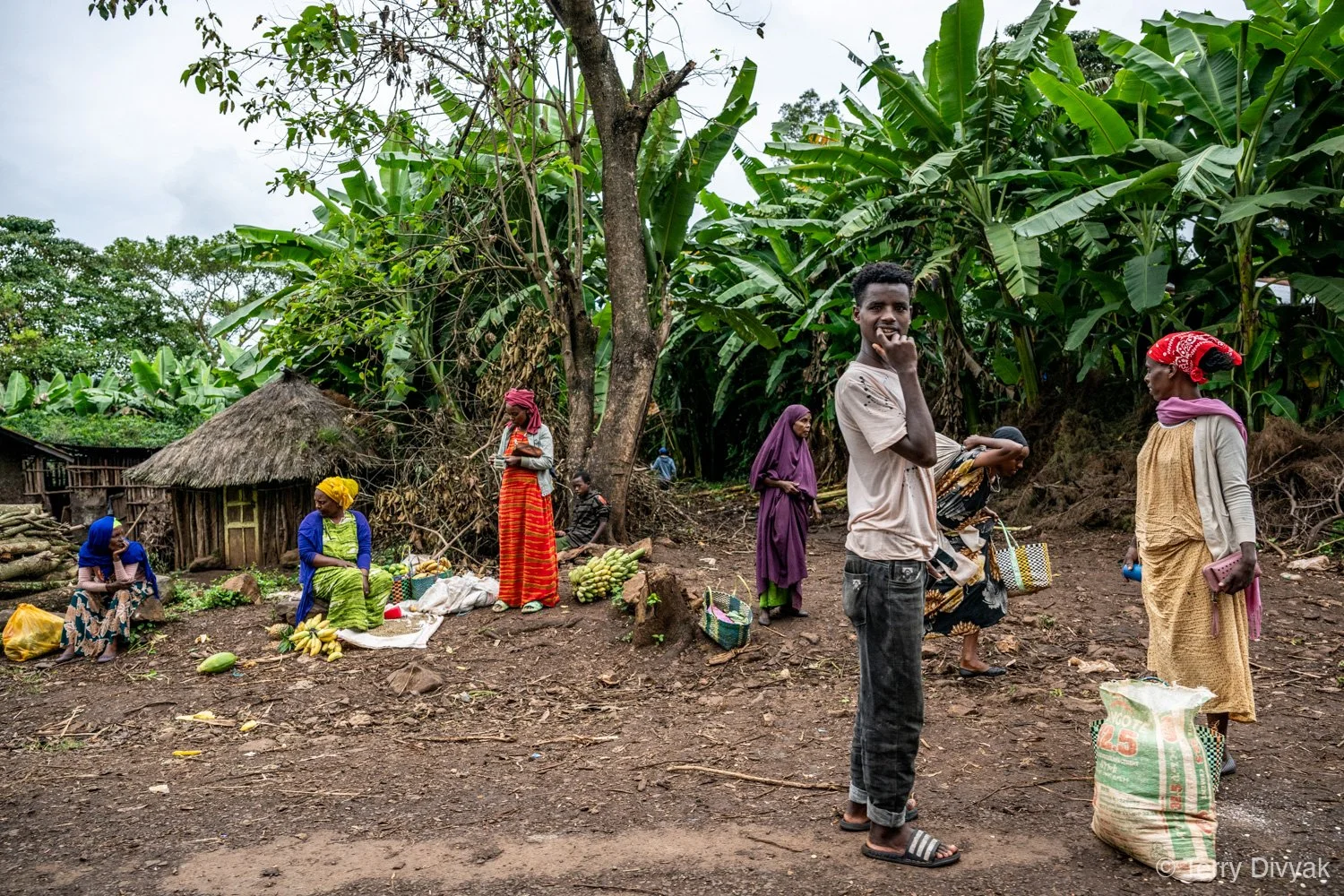
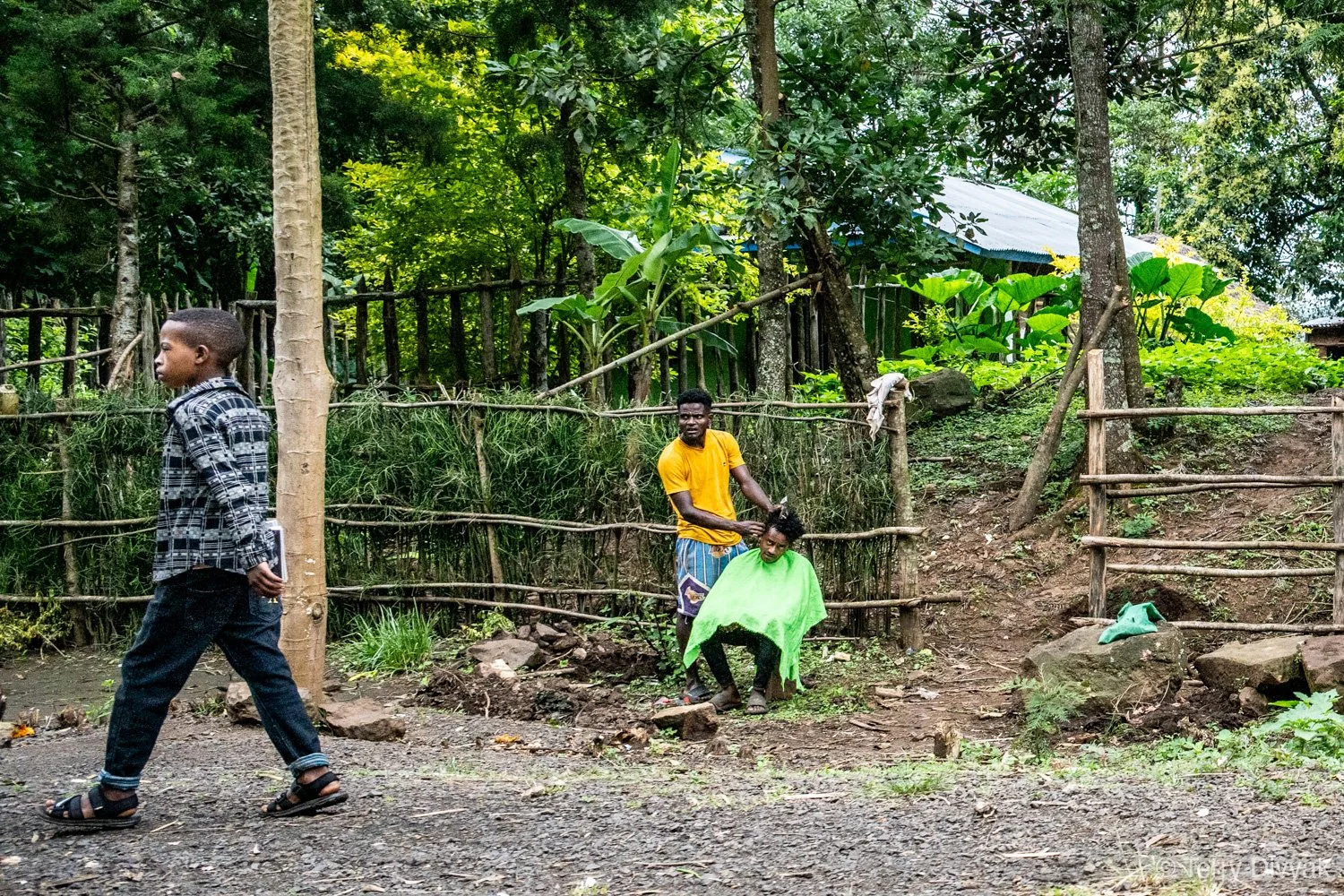
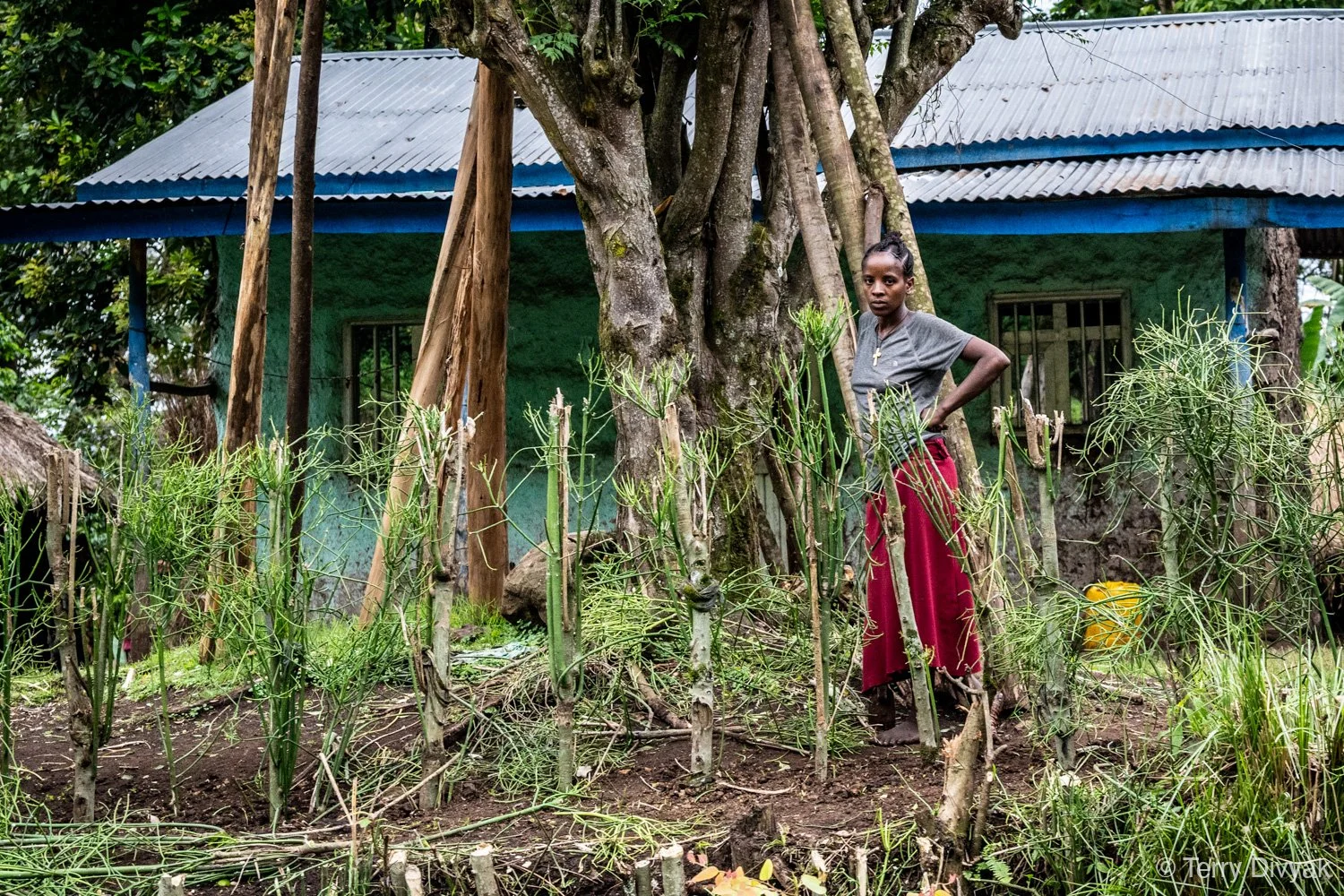
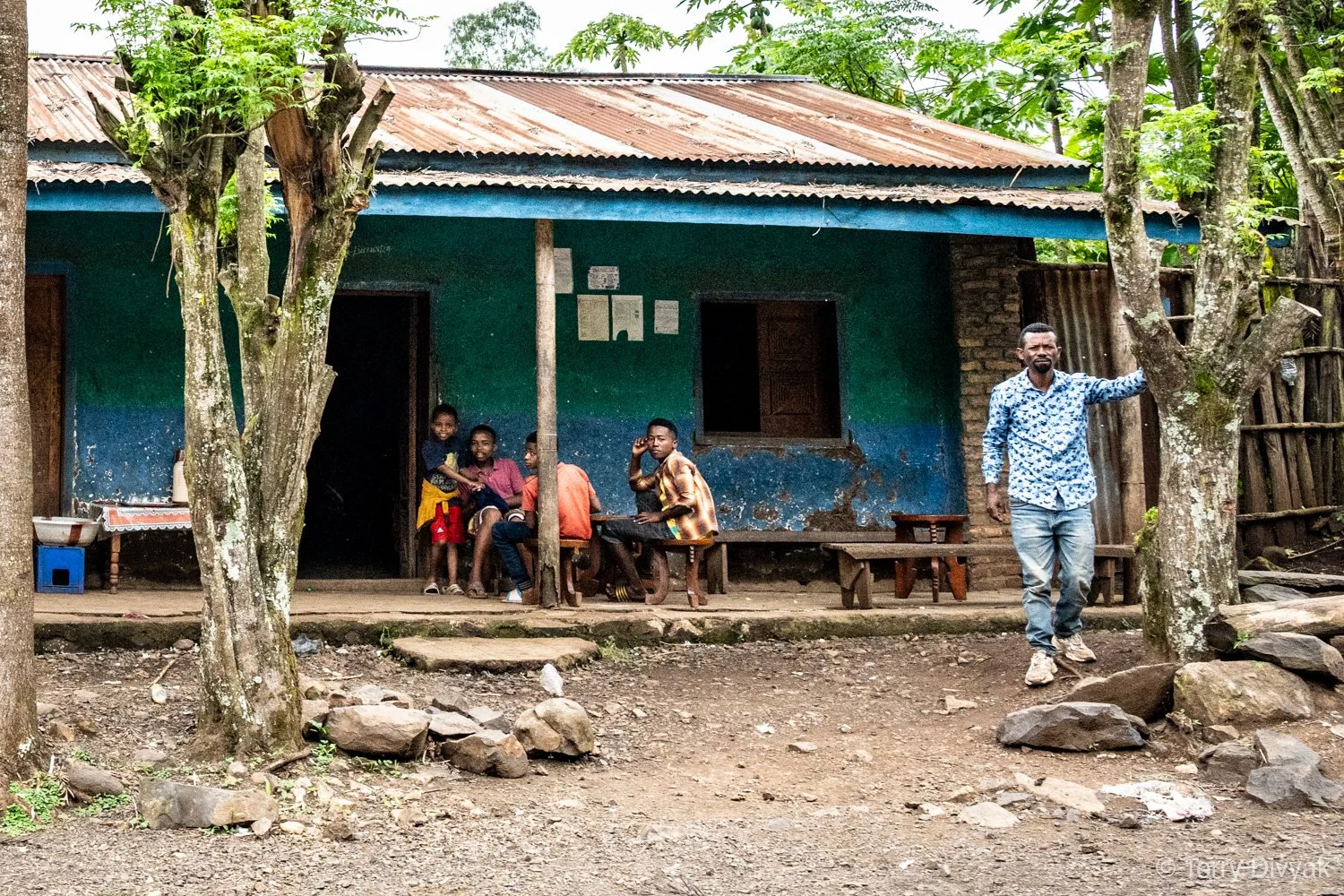
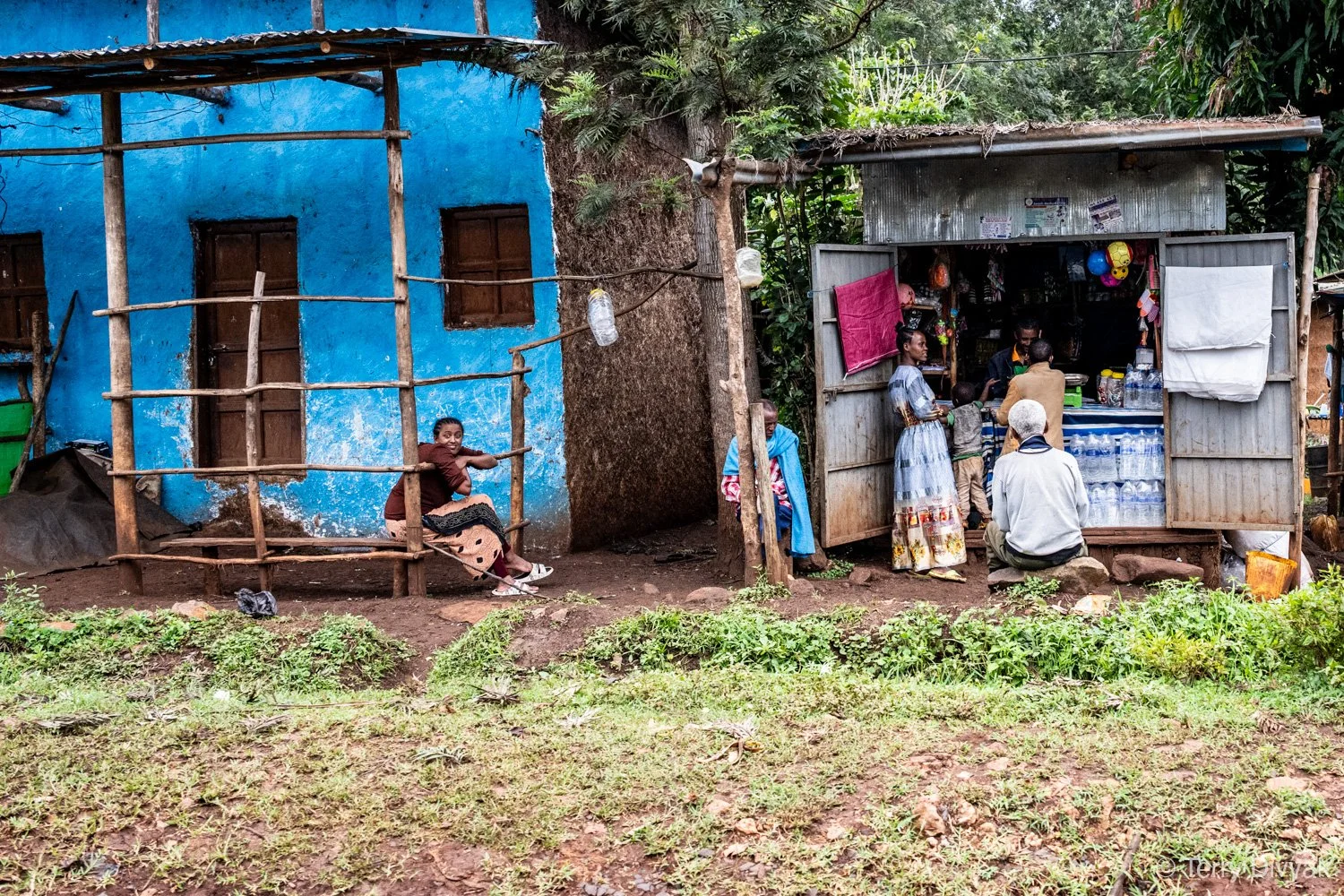
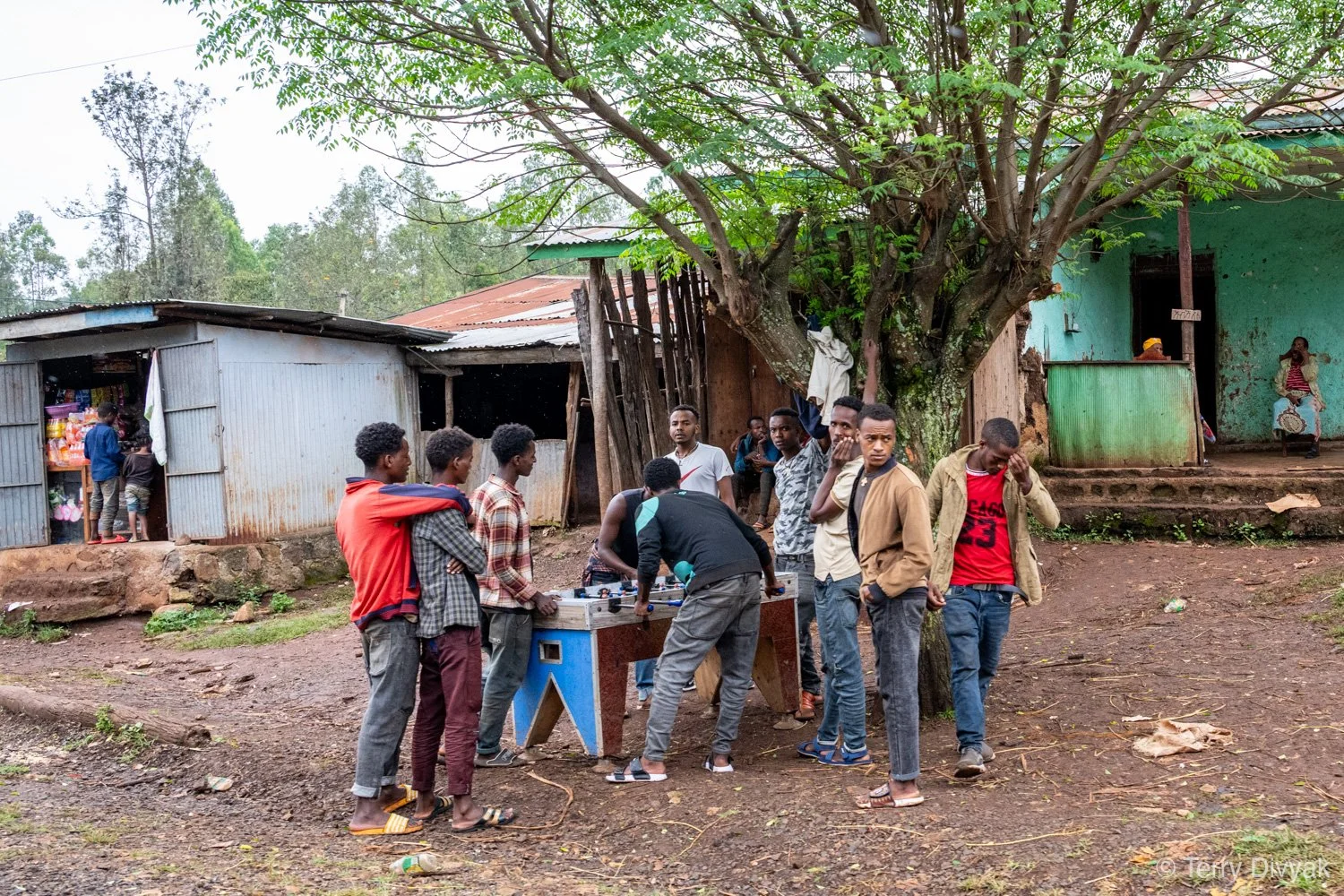
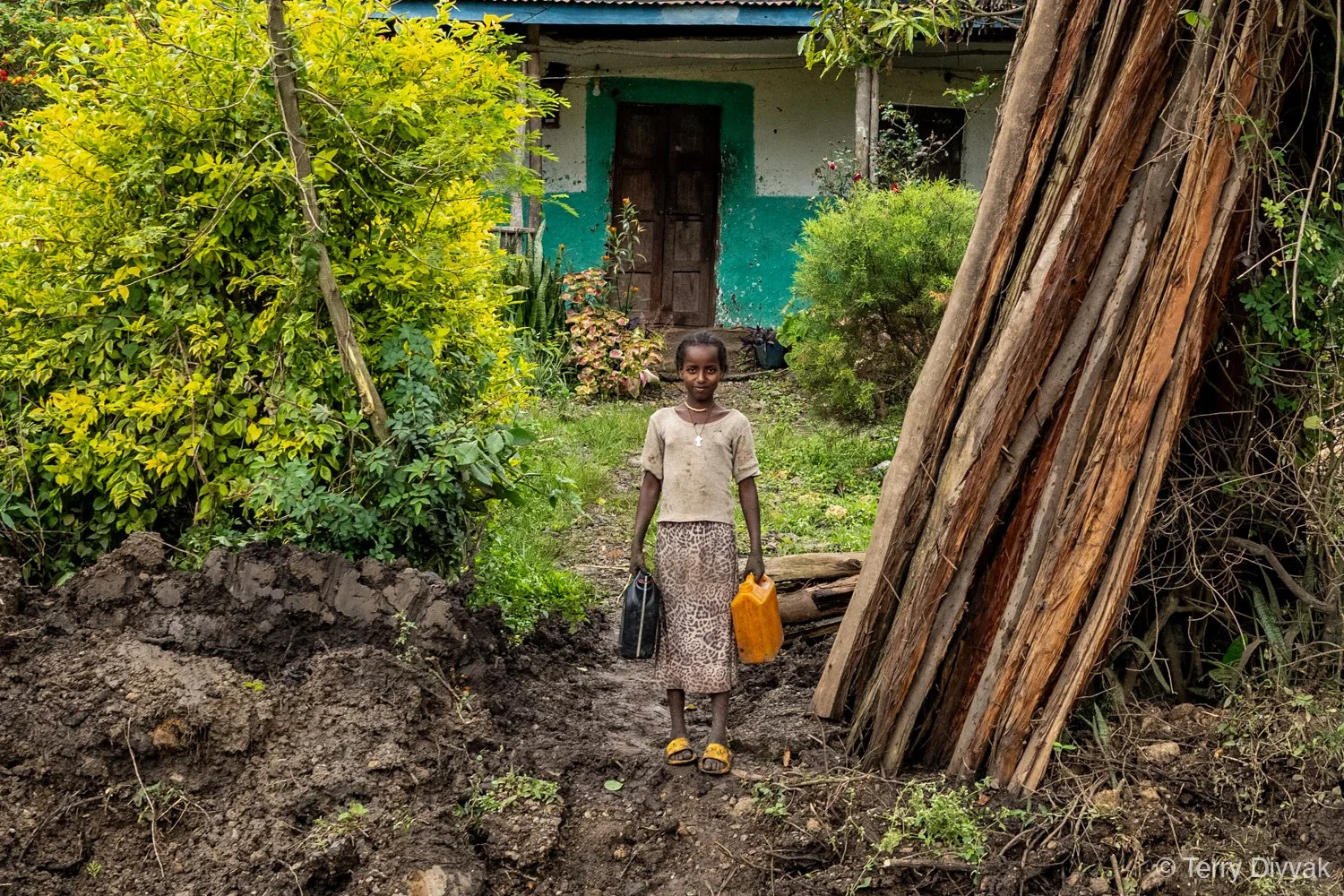
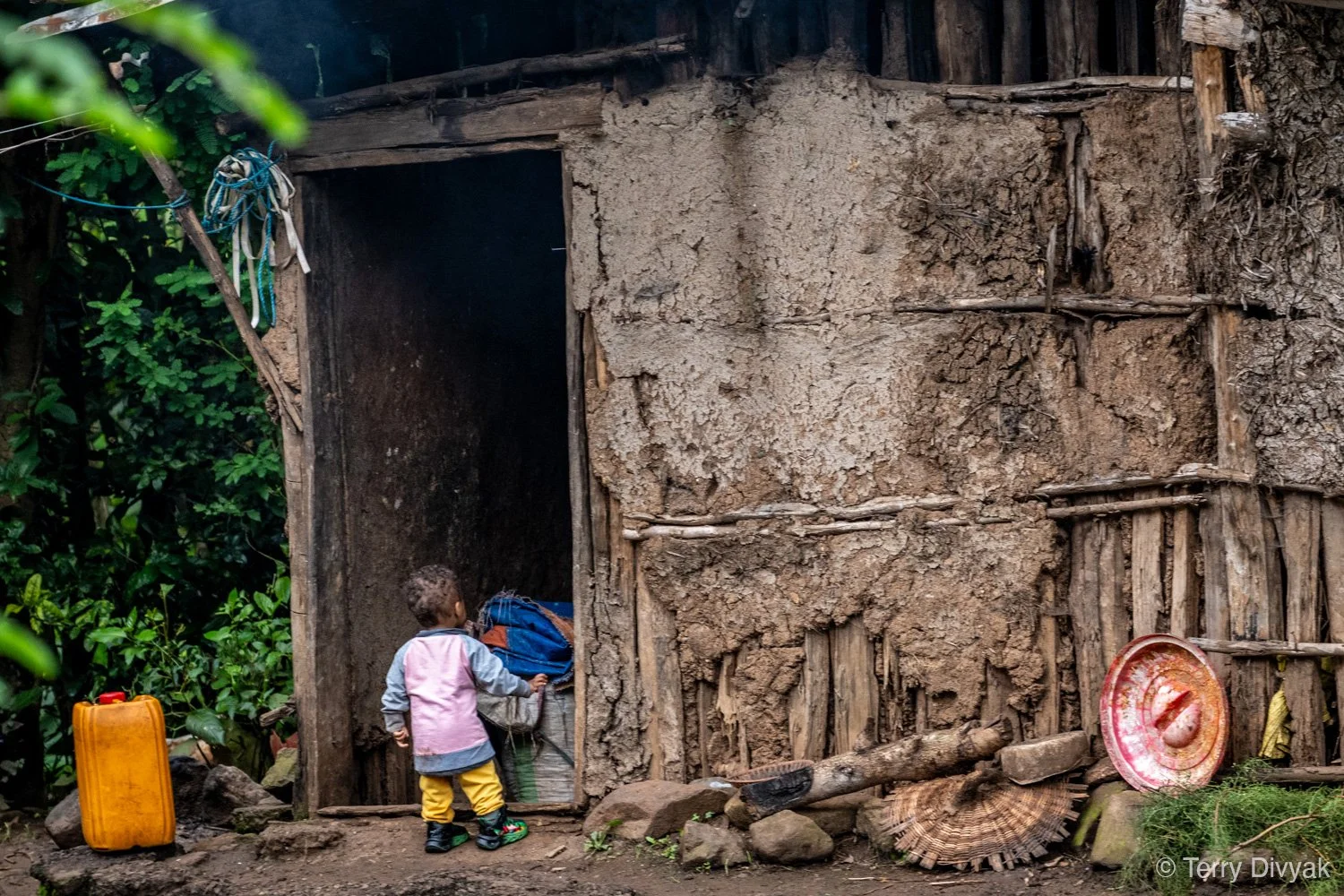
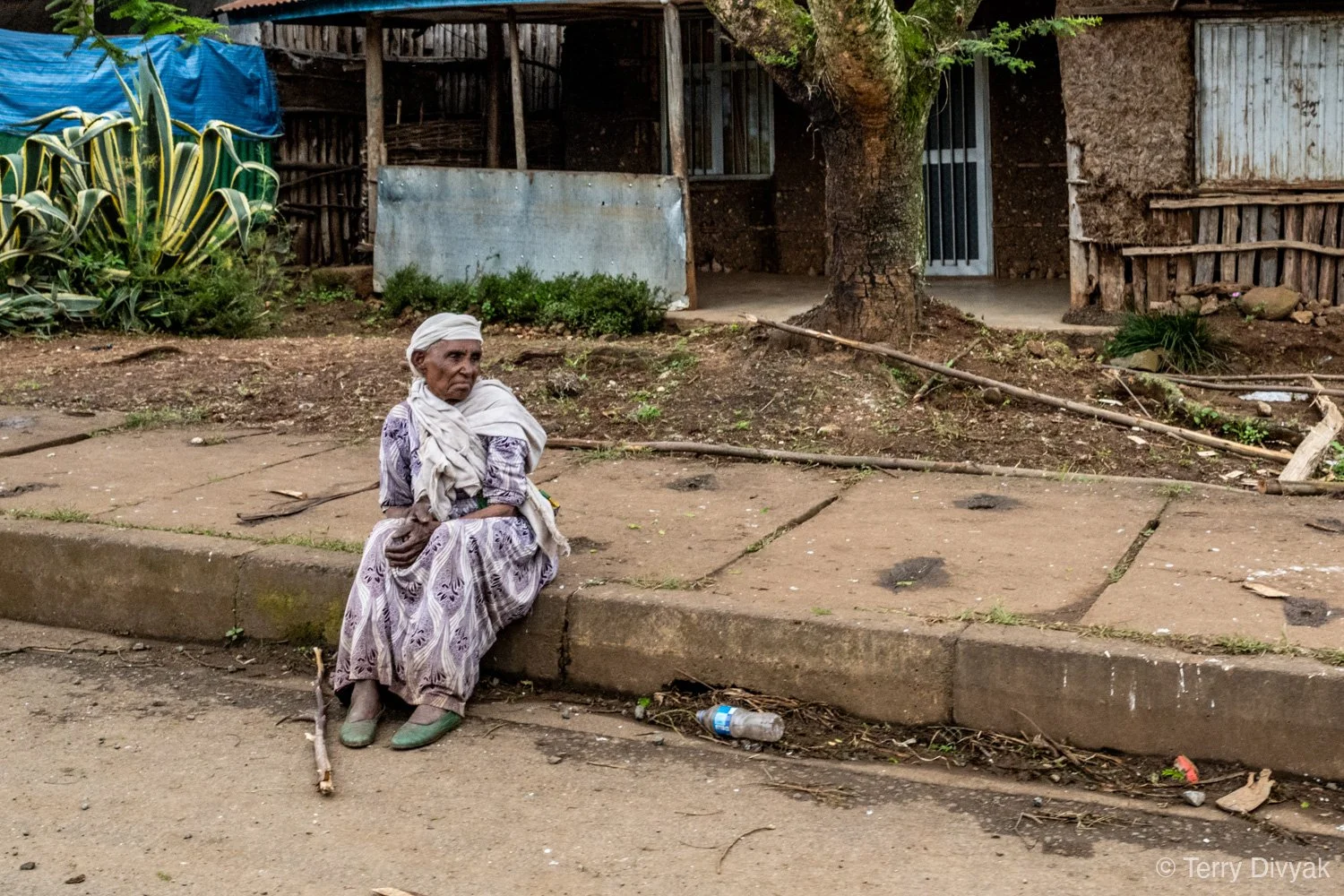
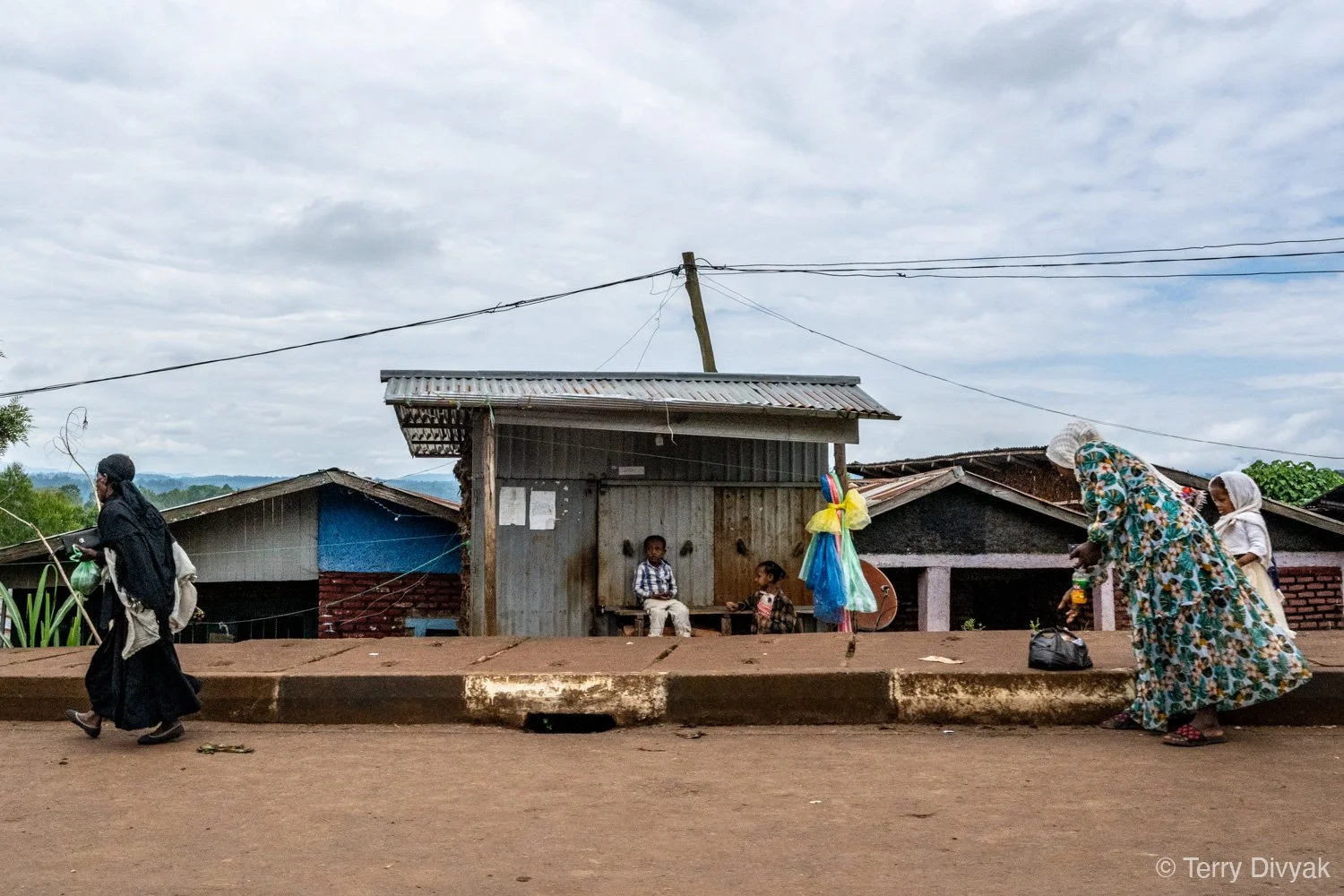
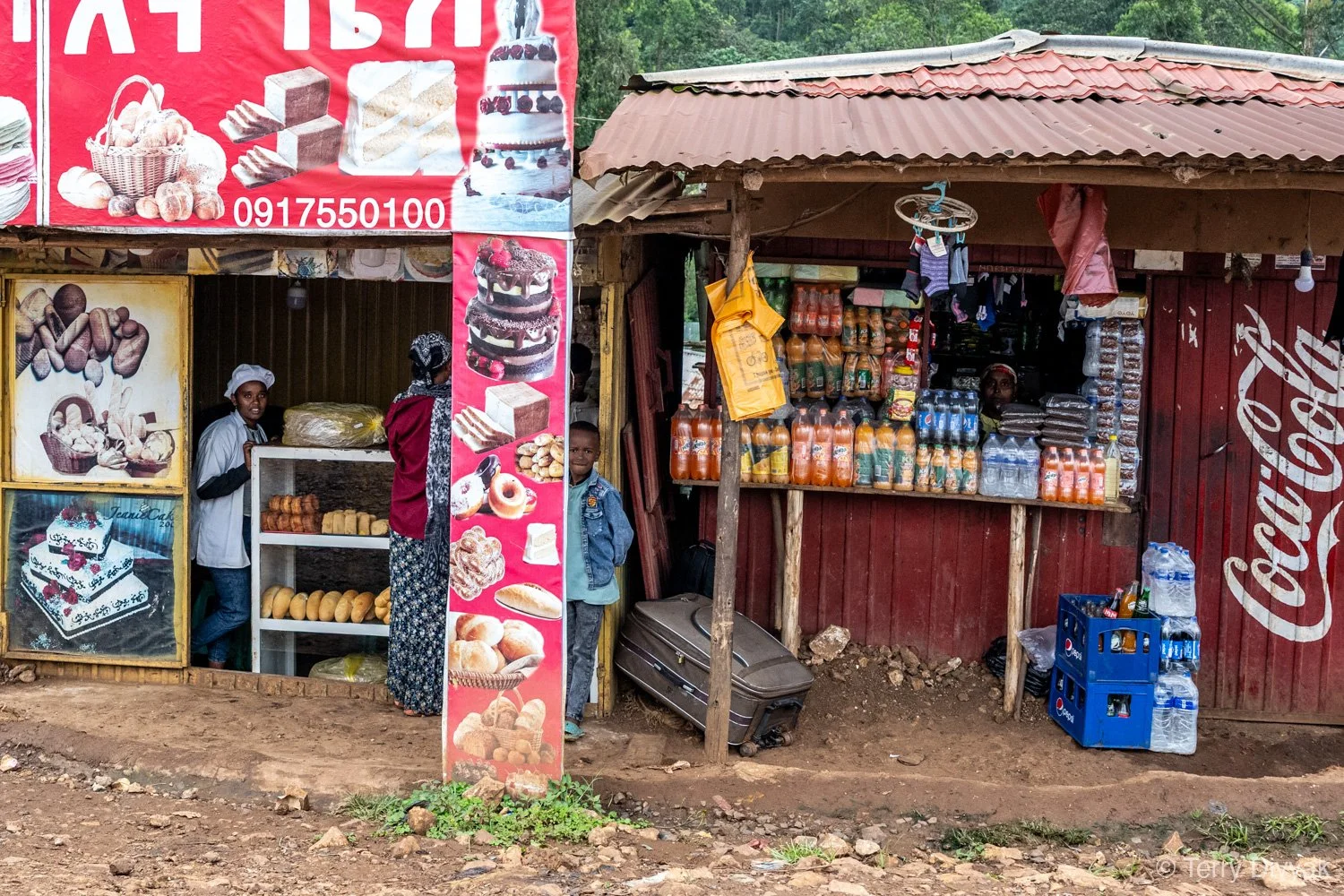
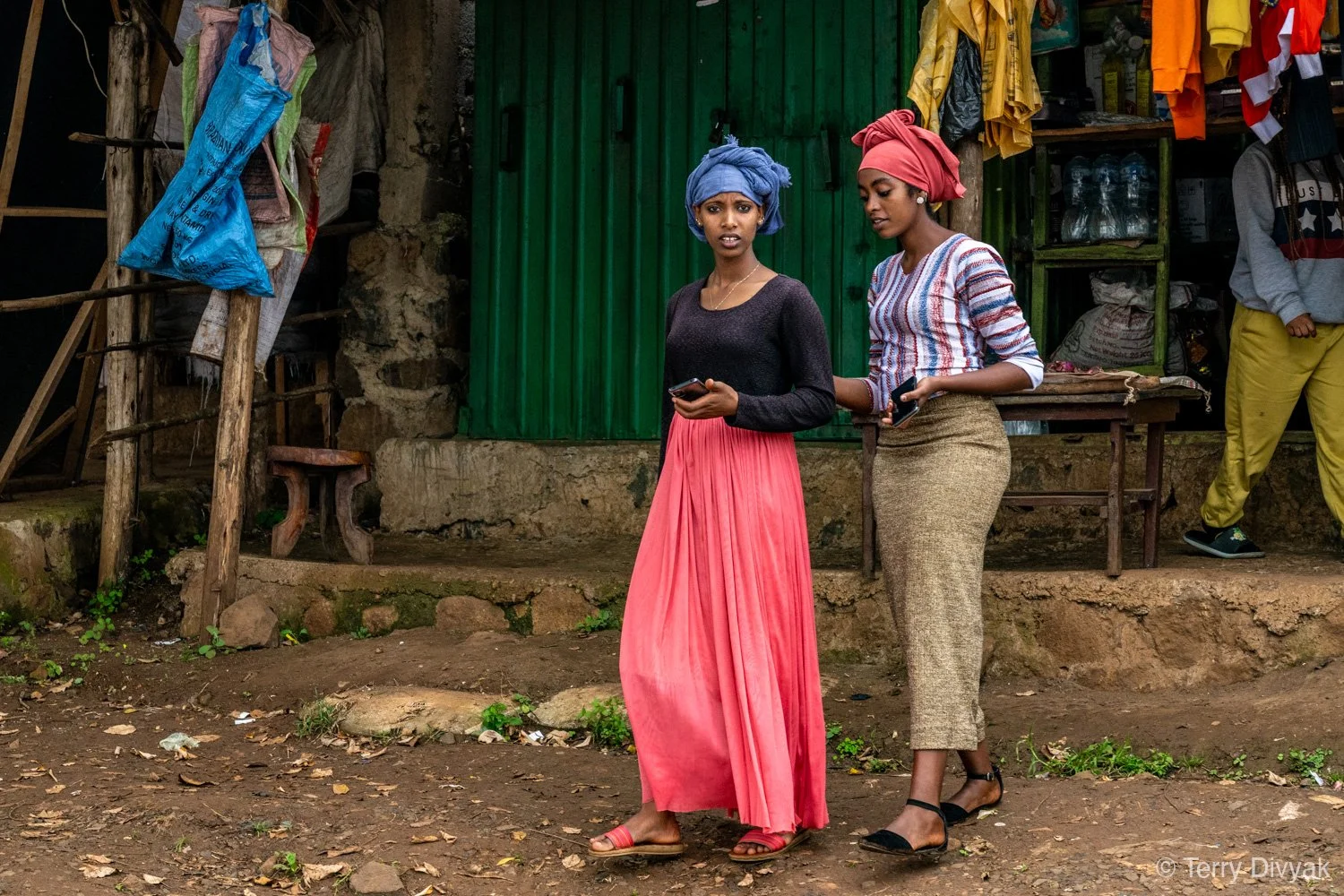
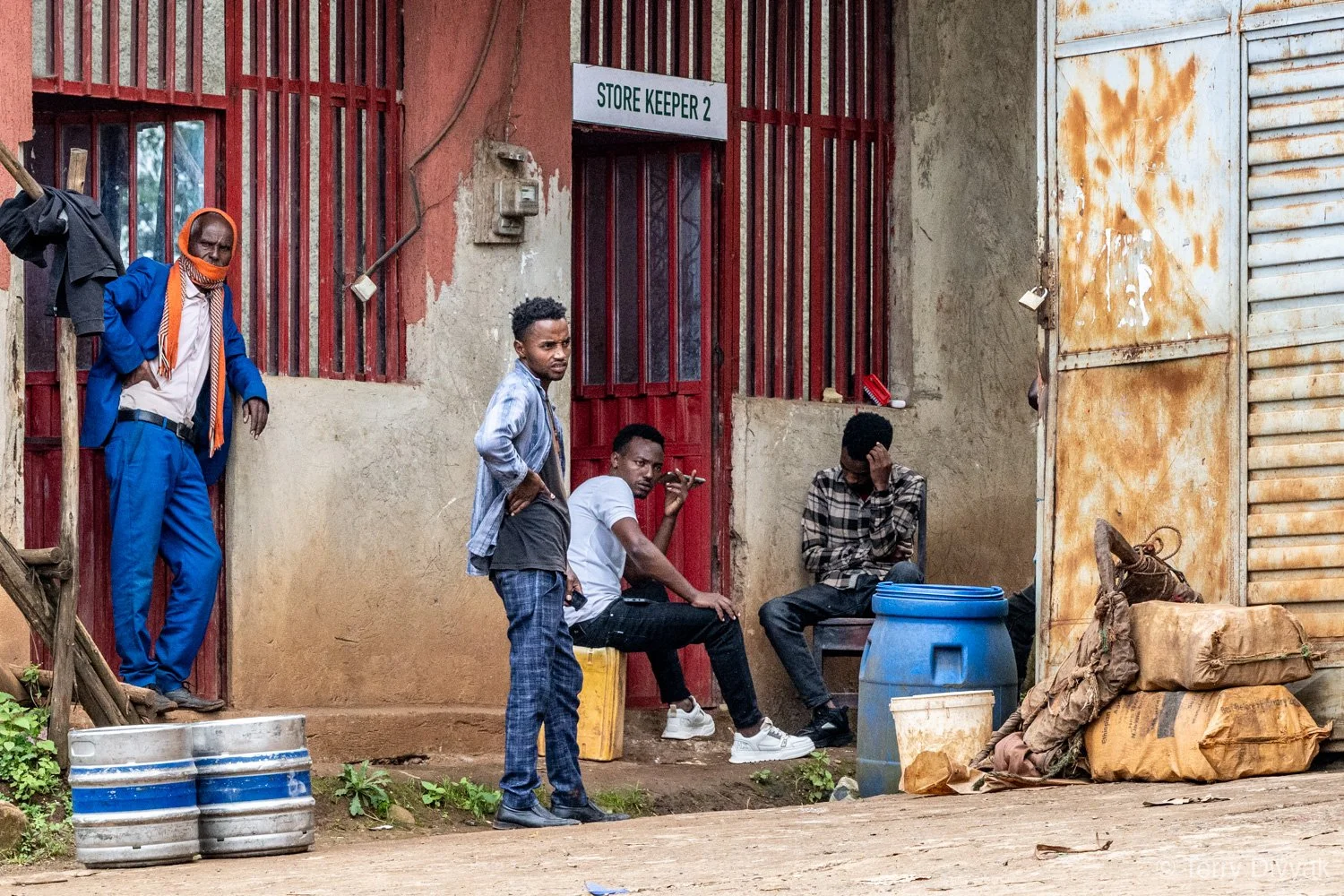
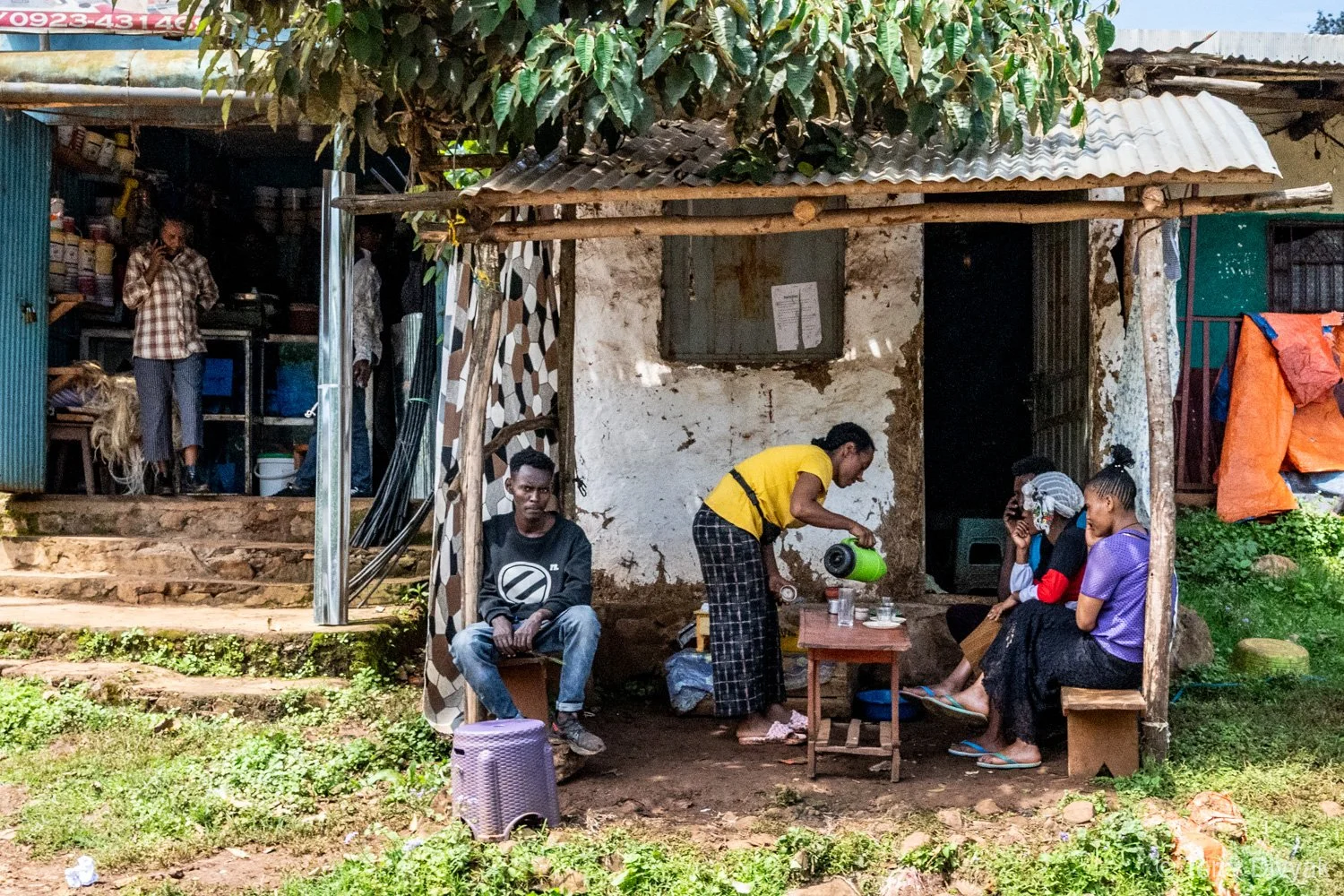
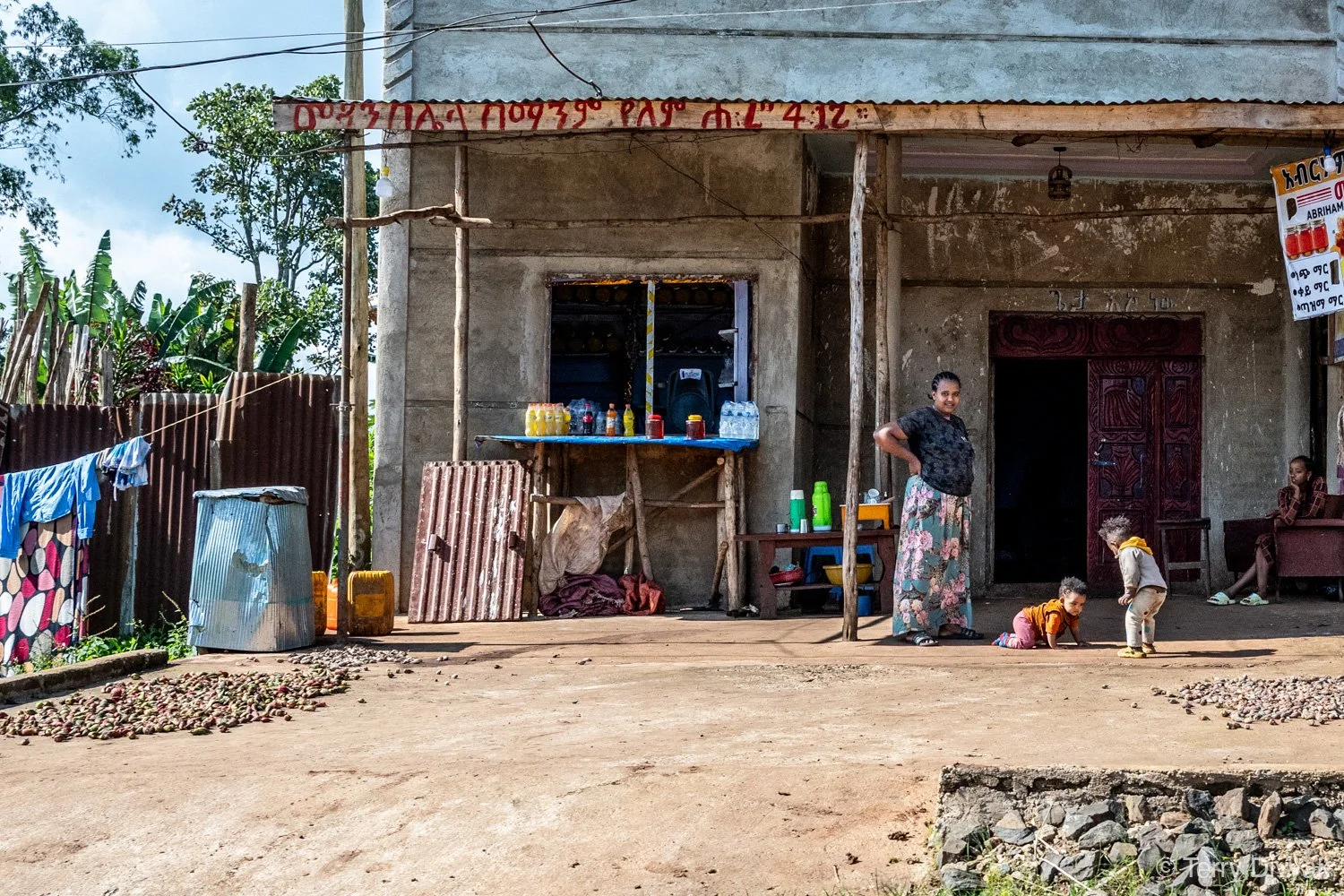
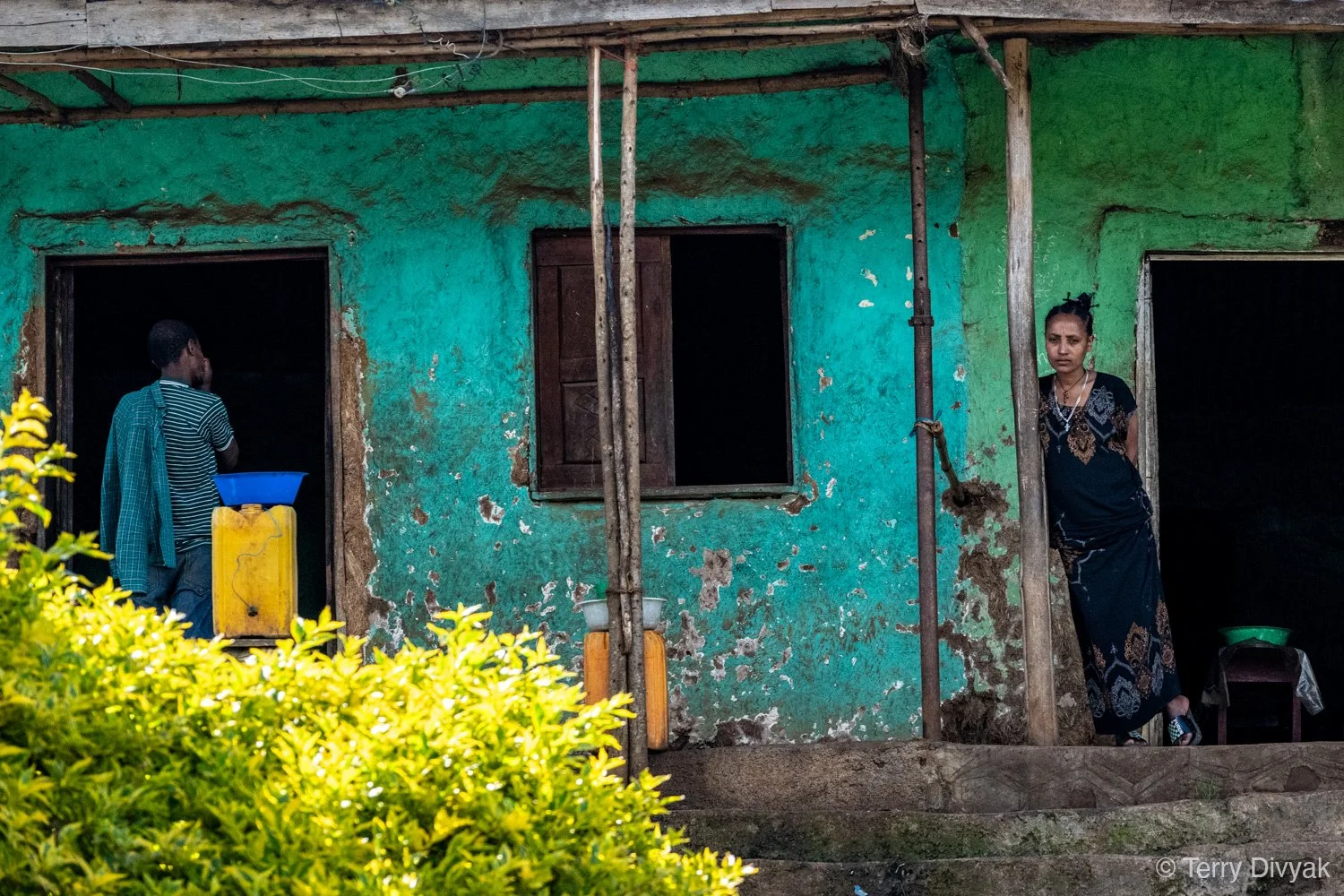
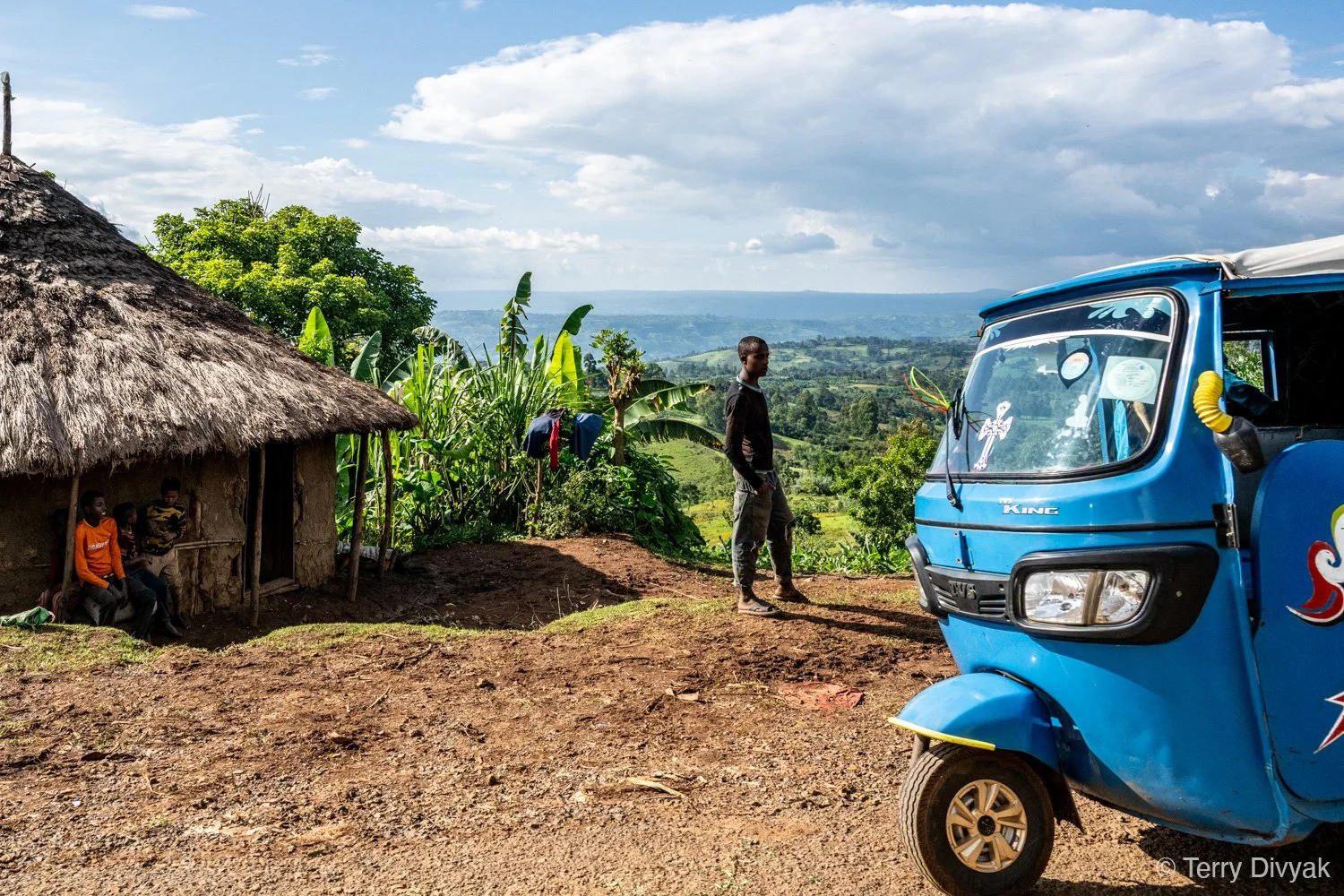
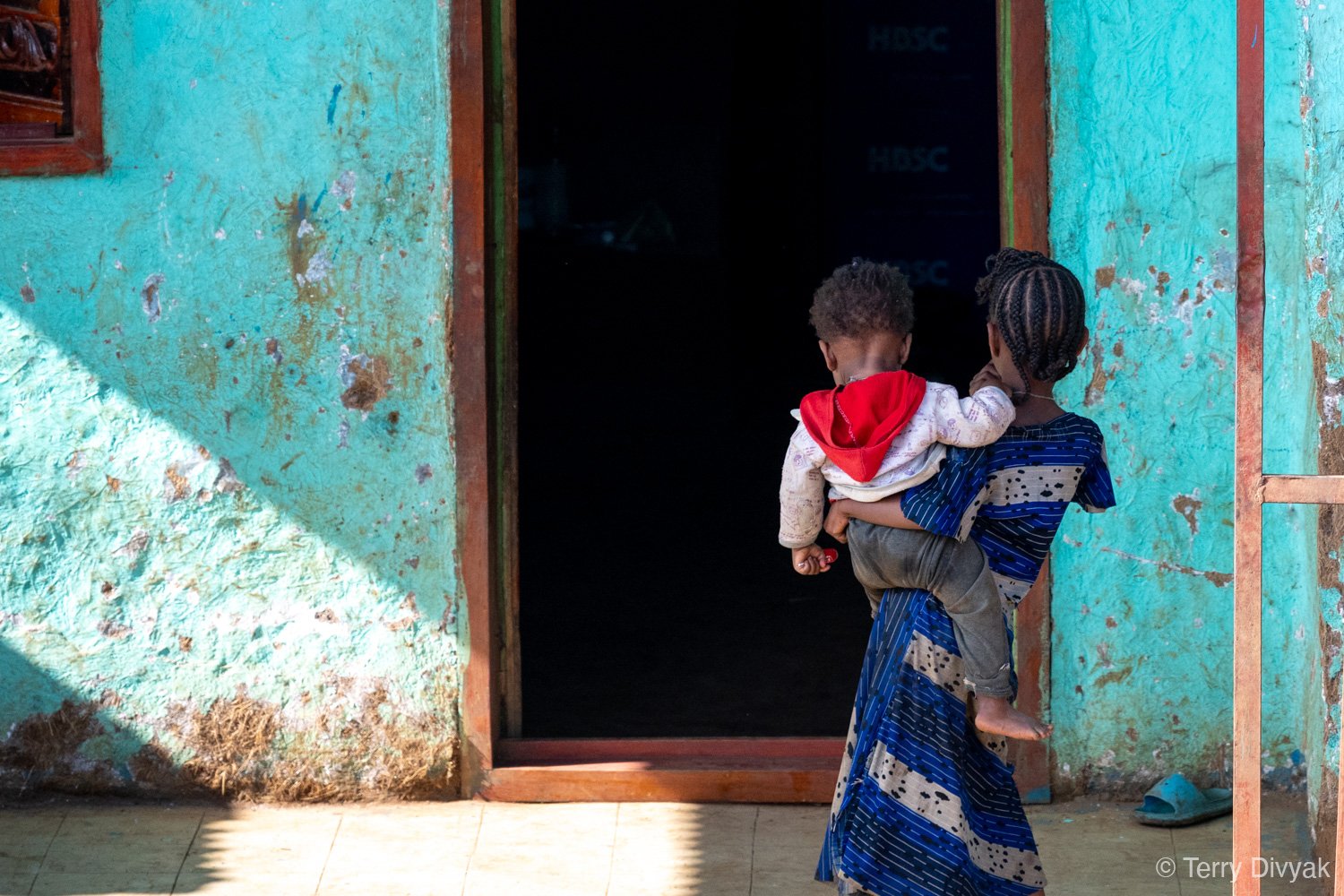
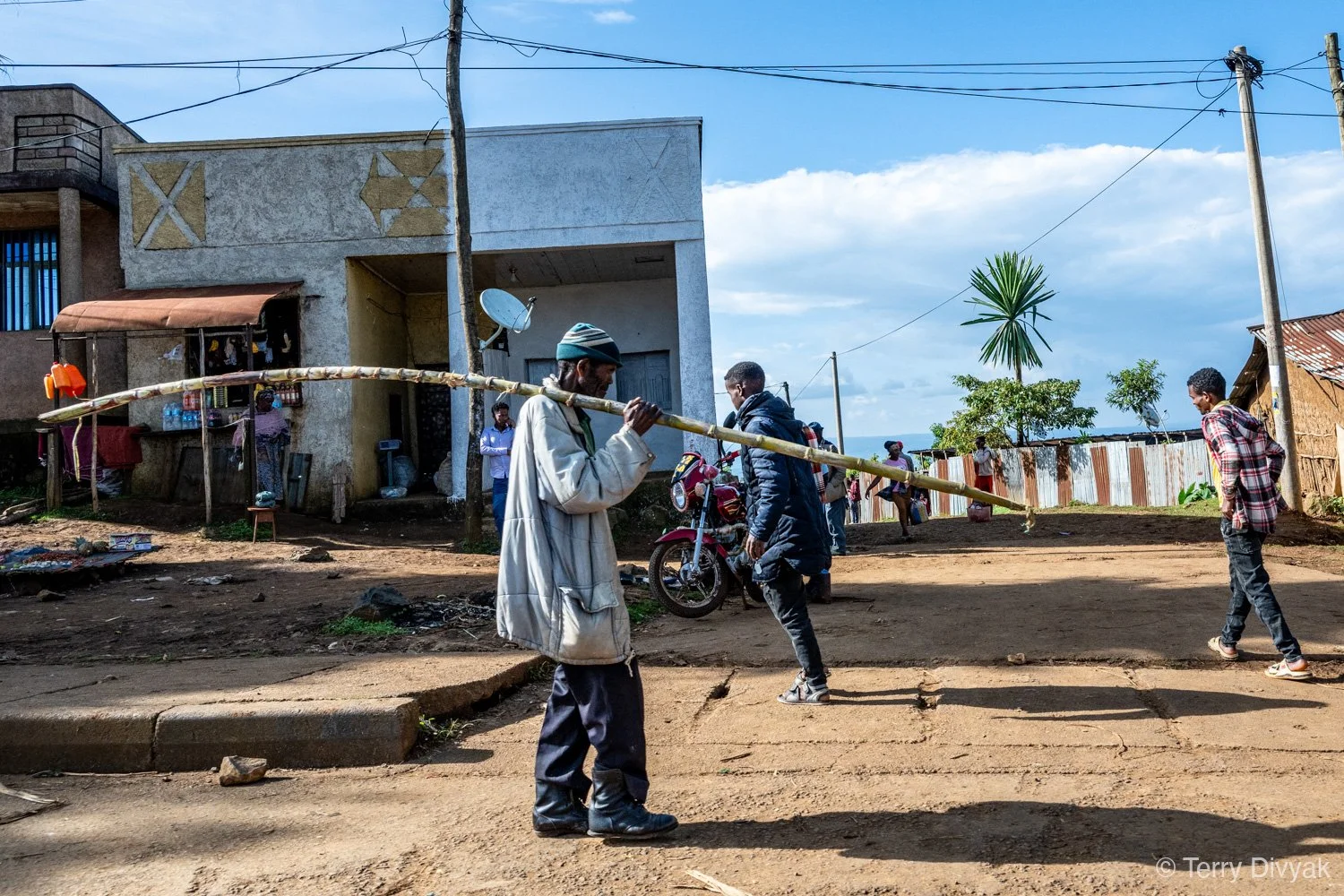
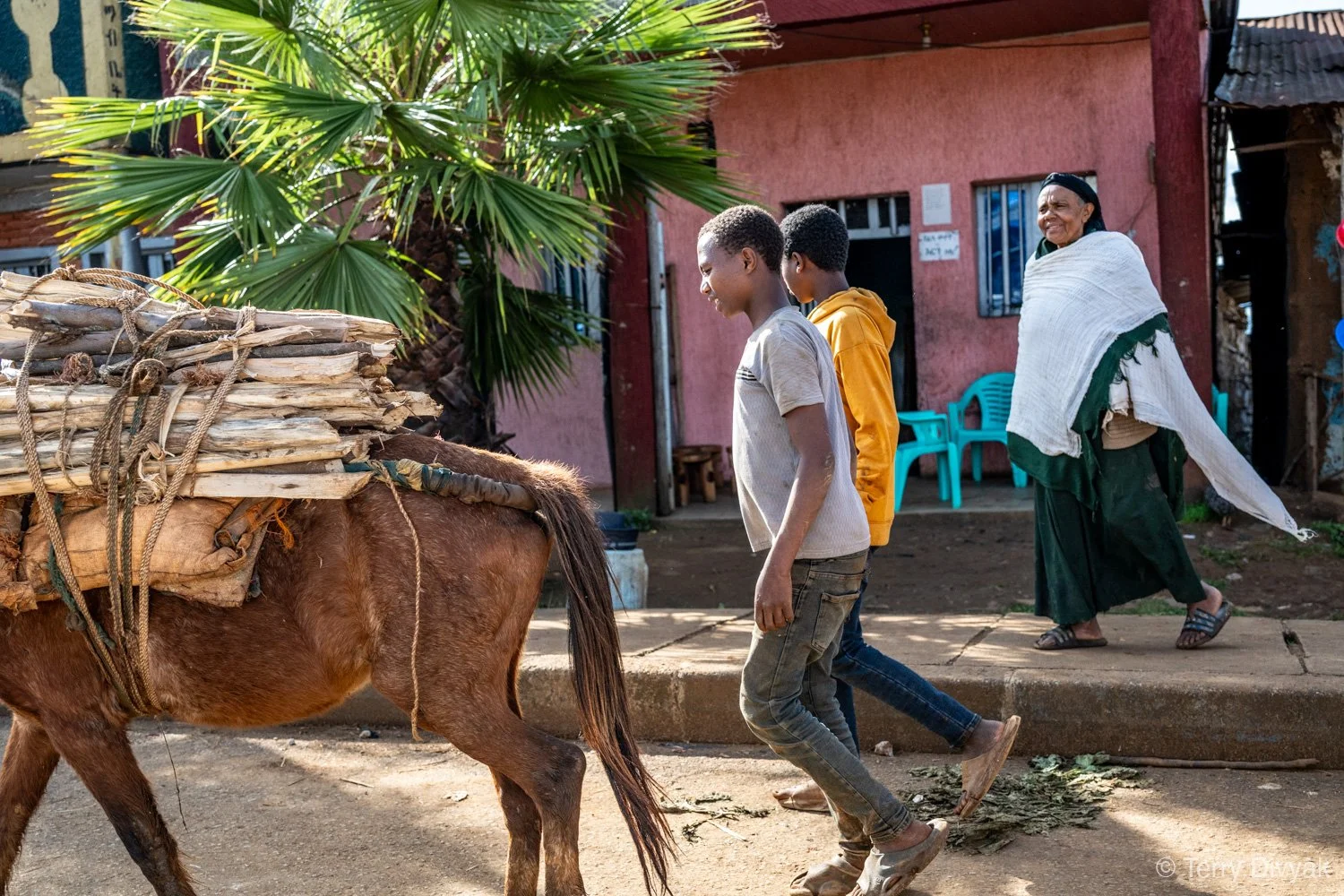
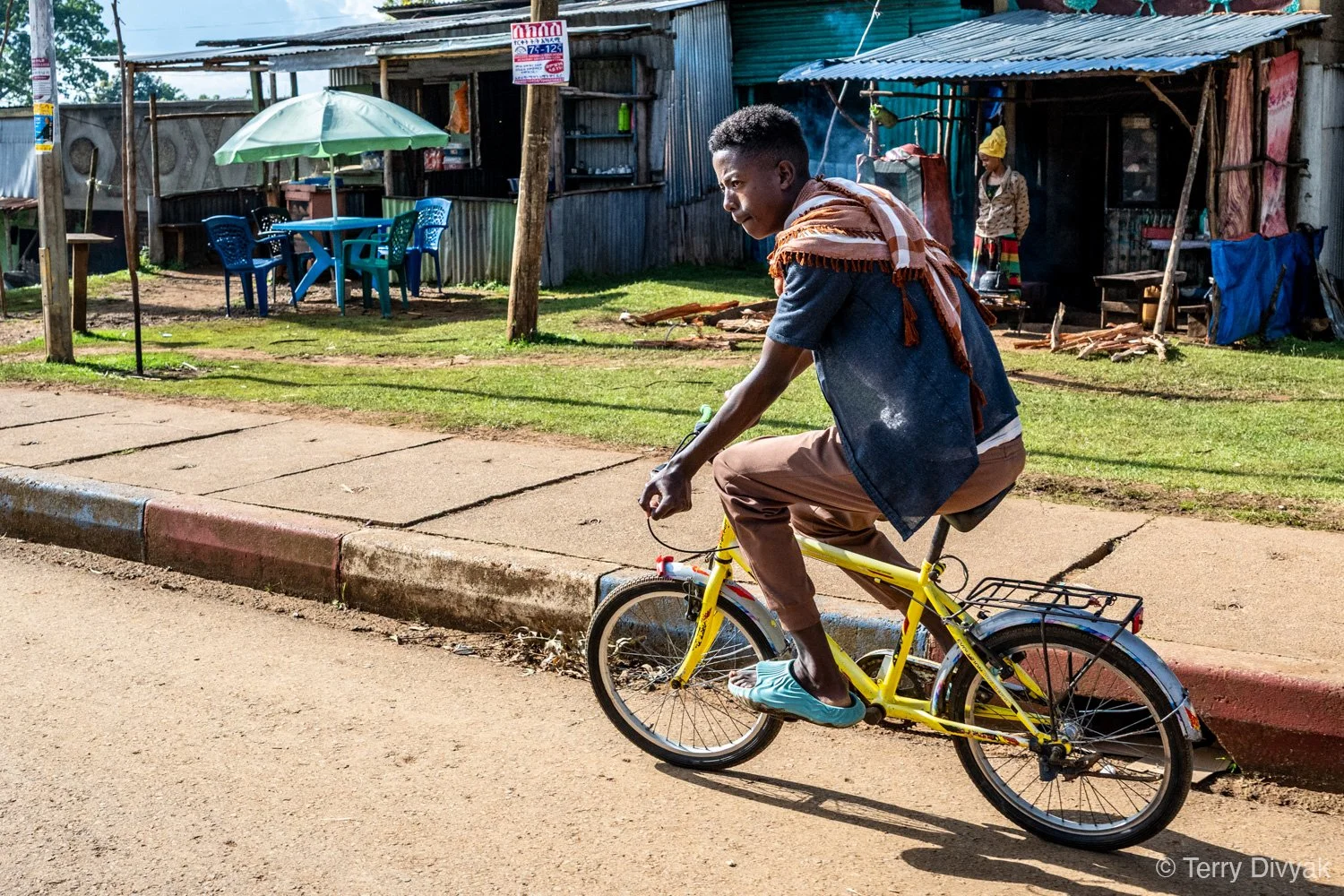
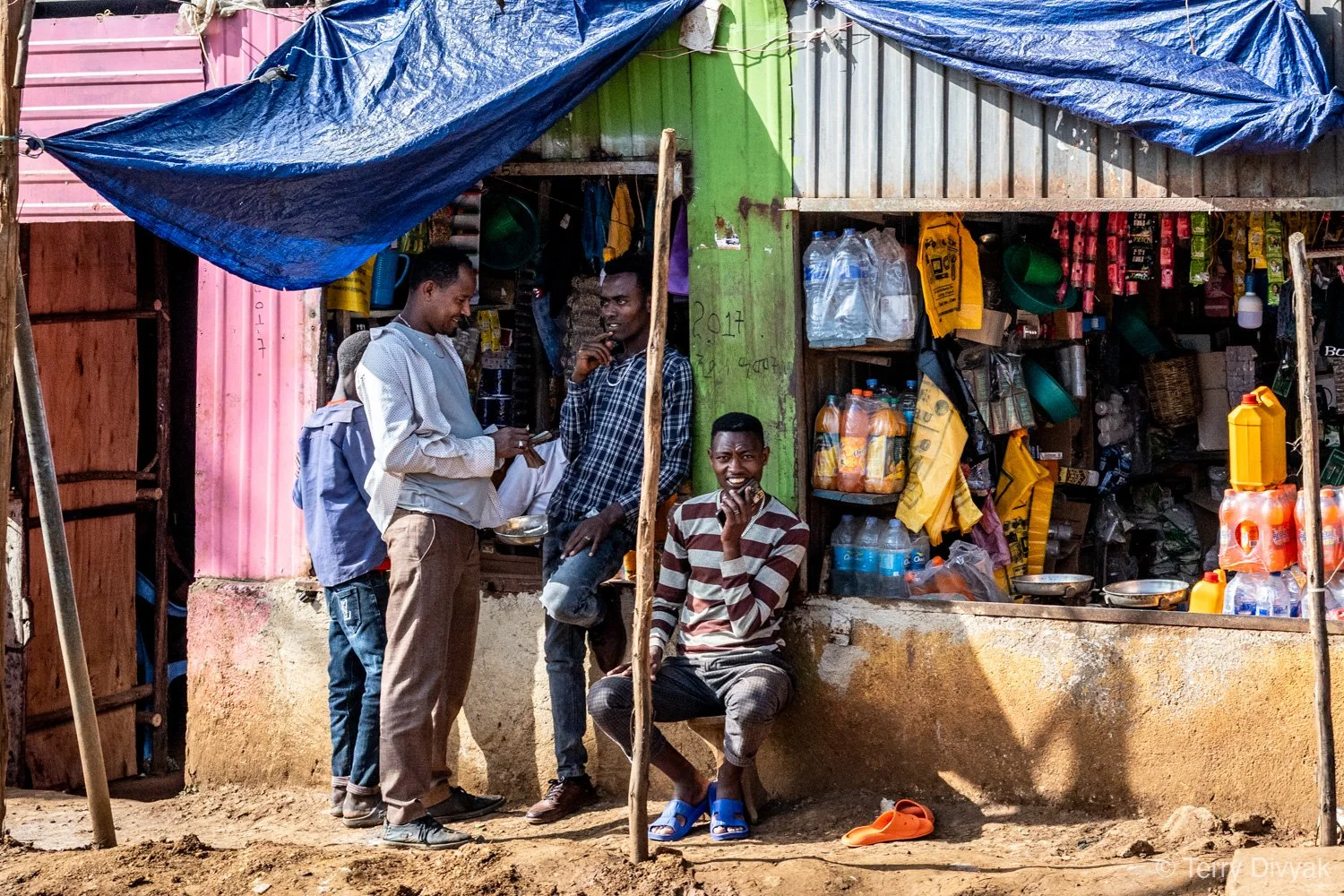
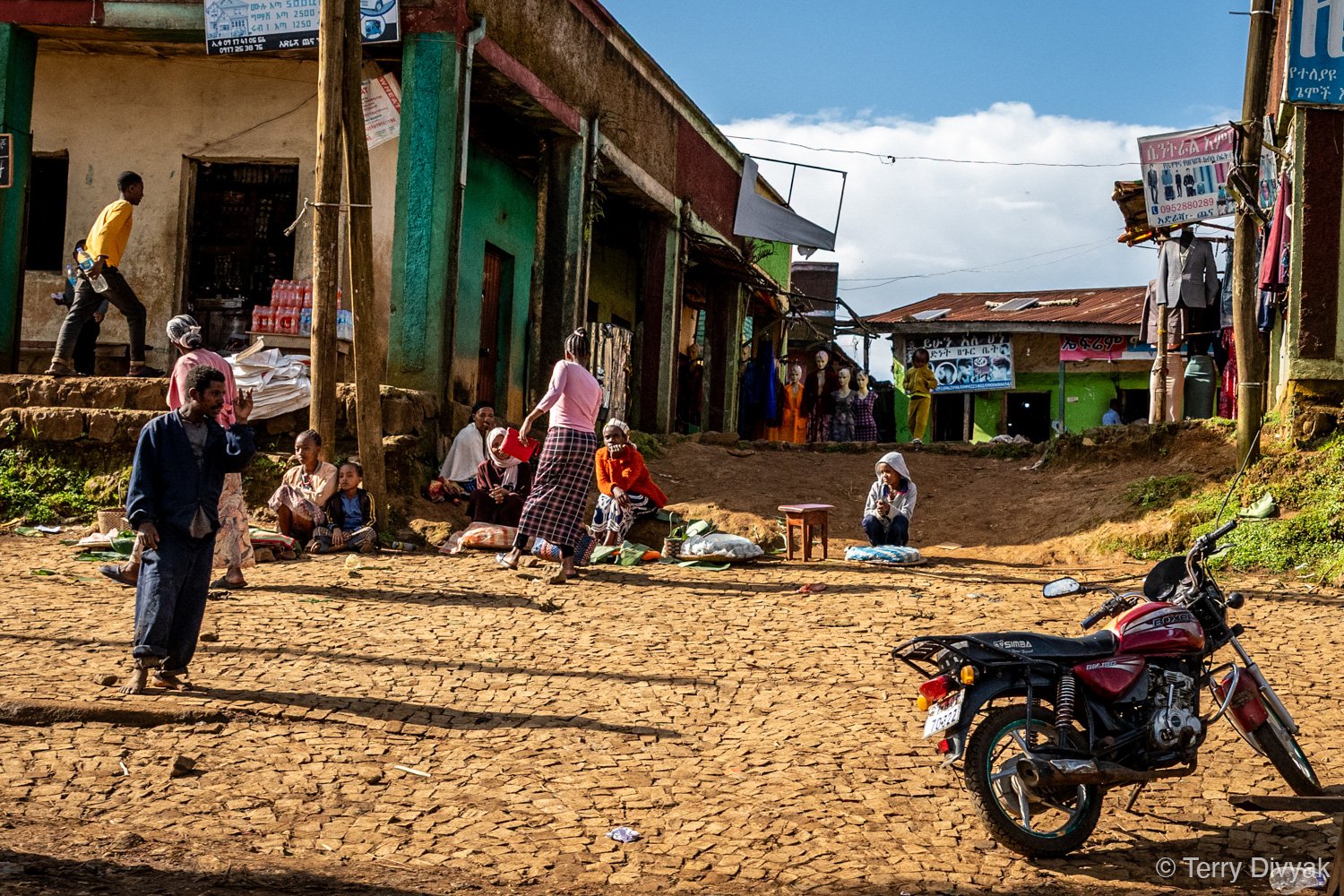
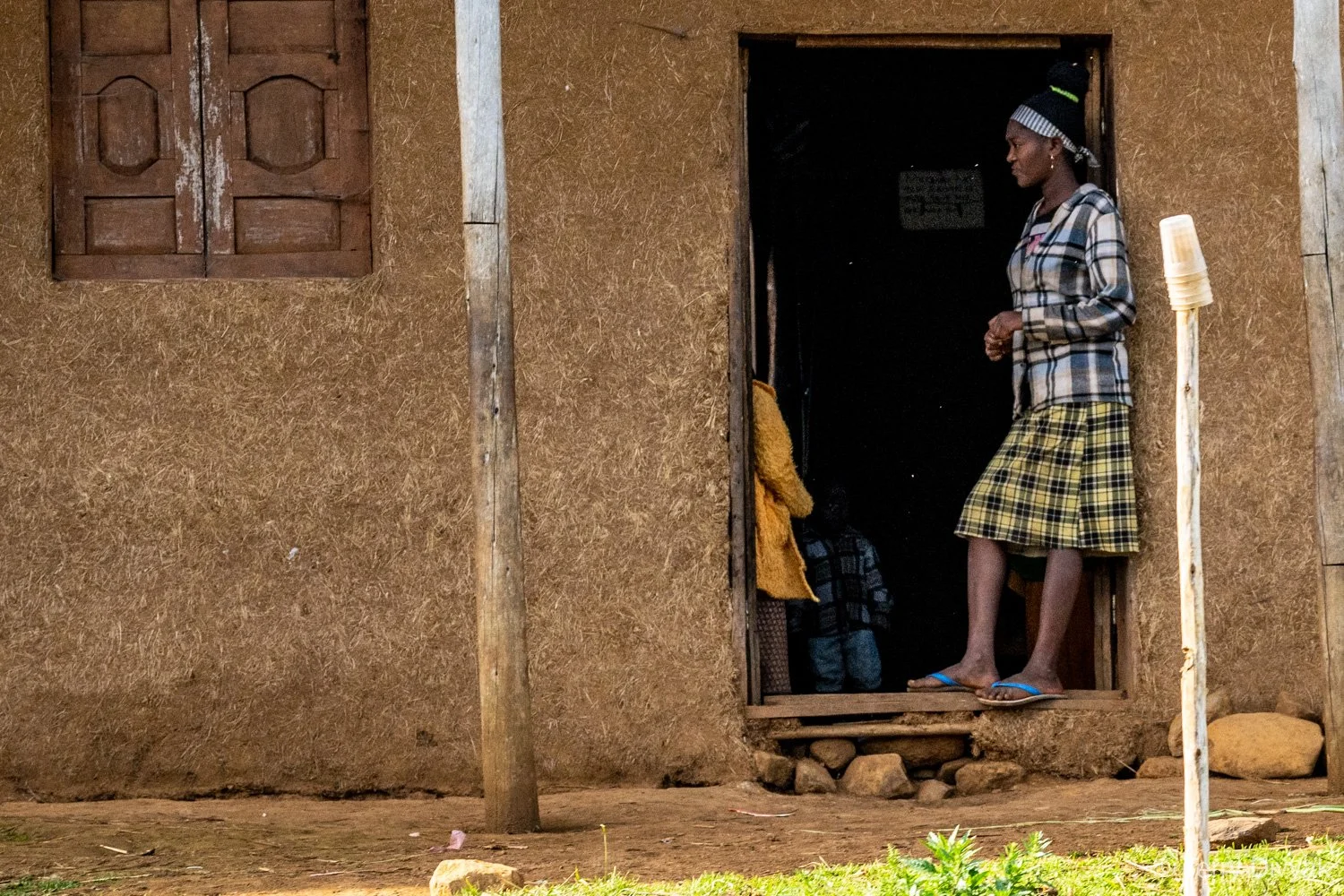
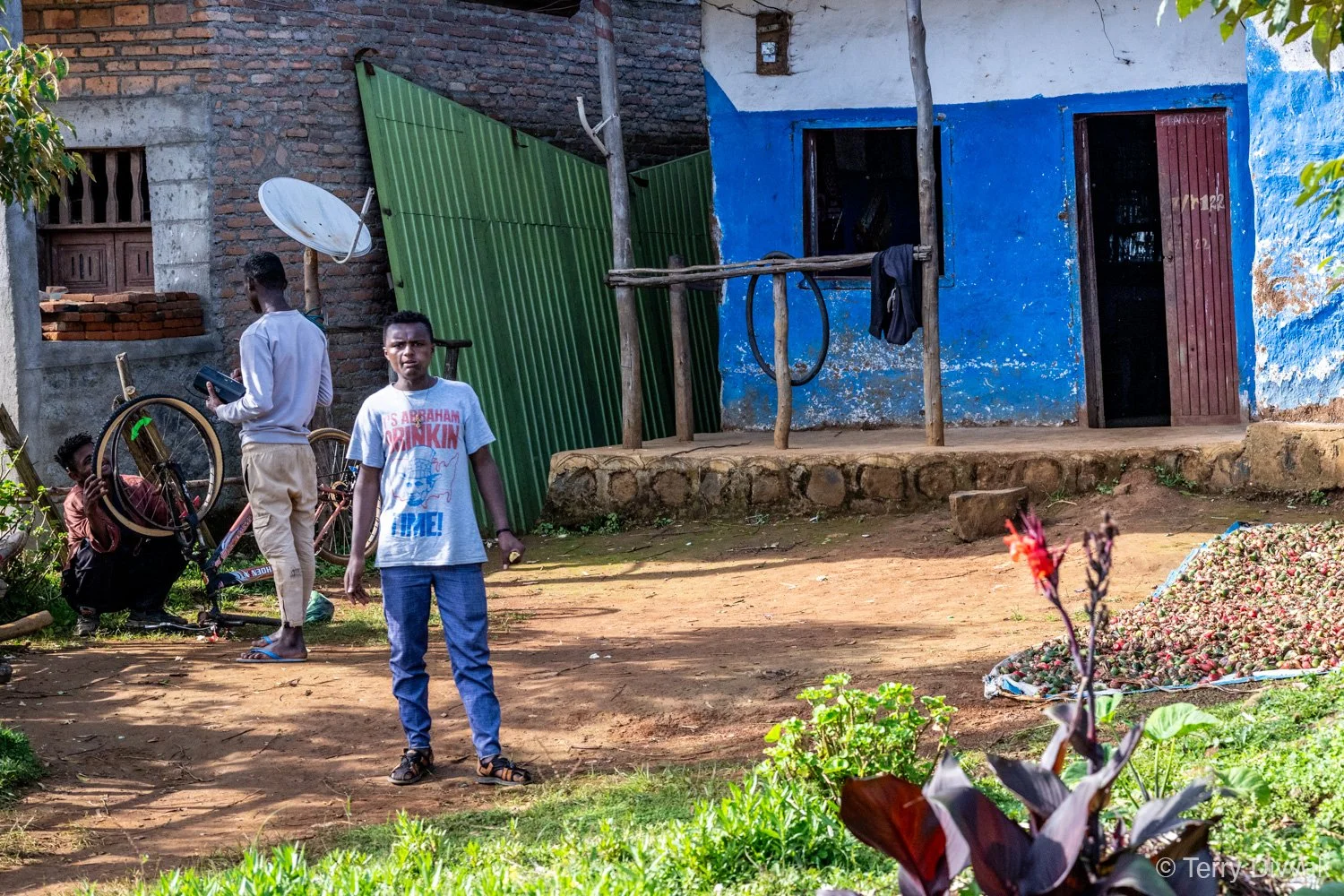
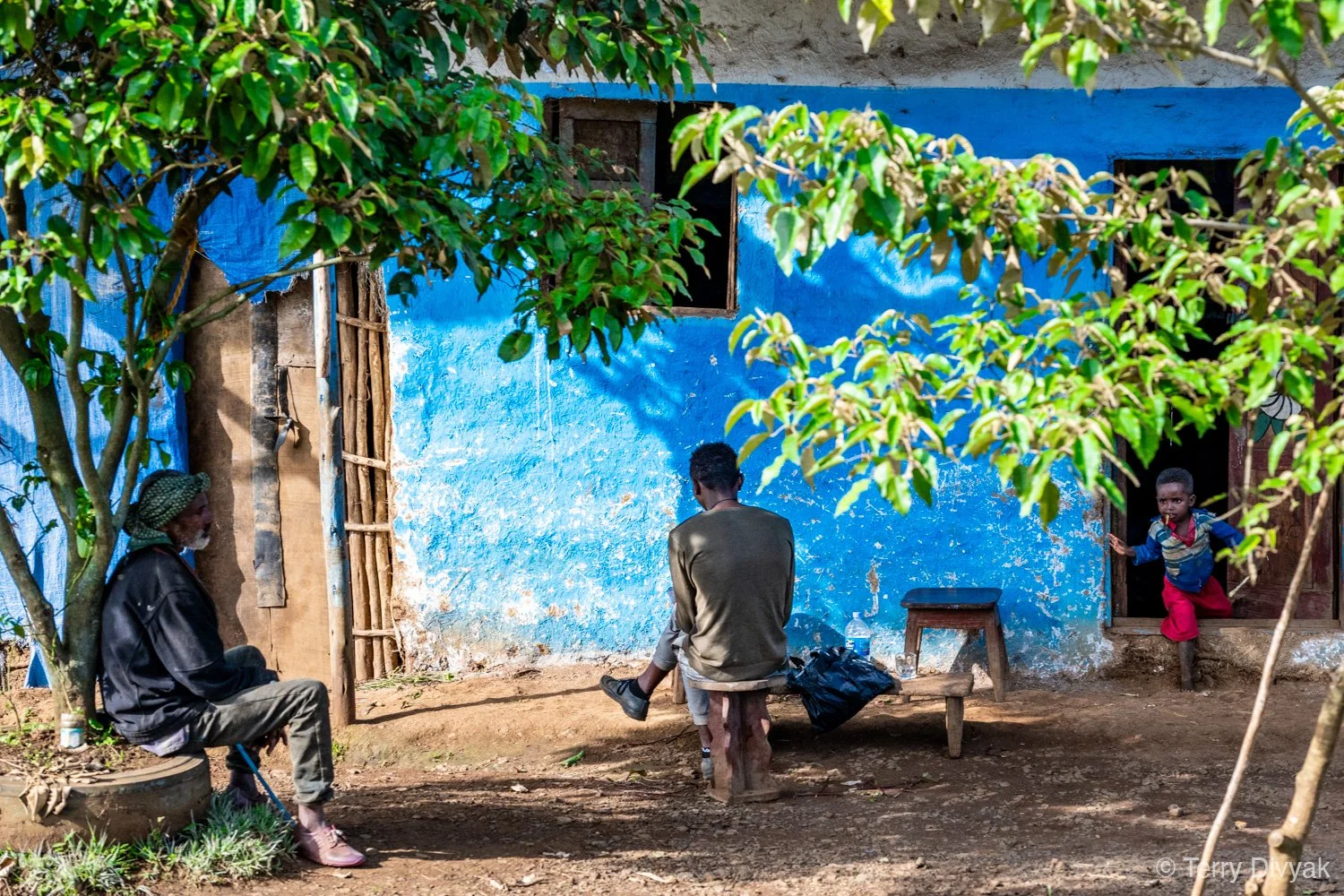
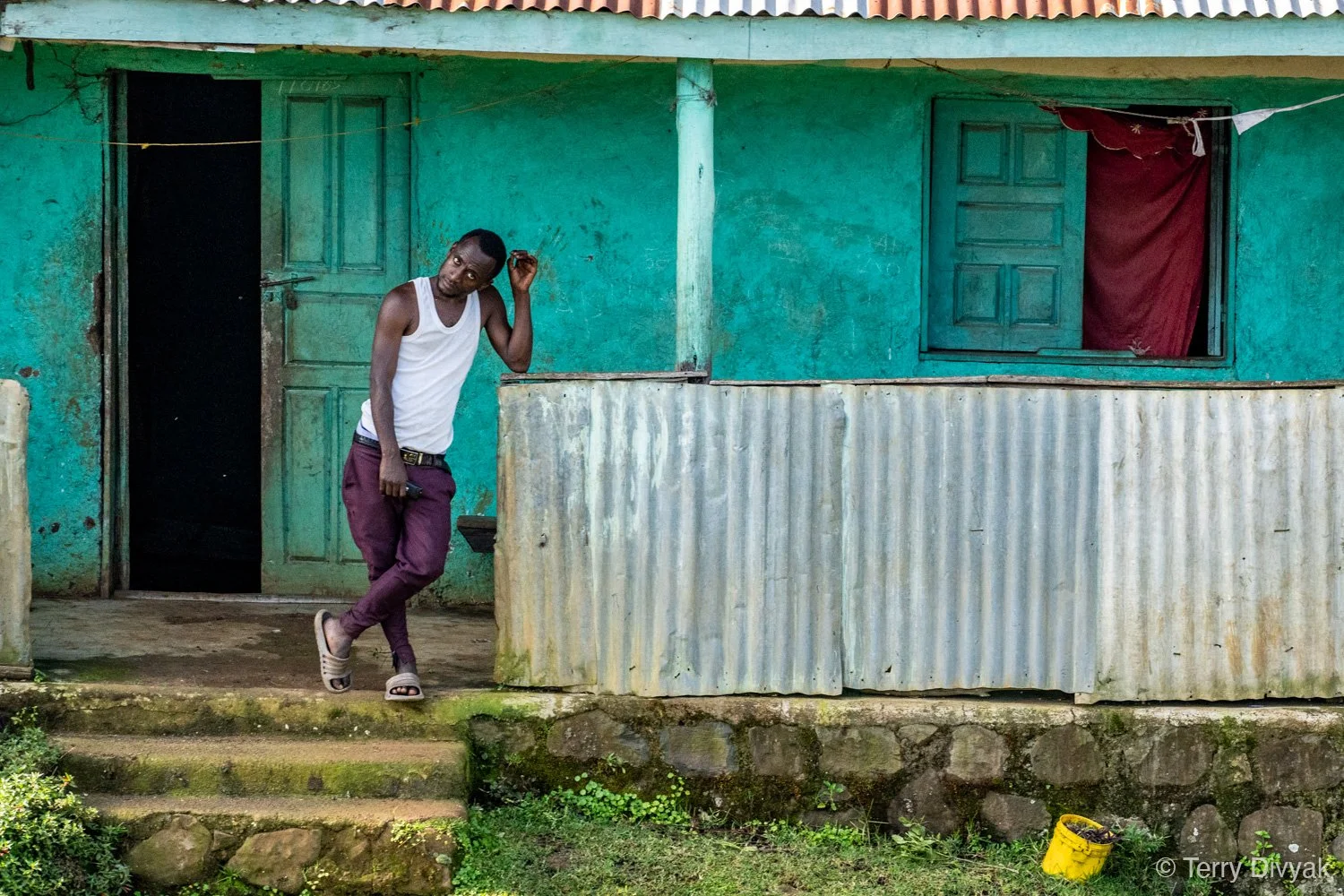
Ethiopia is rich in story telling and the drive to the Omo Valley was no exception for photo opportunities, where every image tells a story.
In 2024, Linda and I traveled to Ethiopia when we had a break between leading our two safaris. We had just had one of the most amazing experiences of seeing the migration crossing the Mara River in Tanzania. We saw it happen four times in one day and feel super fortunate to have experienced this incredible movement of animals. You can check out the video here “11 Days in Tanzania”
Our goal was to spend 10 days in the Omo Valley, hoping to meet numerous tribes to photograph, like the Suri (Surma) and Mursi tribes. For the few previous years, Linda and I had been inspired by three photographers who have brought the Omo Valley, and specifically the Suri tribe, into the forefront with their amazing photos: Giovanna Aryafara, Piper Mackay, and Jayne McClean. The inspiration from their Instagram feeds had us hooked. Though they offer their own tours to the Omo, we felt that we could arrange this trip on our own and worked with a local tour company to put everything in place.
We initially flew into Addis Ababa and did the typical first-time visitor circuit there, including a visit to see Lucy. A few days after arriving in Addis, we boarded a flight to Jimma to meet our guide, Ermi, and our driver, Giddy. In our minds, the sole focus was getting to the tribes and beginning our photography adventure, but we were in for a surprise. The journey to reach them turned out to be an adventure in itself. The old saying “It’s not the destination, but the journey that is important” felt 100% true in this case.
Ethiopia is far more lush than I expected, and I had no idea it would be such a beautiful country, especially during the drive from Jimma. In my mind, I was remembering the commercials in the 1980s and the song “Do They Know It’s Christmas?” and the Live Aid concert, which raised over $100 million to help as a result of the 1984 famine that struck the country.
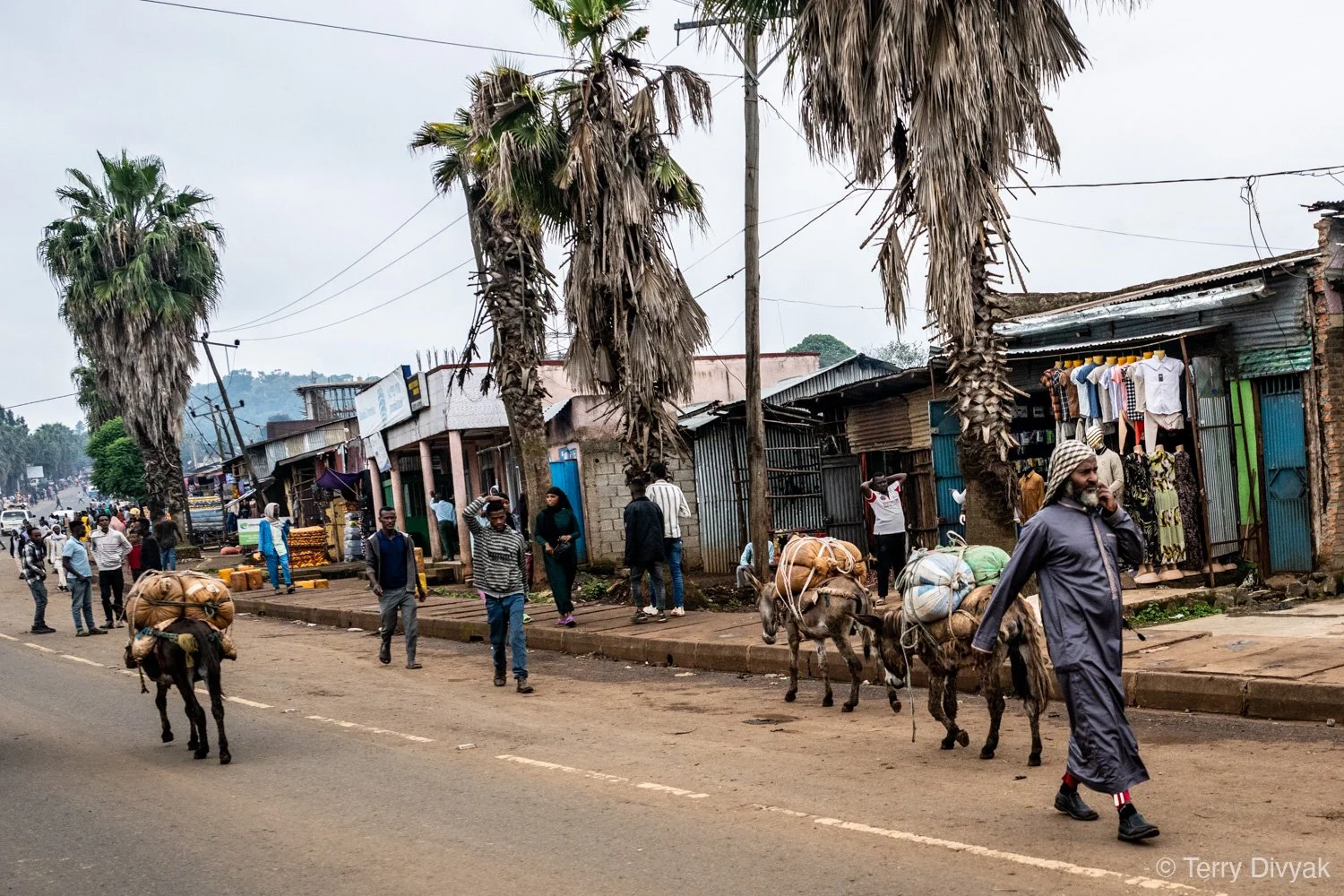
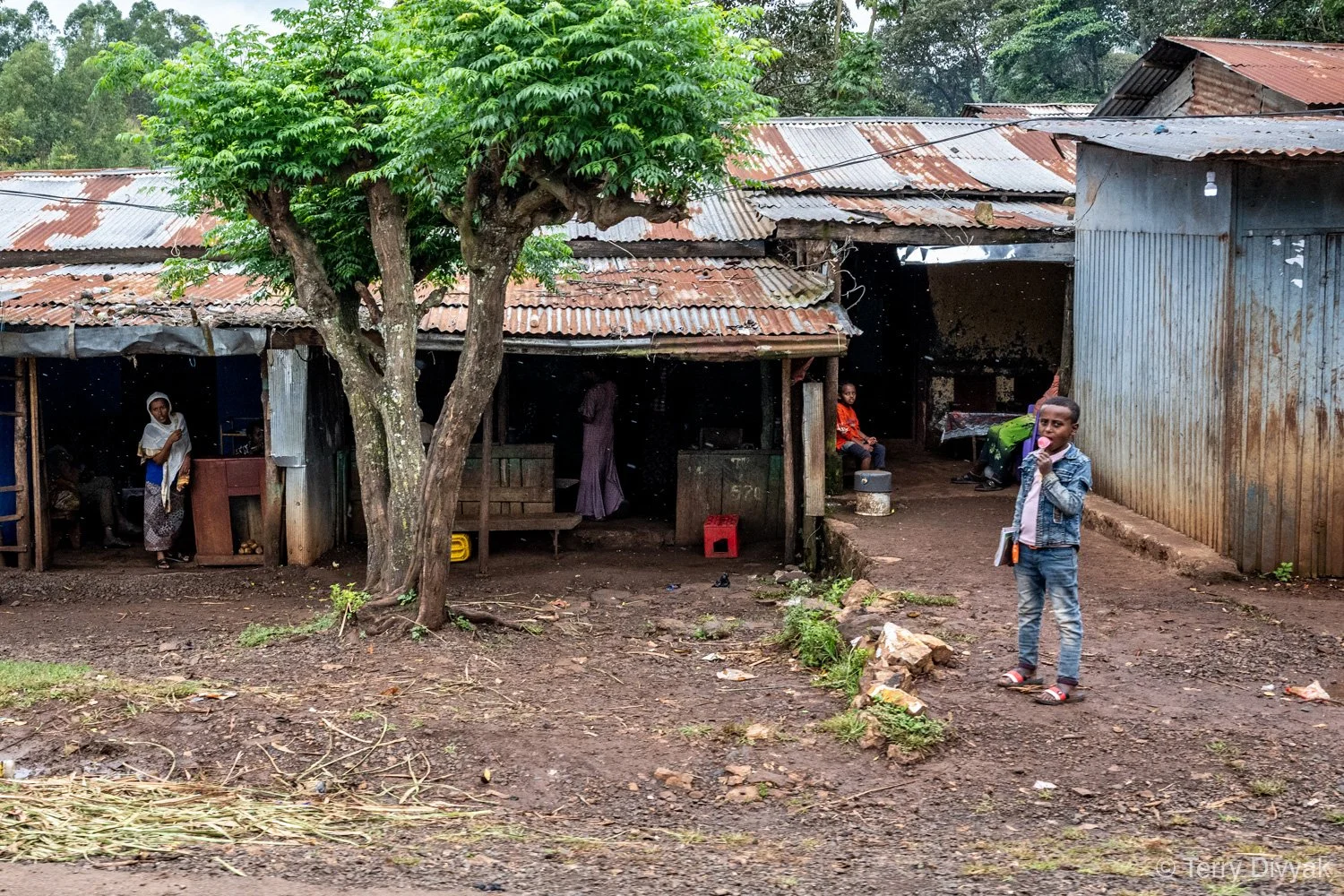
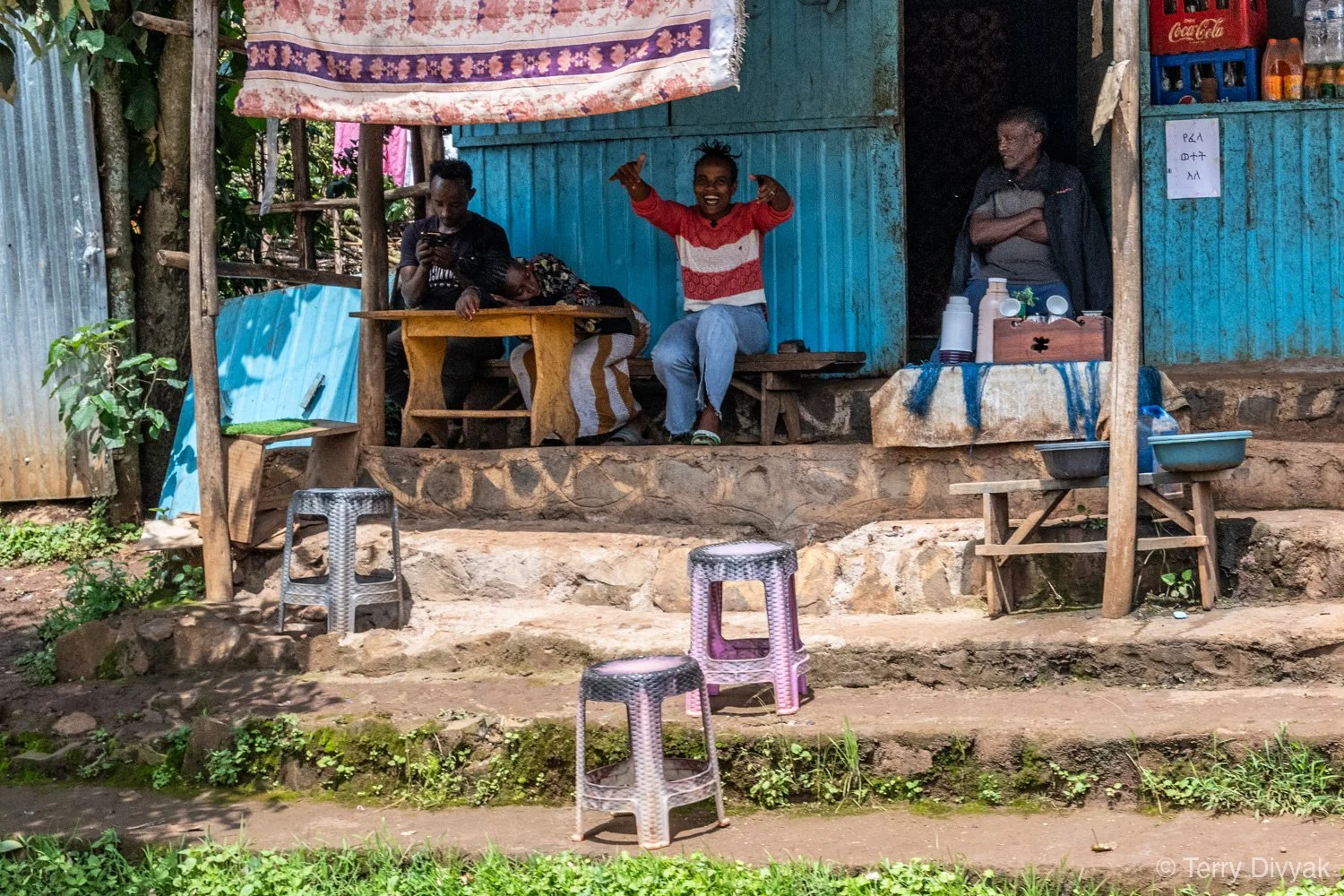
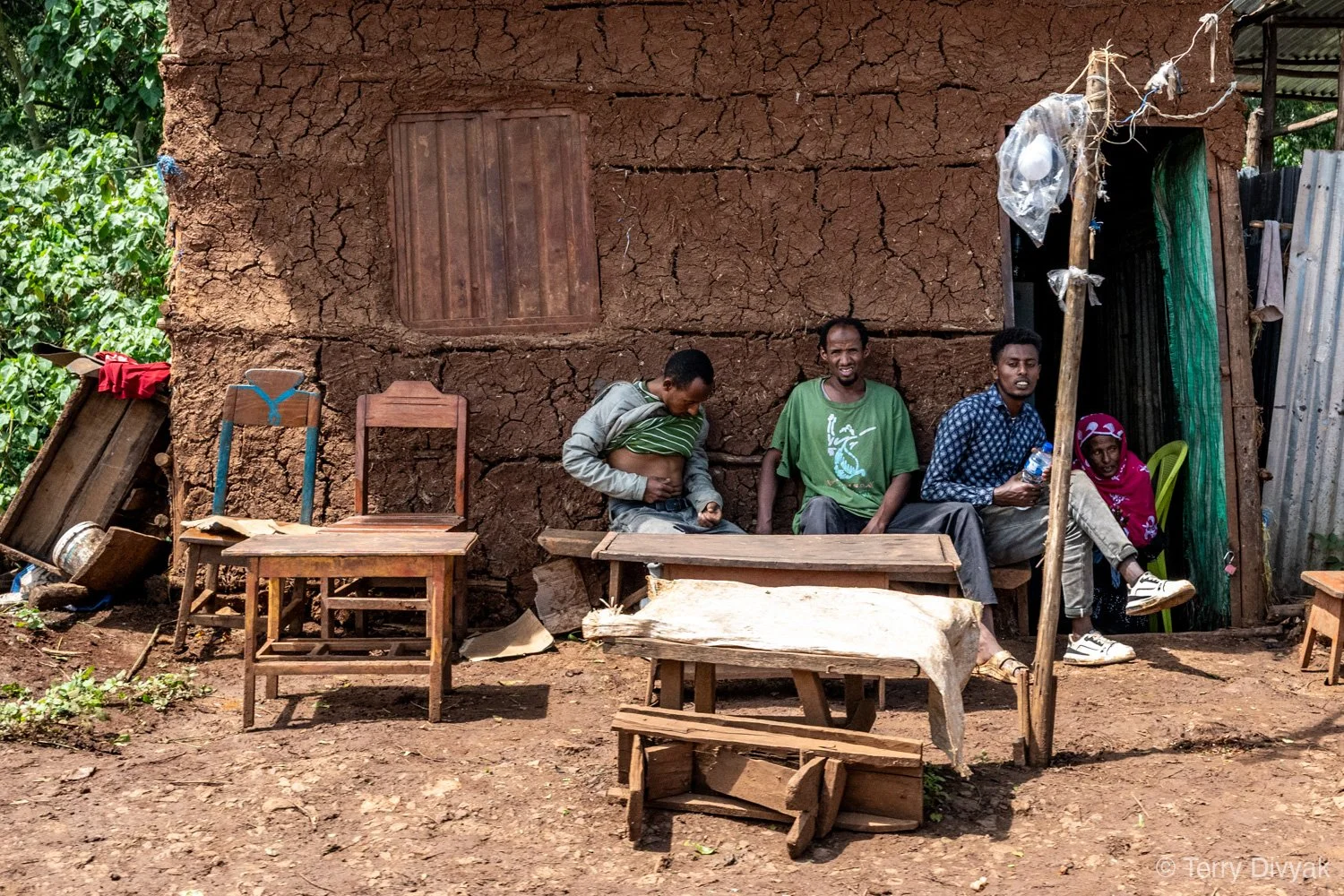
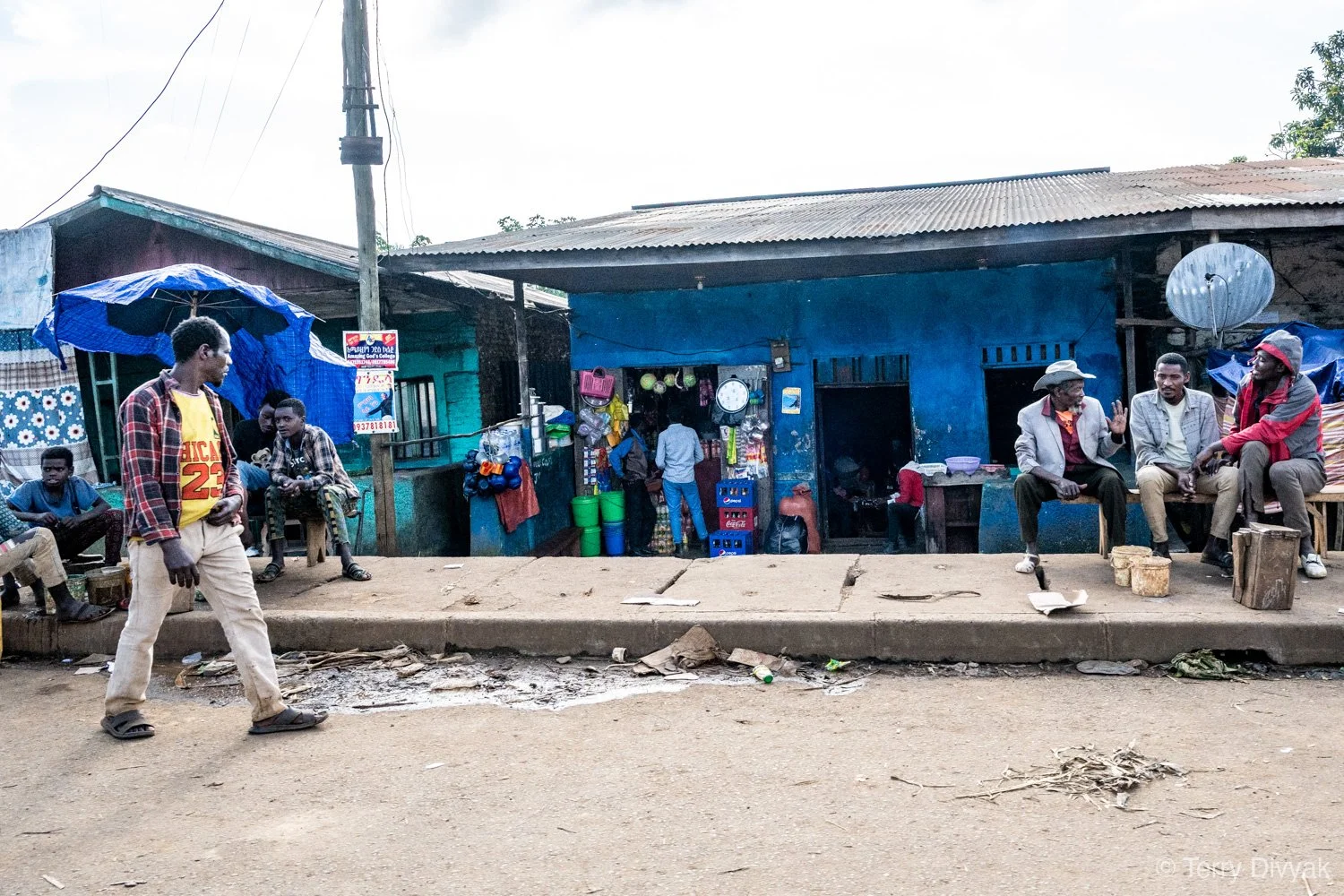
A common street scene in Ethiopia
The drive started around 11 a.m. as we hit the road toward Mizan. When Linda and I are leading safaris in Tanzania, we love the stretch between Arusha and Tarangire National Park, there’s so much to see as we pass through different landscapes, and we always encourage our guests to photograph the drive. So we were super excited to watch this part of Ethiopia unfold before us, and we made sure we were shooting at a higher shutter speed to freeze the action.
It wasn’t until the winter of 2025 that I really sat down and went through the images again. Sometimes after you travel, you need to put the camera down, close the laptop, and step away for a while so you can come back to the photos and appreciate them even more.
What pulled me back to these images was actually Linda’s work. One day while she was at work, I started scrolling through her photos. She’s a fantastic photographer, but she doesn’t always give herself enough credit. I wanted to give her a bit of a confidence boost, so I dove into her images from the drive and began editing them, studying each frame and looking for those that held a story. Often, a simple crop or a slight straightening can make a huge difference. When I surprised her with the edited images, she was genuinely thrilled. I could see her confidence grow as she started to “see” her photographs in a new light.
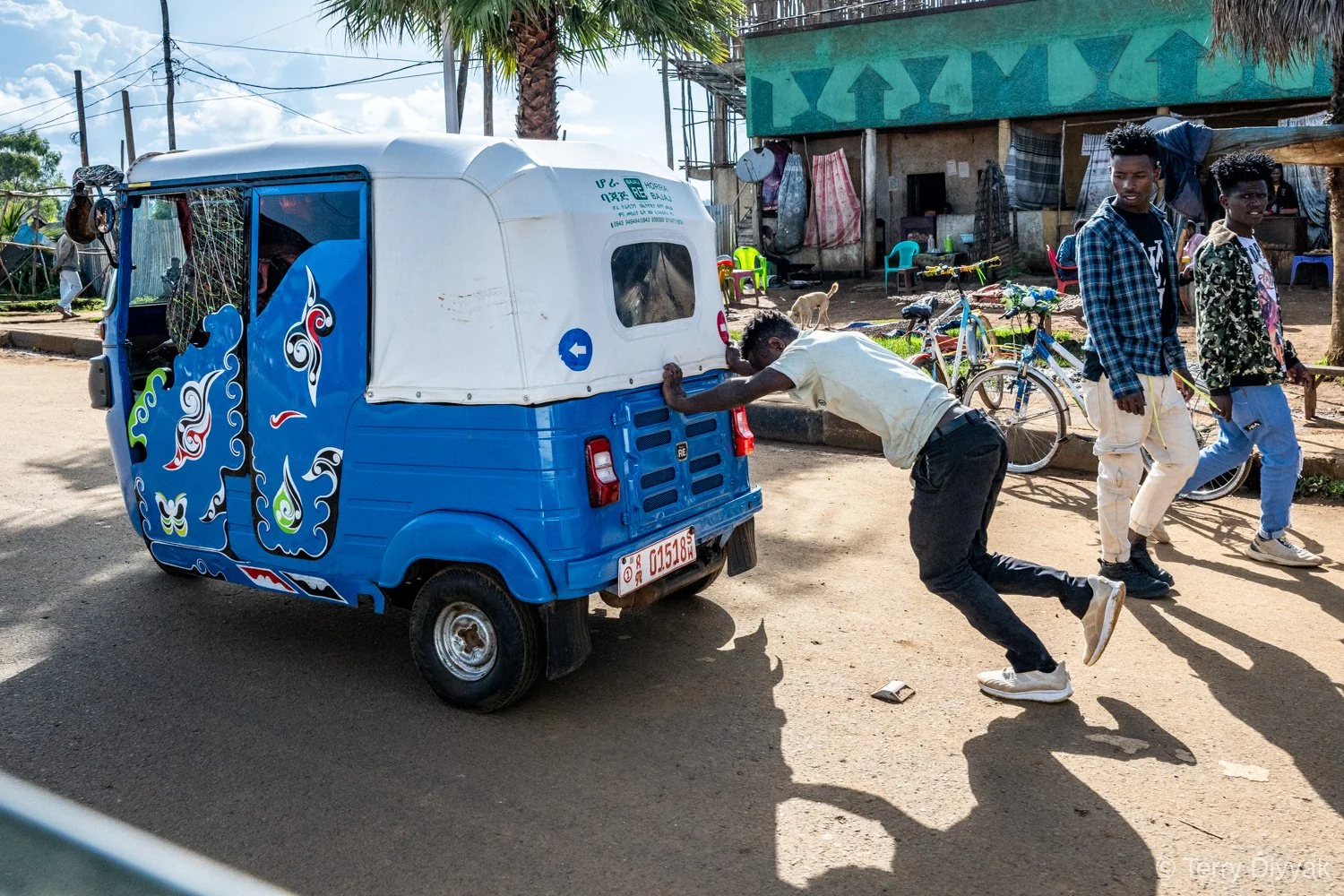
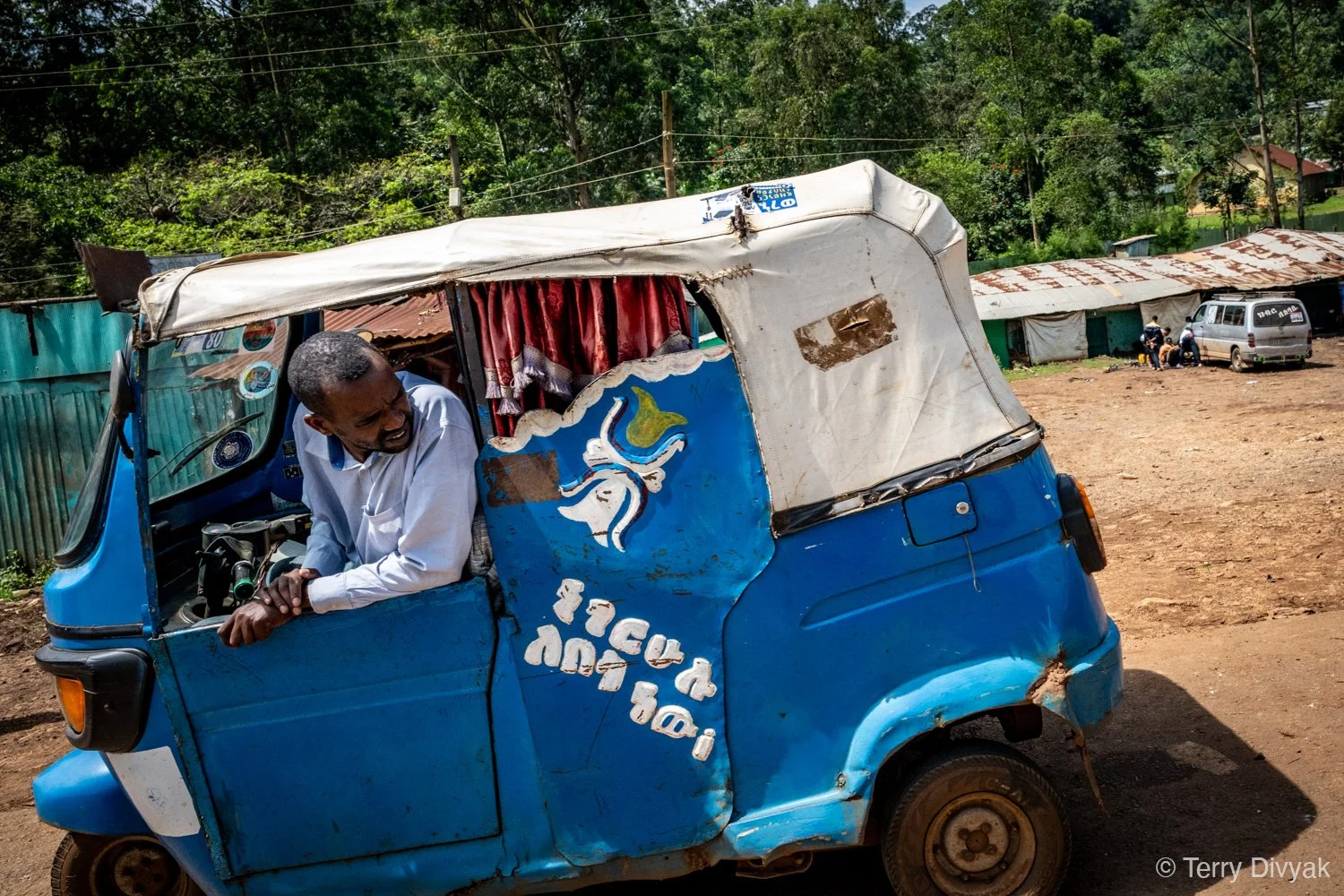
Pushing a Bijaj uphill
I thought, “Hey I need to revisit mine as well”. I had gone through and edited the obvious ones, but I dove a bit deeper into the story telling side of the images and what a thrill it was to revisit these. I brought them into Adobe Bridge and looked at each one, marking them with a 1 star for further review and once I had gone through close to a thousand, I had culled it down to a little over 100 and then started working with them.
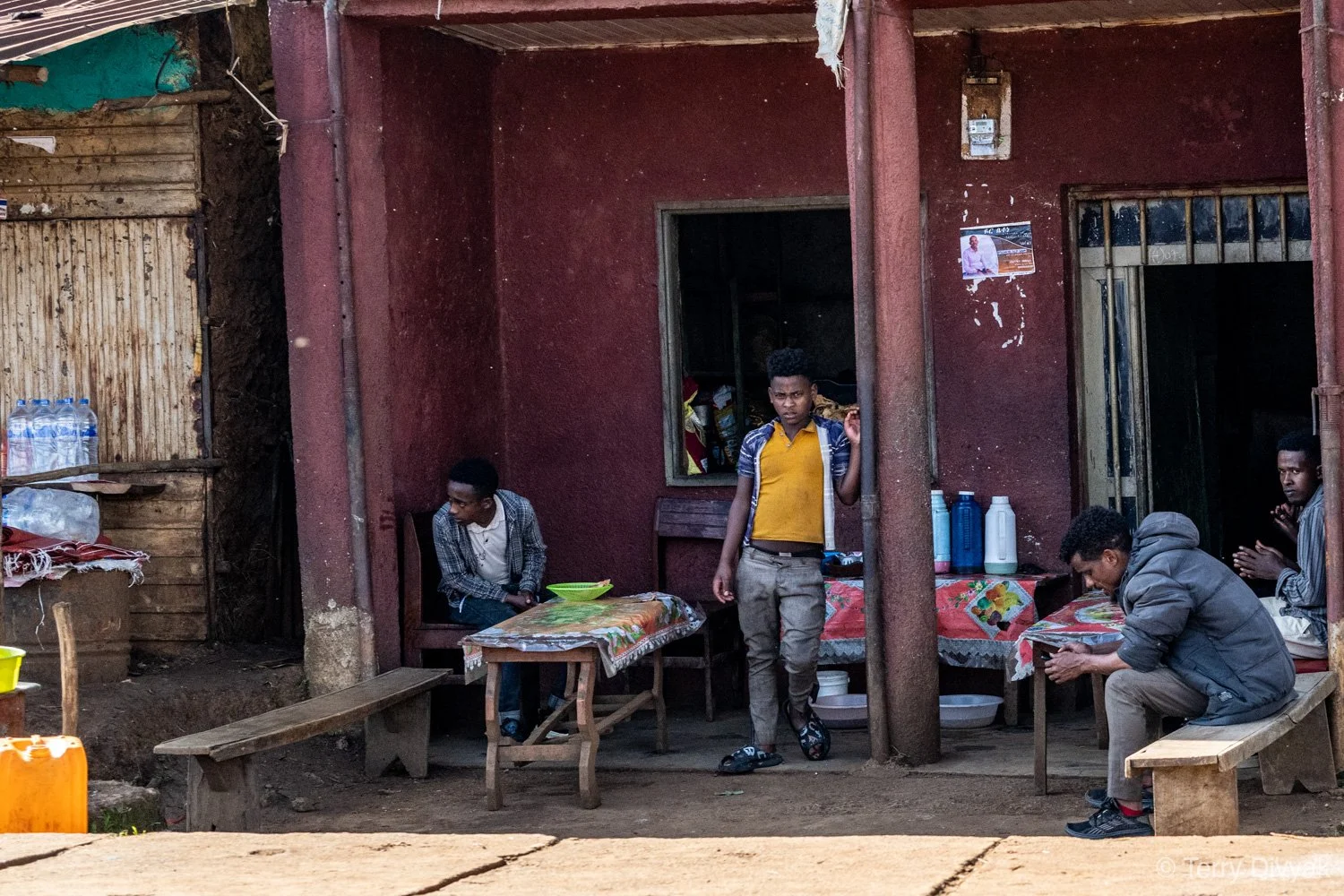
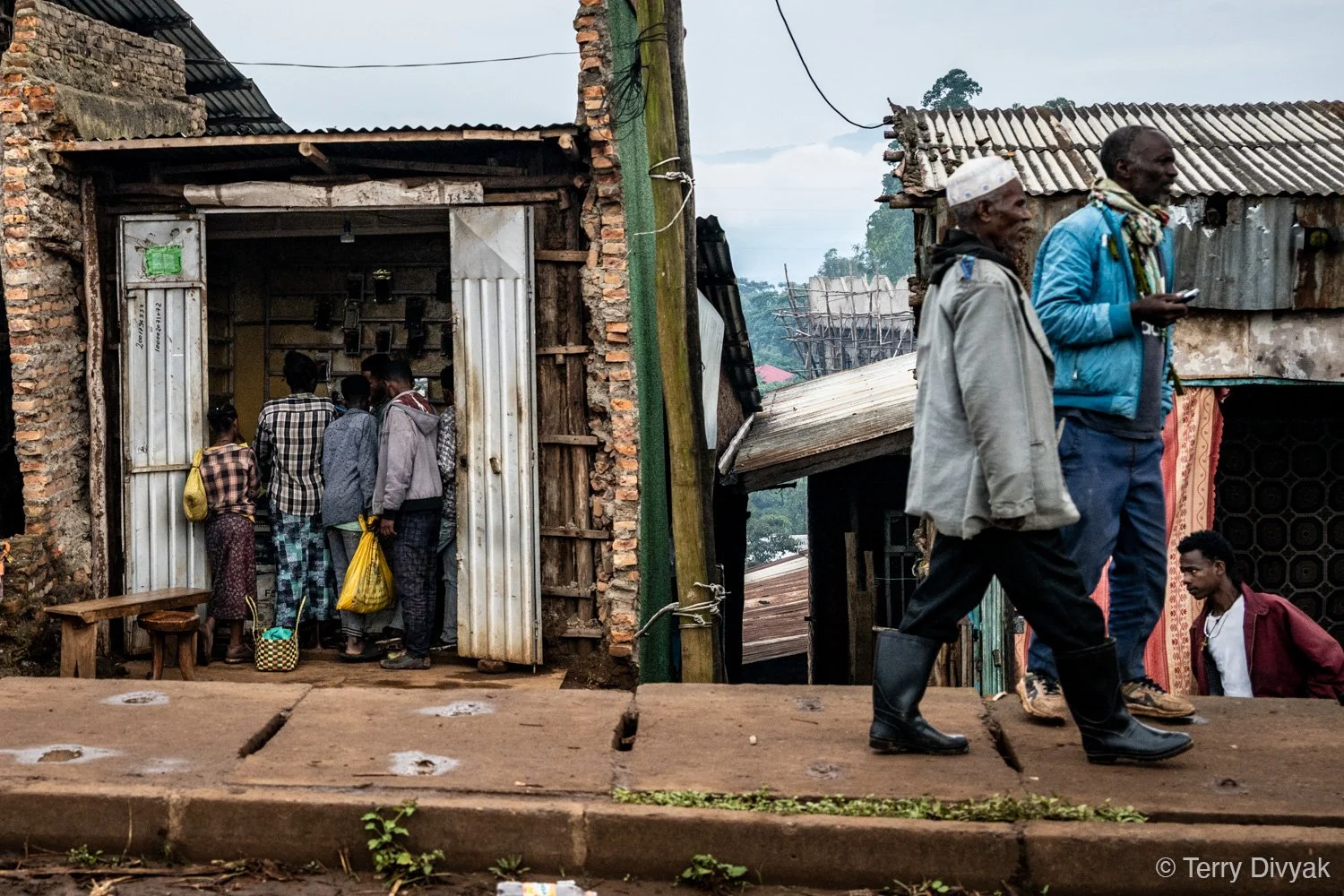
A typical local shop
One thing I noticed while we were driving was how aware everyone seemed to be of the camera. Many people waved, smiled, or looked at us with a bit of suspicion, but of course, we just kept going. That changed when we stopped for lunch, I think on our second day of driving.
A man in mirrored sunglasses approached us, with a demeanor that felt like it was inspired by Idi Amin or maybe just too many American movies. He didn’t like that we were filming and talking about our trip and became quite threatening, accusing us of all kinds of things we clearly weren’t doing. He told us to get out of town.
Our guide, Ermi, handled it incredibly well. My instinct was to tell him to “eff off,” but I knew better, especially in a foreign country where you don’t know who’s connected to the local authorities.
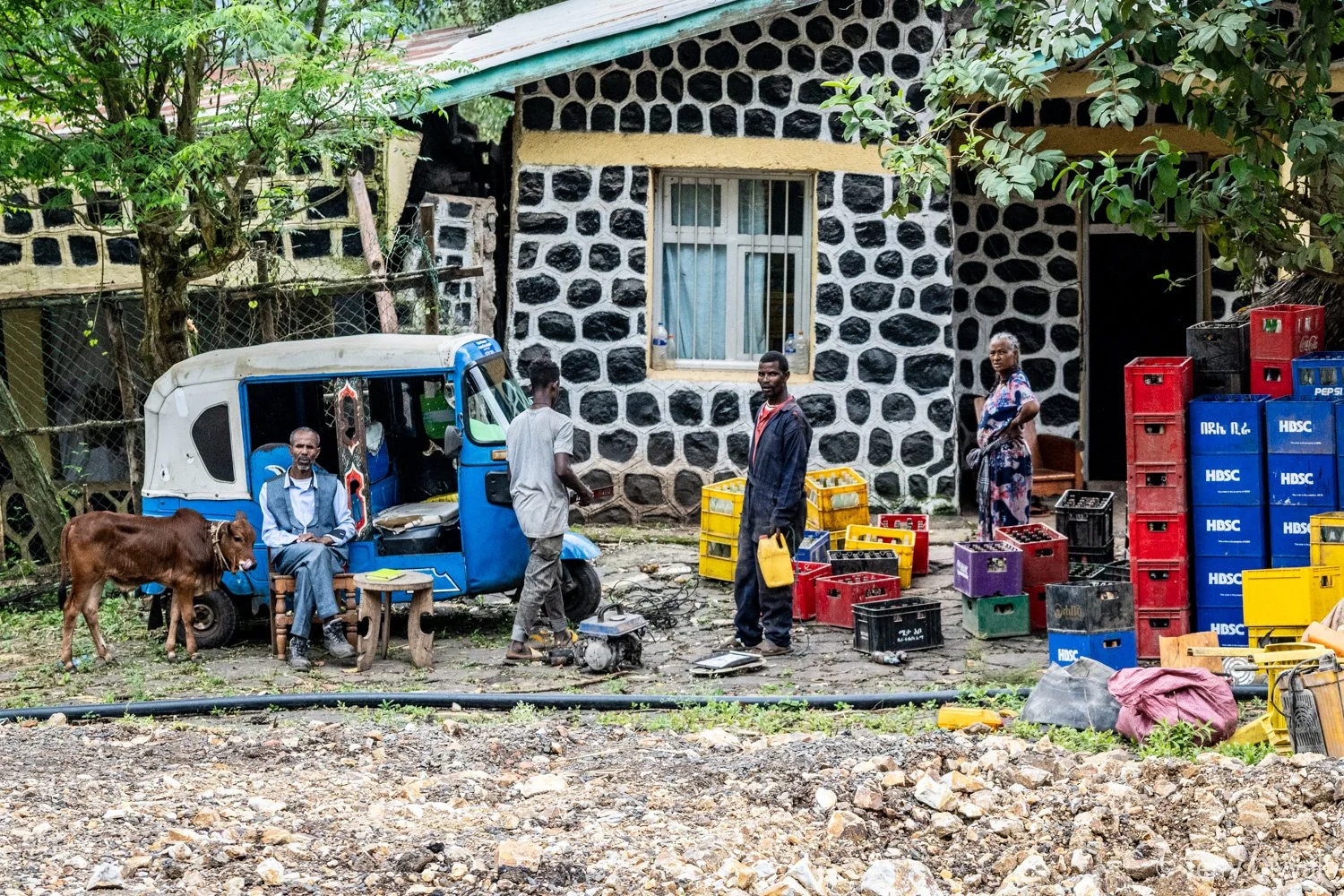
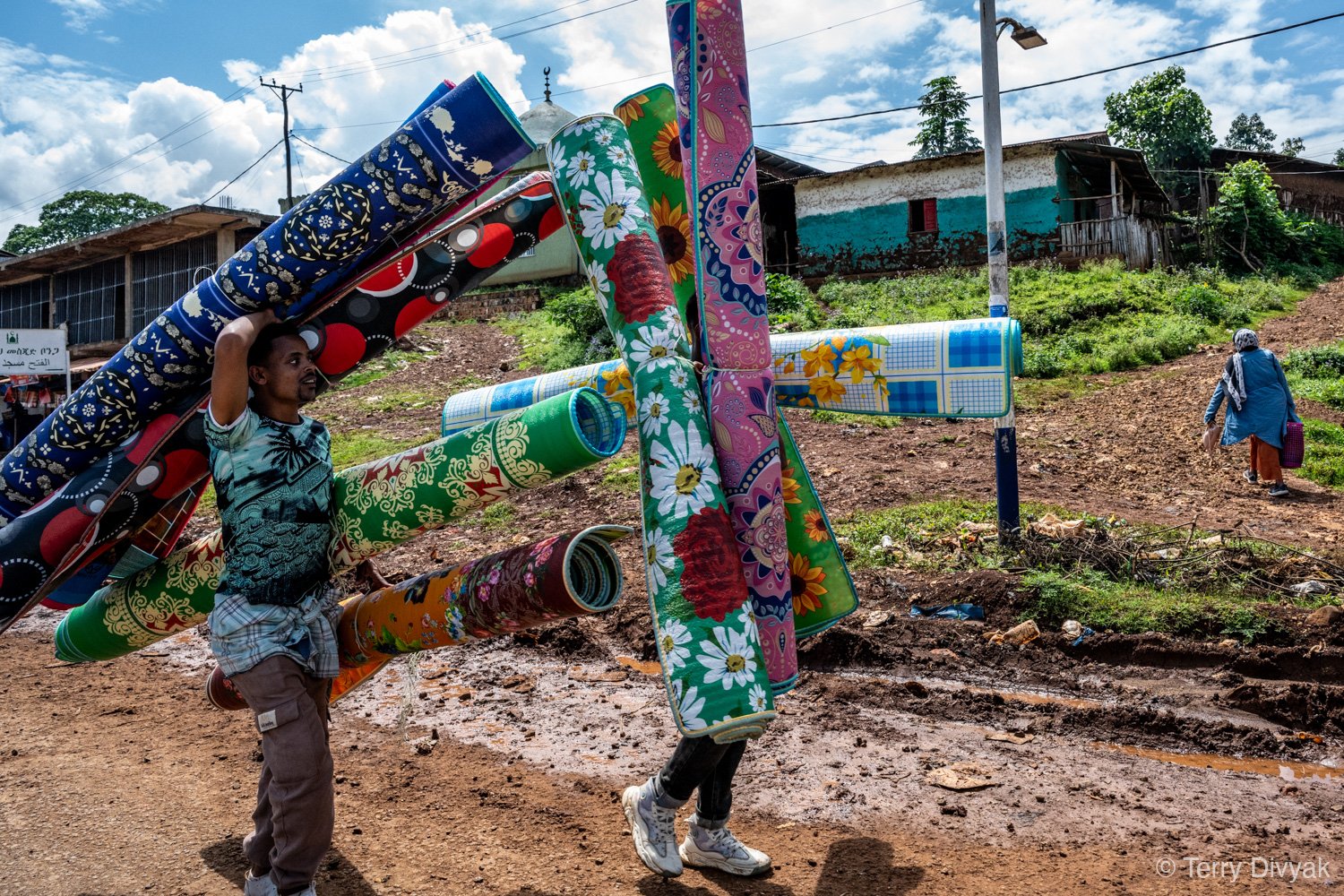
Trying to pop colors and textures
You’ll probably notice these edits are a bit more contrasty. In Adobe Camera Raw (yes, I always shoot in RAW), I boosted the contrast to +7, pulled the highlights down to –72, increased clarity to +44, and used Dehaze at +12. From there, I fine-tuned each image to my liking, then saved that initial setup as a preset so I could apply it across the whole series for a consistent look.
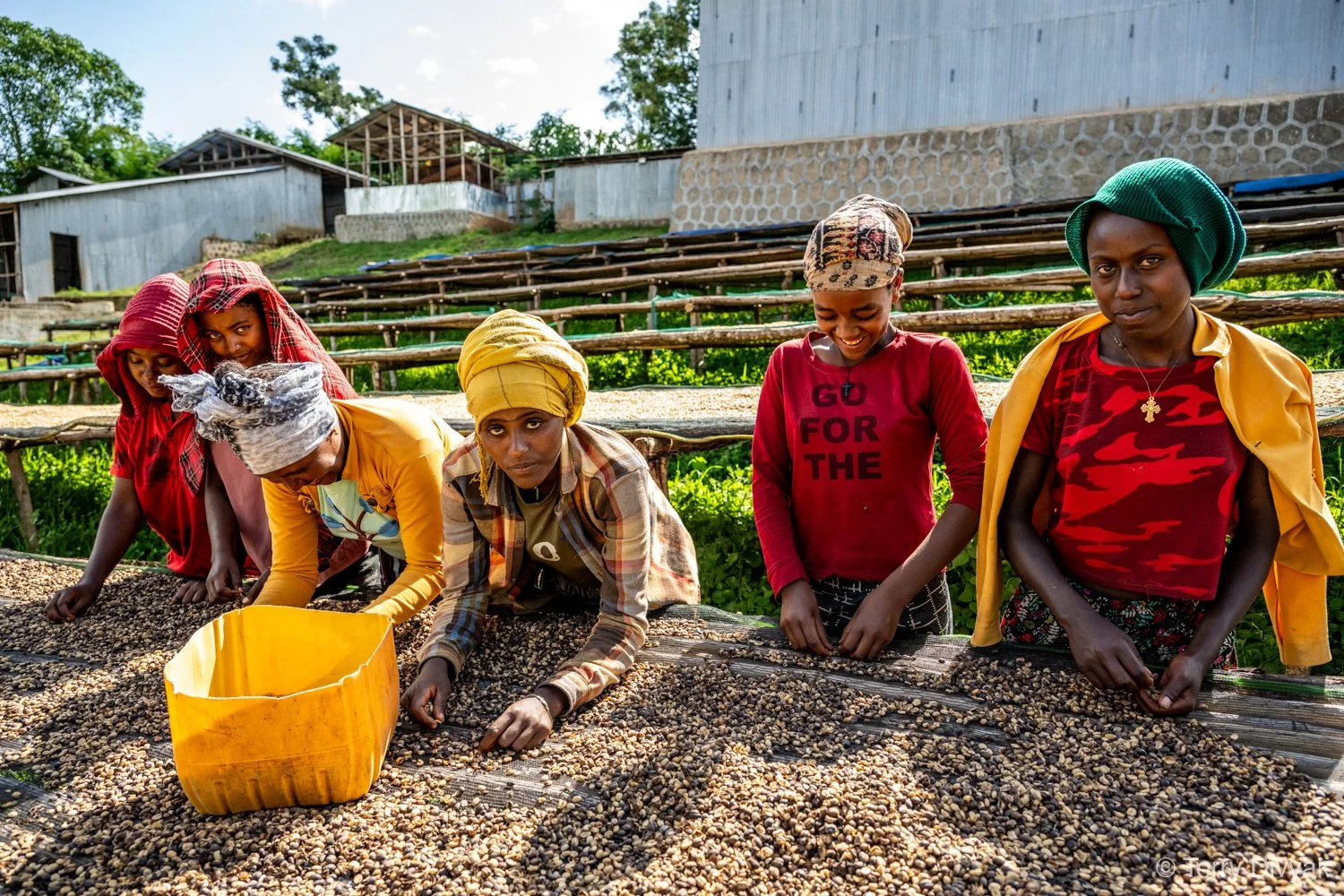
Sorting coffee at a drying facility in Ethiopia
Whenever I travel, I’m not afraid to ask the guides to stop if I see something interesting. Ethiopia, as you may know, is famous for its coffee. Many people consider it the birthplace of Arabica, and you feel that history everywhere, from small roadside stands to tiny cafés where beans are roasted over open coals and ground fresh for each cup. Driving through the countryside, we passed hillsides dotted with coffee plantations; at one point, it felt like we drove for hours seeing nothing but coffee. It’s not just an export here; coffee is a daily ritual, a point of pride, and a vital cash crop.
As we were driving, I saw coffee laid out to dry and workers sorting through it, so I asked Ermi if we could stop and take a look. Even though our visit was brief, I was able to capture the photo above of the six women sorting coffee. At first, they were a bit suspicious of us, but they warmed up pretty quickly.. You’ll find a bit of video footage in the Omo Valley video I put together.
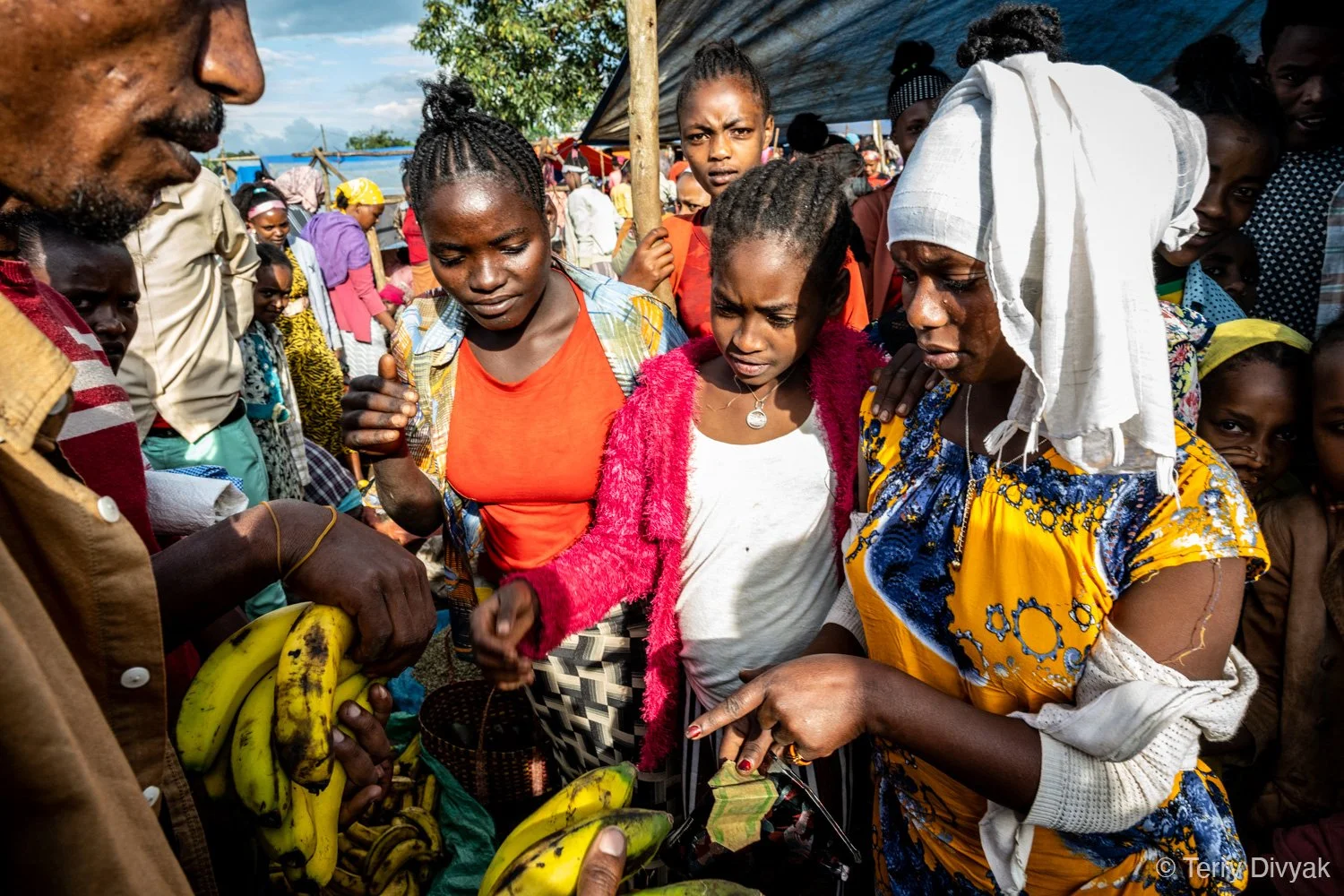
Ermi buying bananas
Our next stop was a local market. Linda and I love going to markets when traveling and this one was great for interacting with the locals. Ermi, purchased some bananas and if you look at the photos of the bananas, people in America would not want them because they are not perfect. But they taste way better than any you’ll find in the states. In fact, here’s a quick look at the process of bring bananas to the states, compliments of ChatGPT:
“For the American market, most bananas are grown on large plantations in Latin America, harvested while they’re still green, and taken to packing stations where they’re washed, treated to prevent rot, and sorted to meet strict cosmetic standards, anything too small, spotty, or misshapen is usually rejected. The selected bananas are boxed and shipped in refrigerated containers to the U.S., where they stay cool and green until they reach special ripening rooms. There, they’re exposed to ethylene gas so they ripen on schedule to whatever shade of yellow supermarkets want. Only then are they sent to grocery stores, where they appear “perfect” and uniform, but often at the cost of the deeper flavor you find in fruit that’s grown and eaten closer to home.”
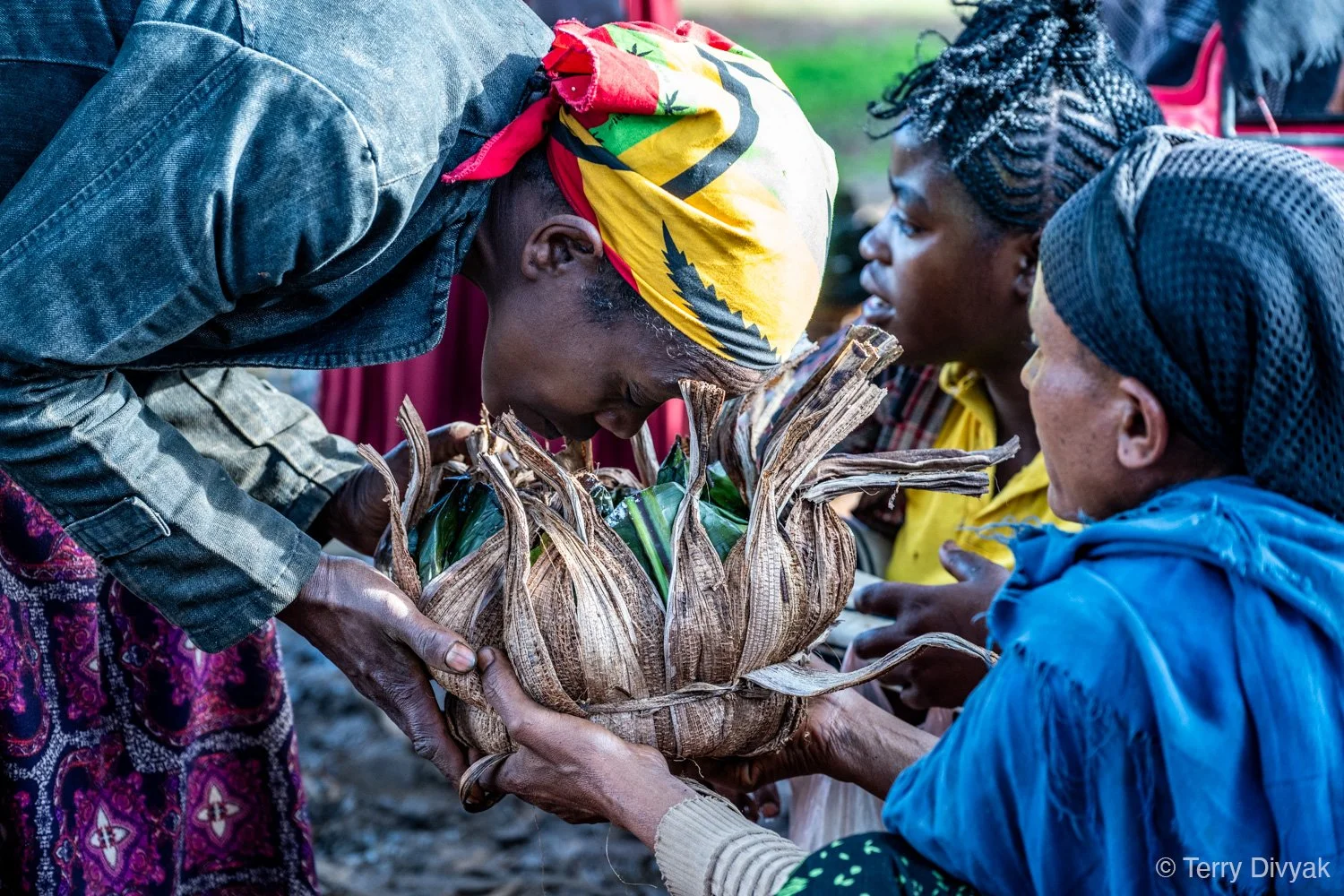
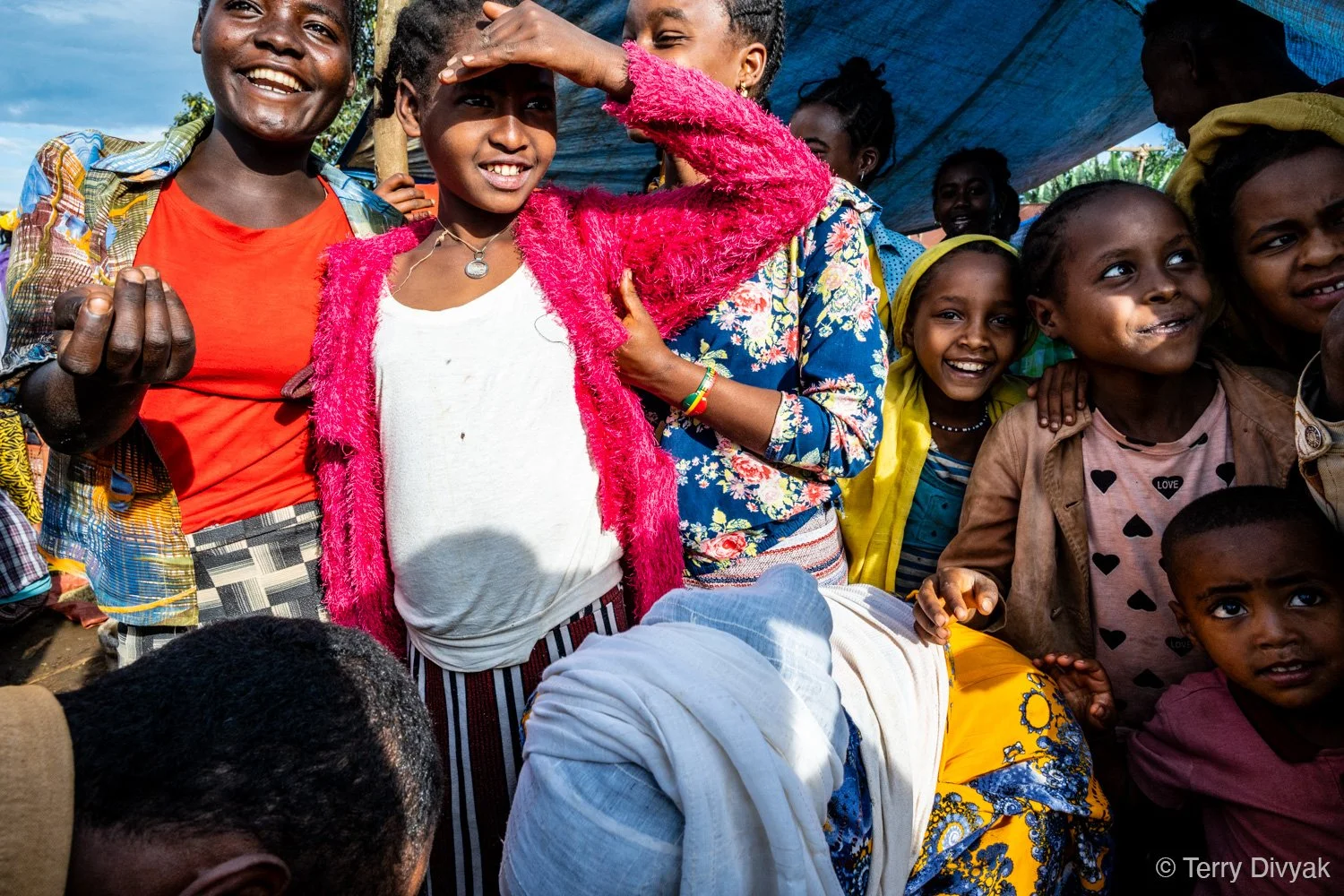
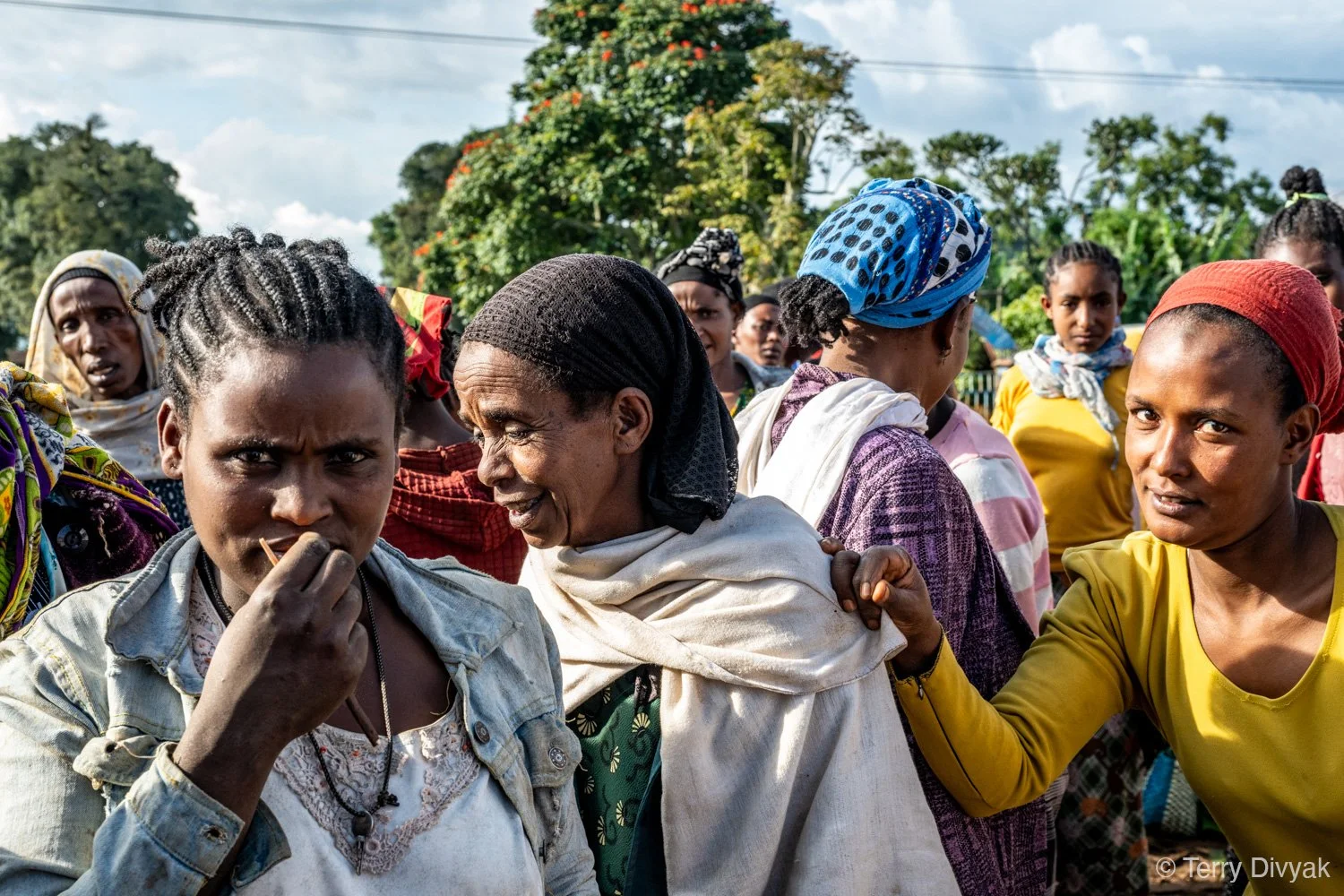
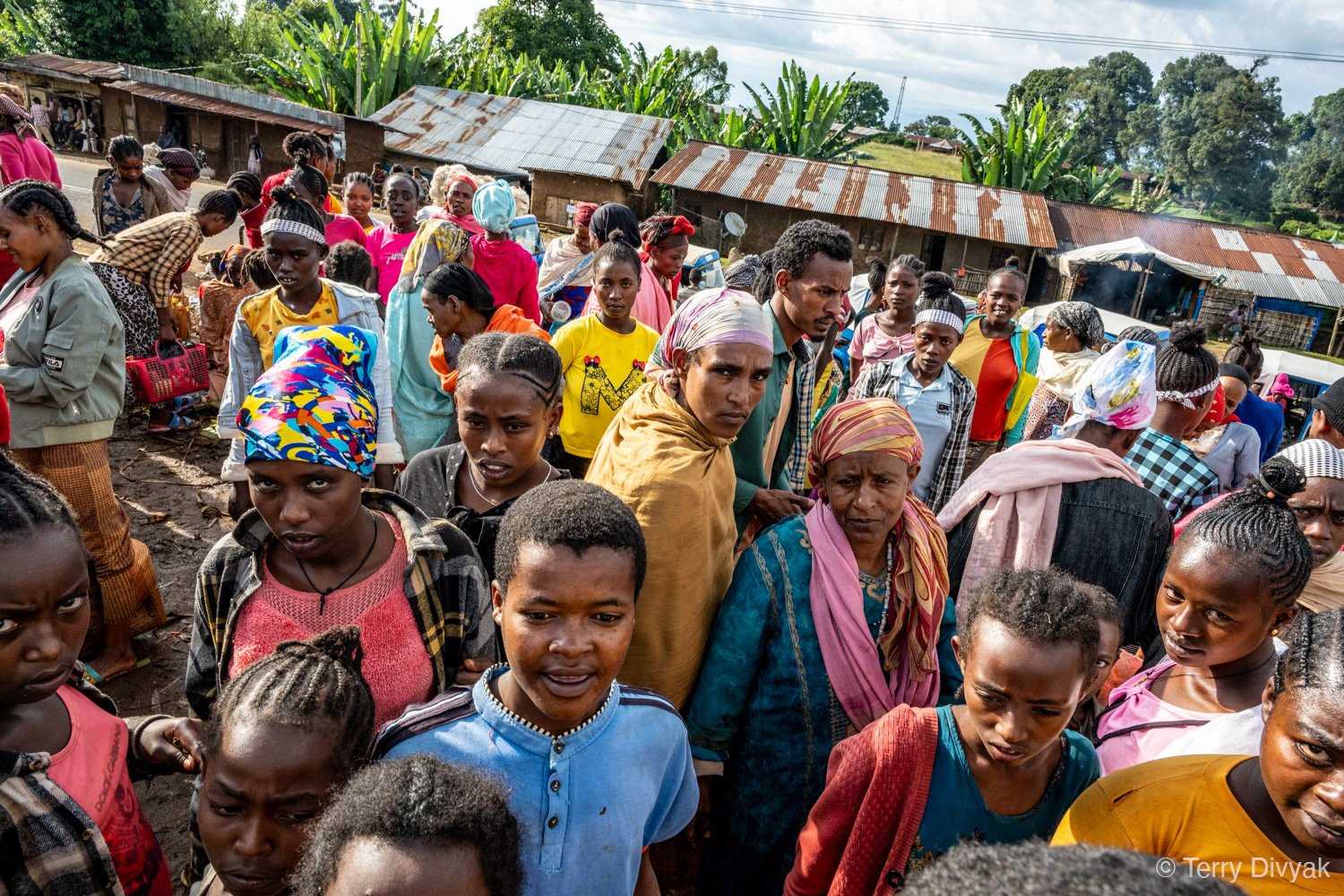
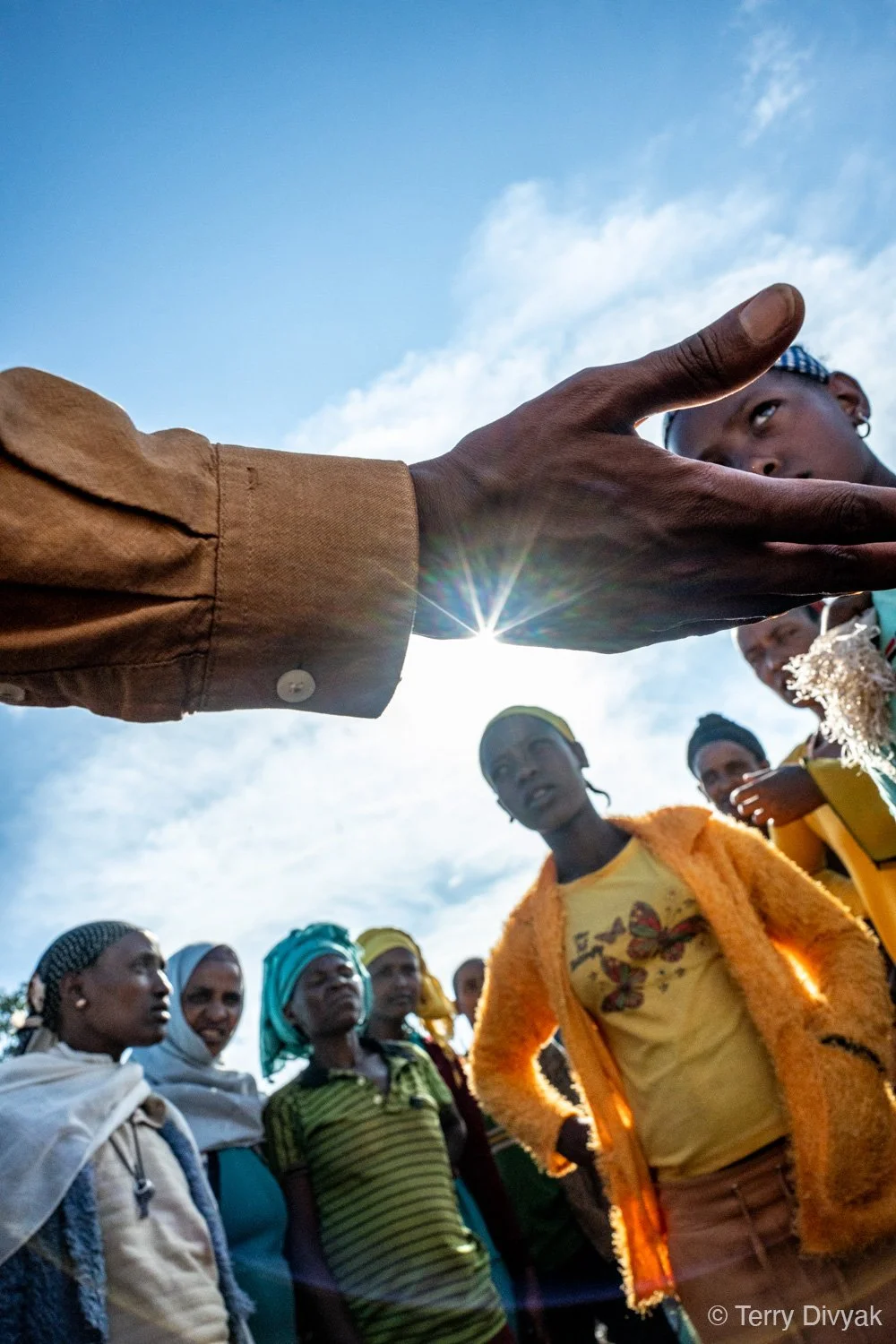
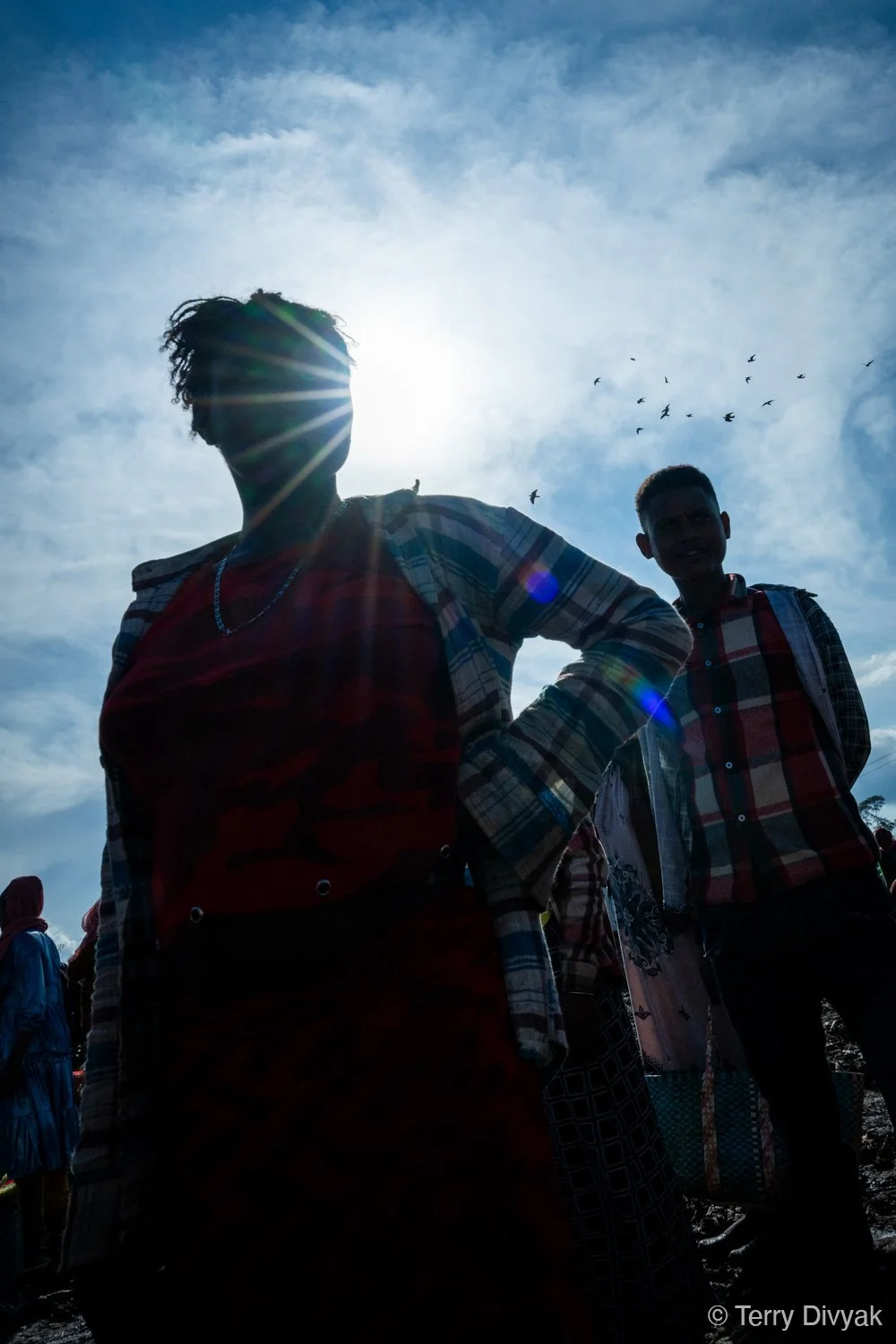
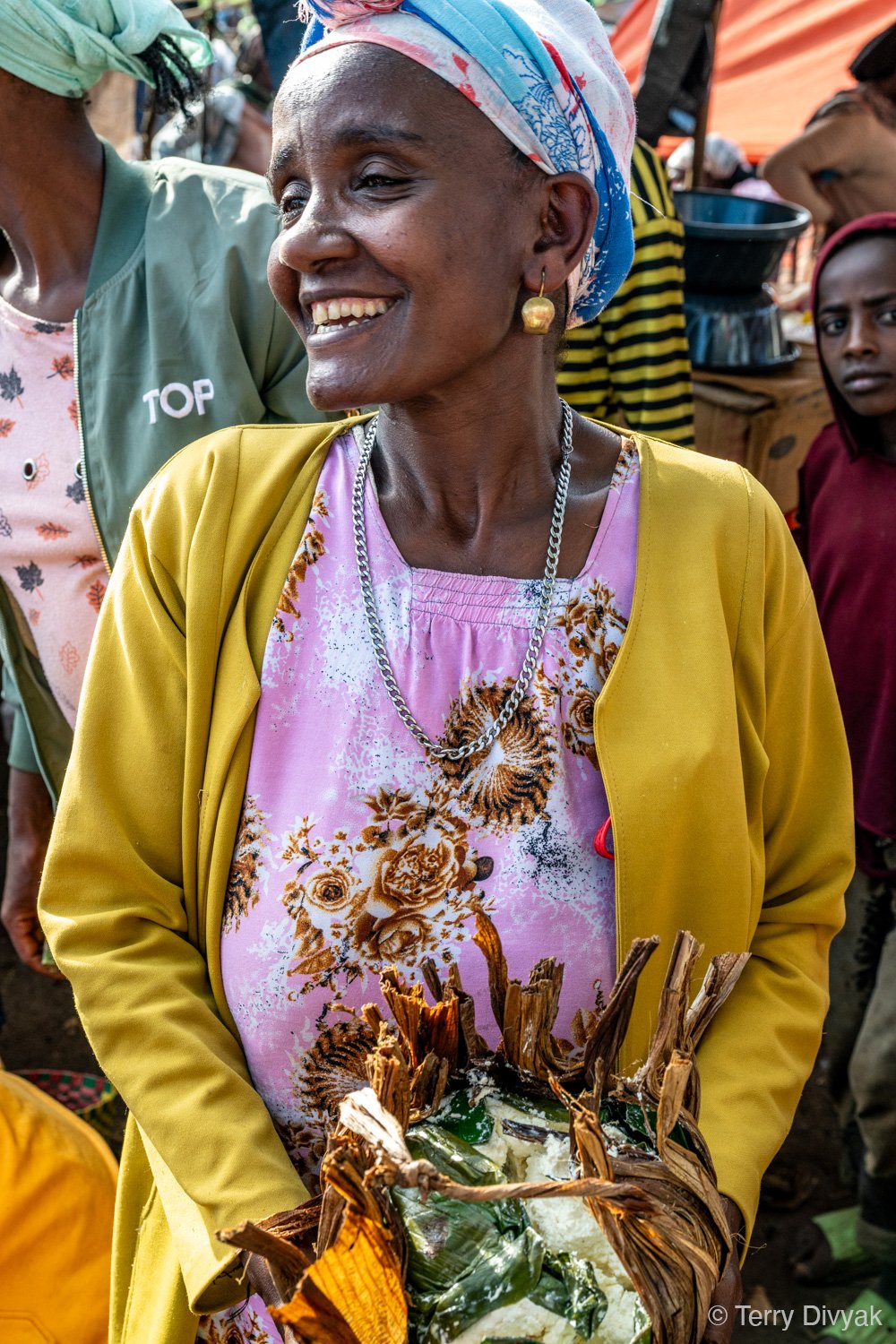
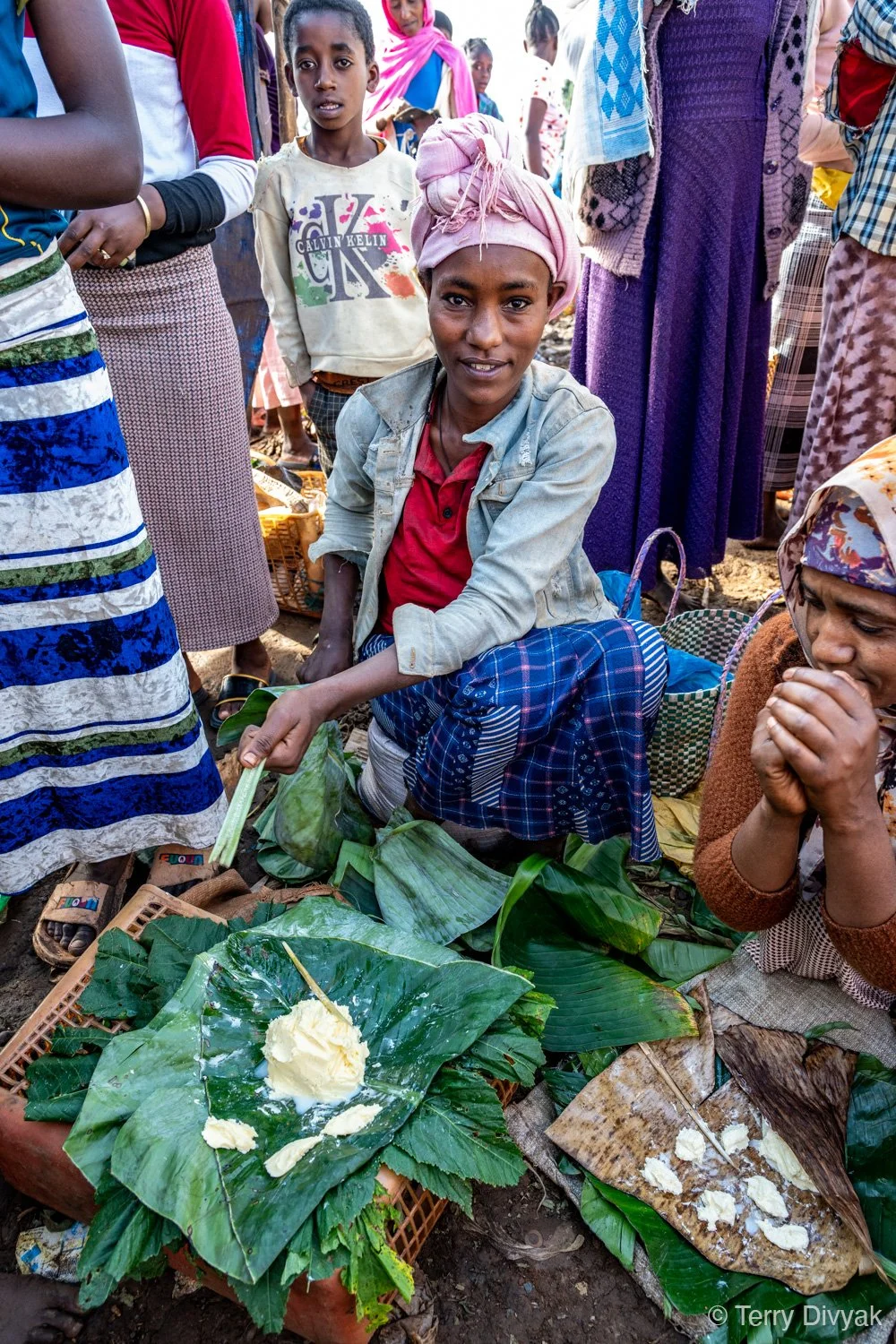
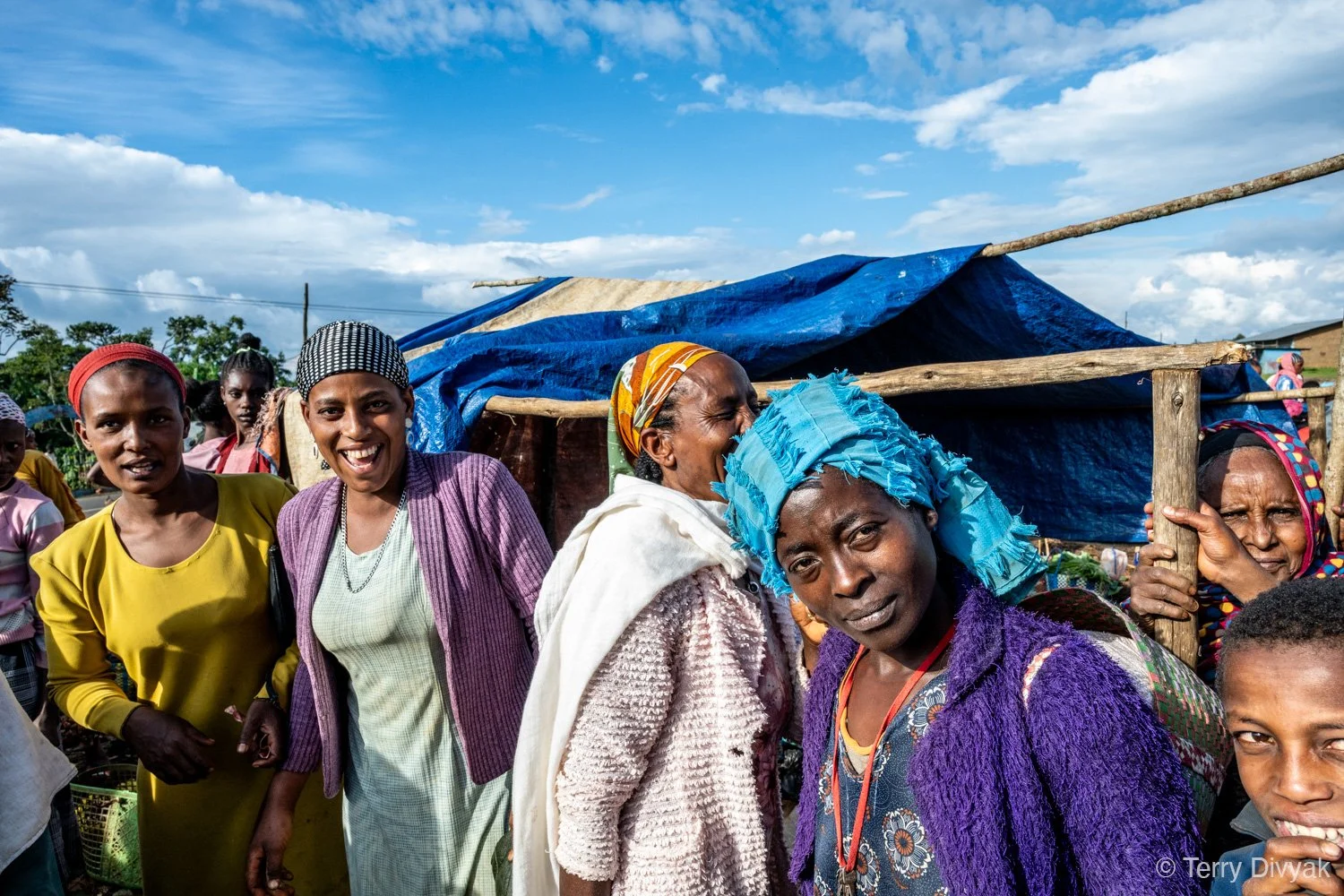
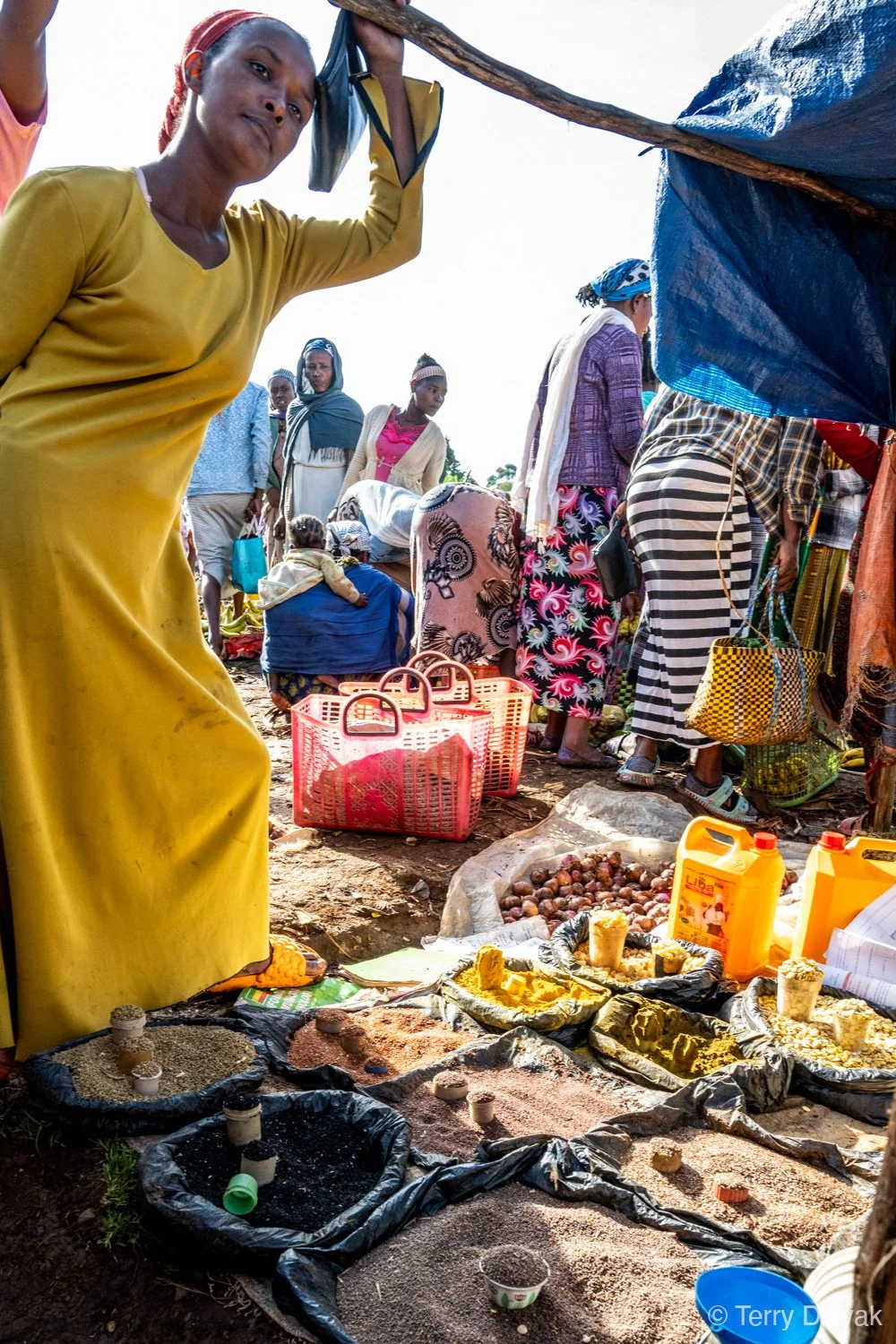
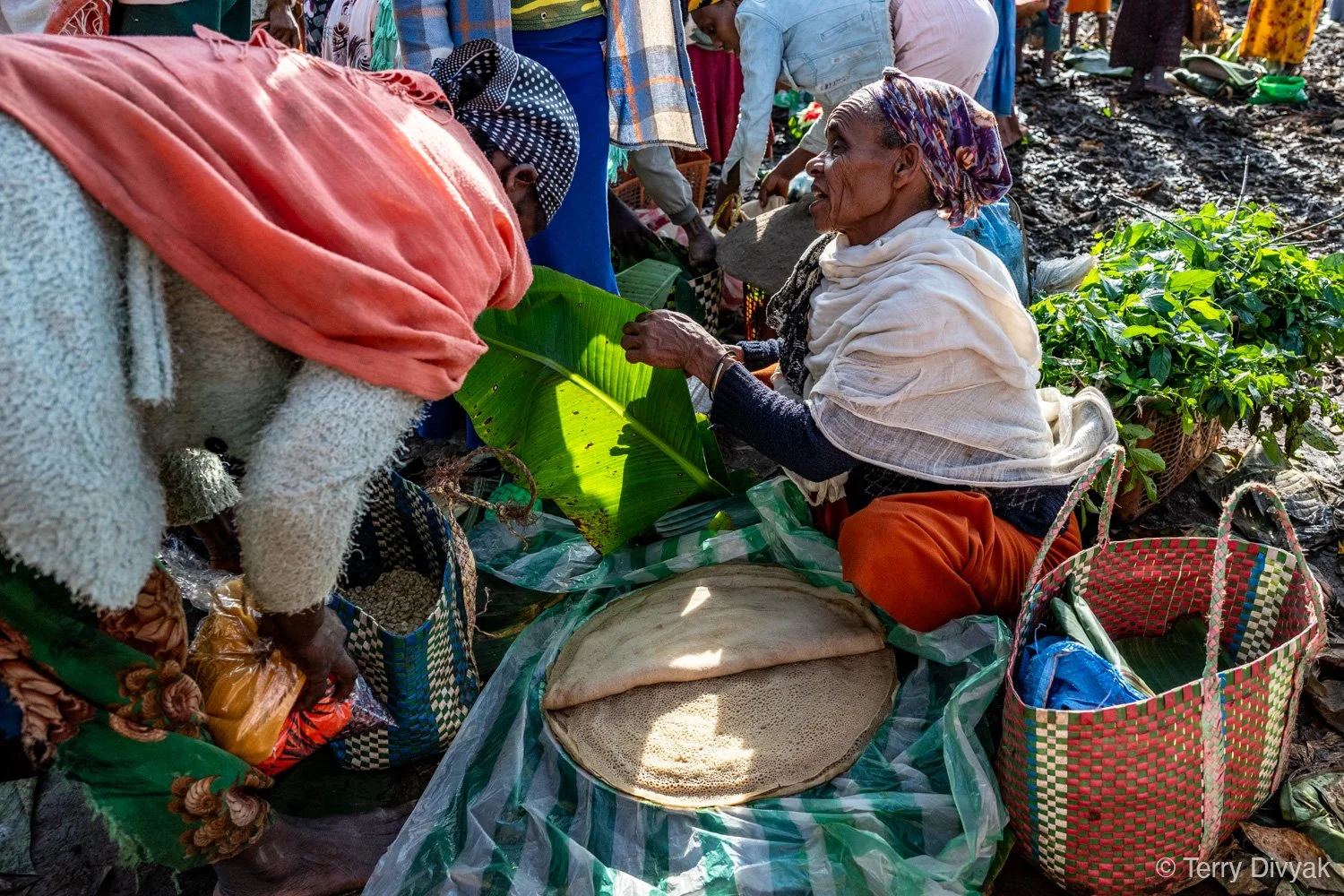
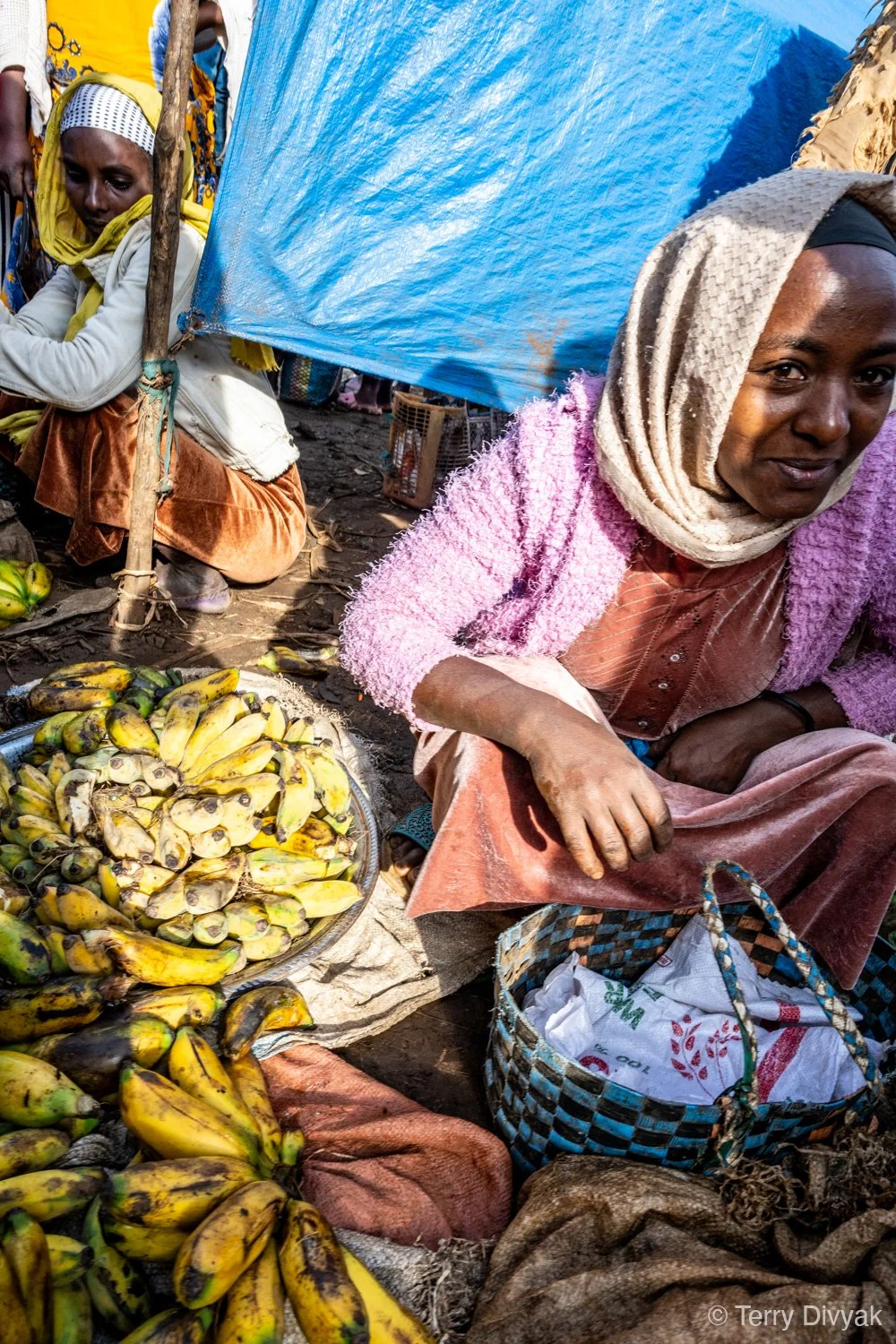
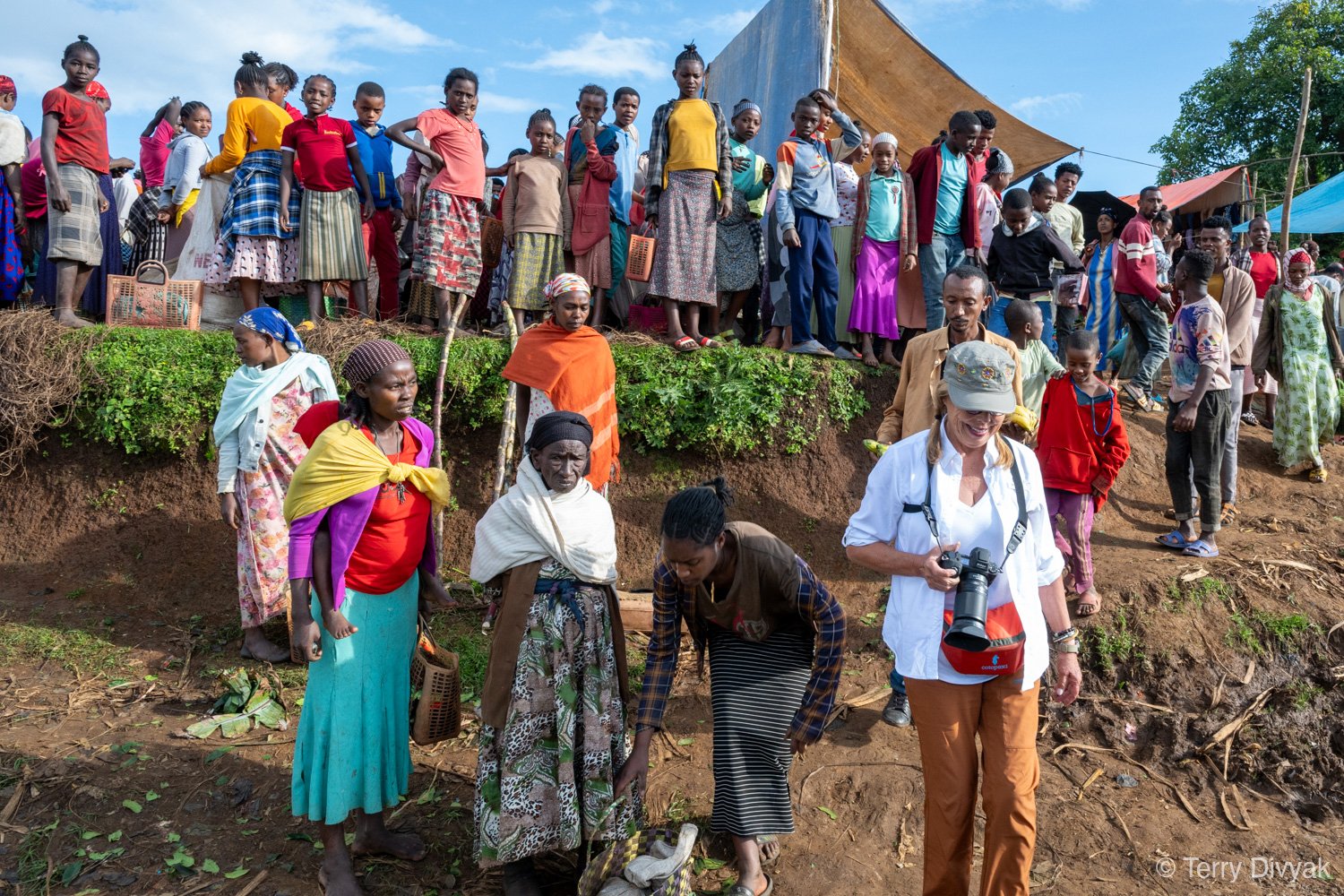
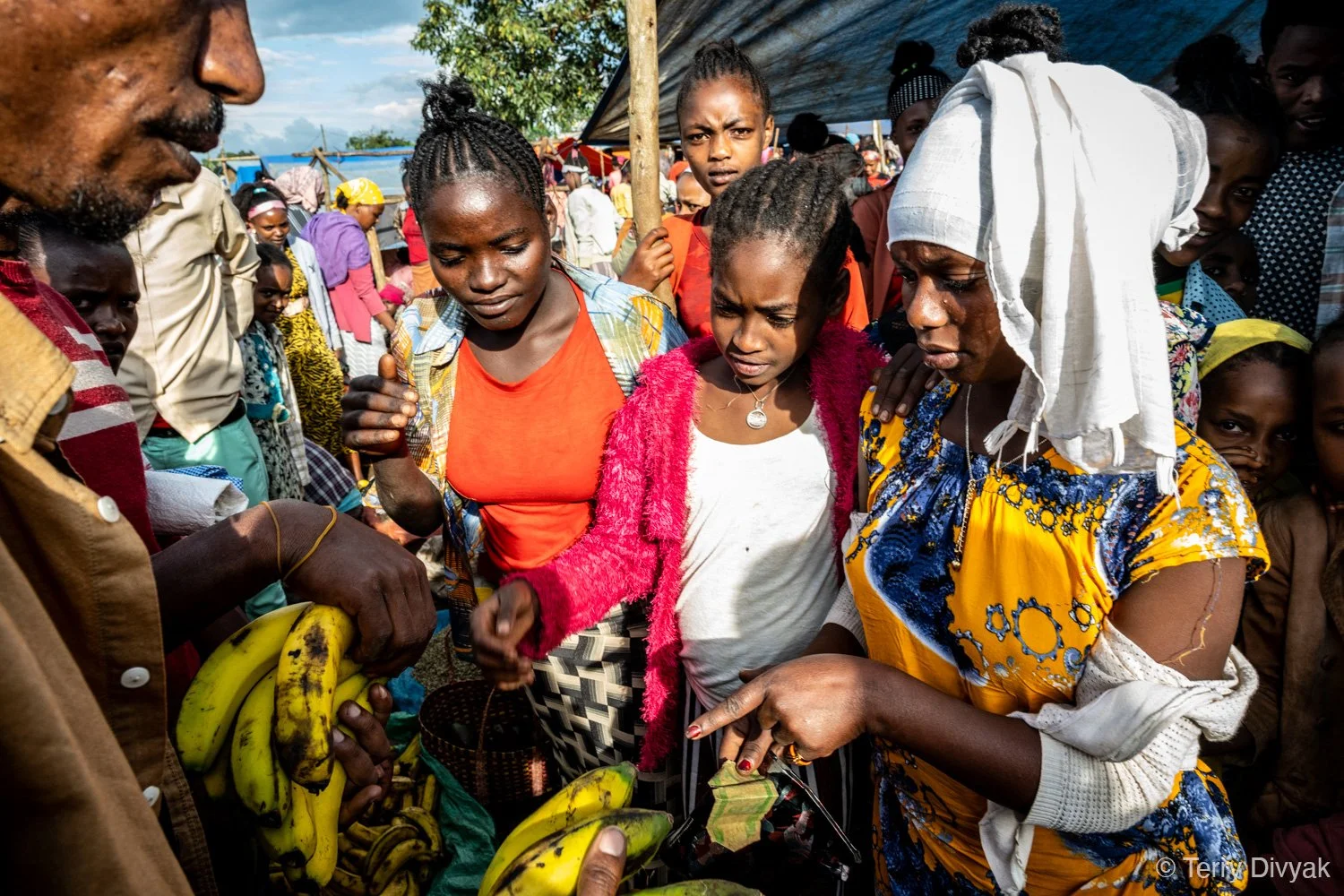
I hope you enjoy these images below; they were really fun to edit and revisit with fresh eyes. I’m considering putting together a video showing how I select my images, what I look for in cropping and storytelling, and some of the thought process I use when presenting my travel photos. I also still need to share, here on the blog, the images from the various tribes we visited and the deeper reasons behind our journey to the Omo Valley.
In the meantime, I’m grateful you’ve taken the time to come along on this part of the adventure with us.


Faces of Faith in Lalibela, Ethiopia
Lalibela is unlike anywhere I’ve ever been a place where faith, history, and daily life are carved into stone. Over the course of three unforgettable days, we explored the ancient rock-hewn churches, captured portraits of quiet devotion, and witnessed the Feast of Saint Aregawi, a powerful nighttime ceremony filled with centuries-old chants and rituals.
Lalibela is unlike any place I have been in the world, a sacred place of devotion and faith that has stood the test of time for over 800 years. The rock-hewn churches of Lalibela were built in the late 12th to early 13th century, during the reign of King Lalibela, who ruled Ethiopia during that time.
According to tradition, King Lalibela commissioned the churches as a symbolic "New Jerusalem" after Muslim conquests made pilgrimage to the Holy Land difficult for Ethiopian Christians. There are 11 monolithic churches, carved directly from solid volcanic rock, and they are still active places of worship today.
Though our visit lasted only three short days, we were able to gain a great understanding of the culture with the help of a local resident, tour guide, and Lalibela Deacon we met named Desta, also known as 'Happy.'" Happy let us know that there was a special event taking place in the first evening we would be there and he said that we could be front and center to the event, the Feast of Saint Aregawi. This important Orthodox Tewahedo Christian holy day honors Abune Aregawi, one of the nine founding saints of the Ethiopian Church, and is marked by a national pilgrimage.
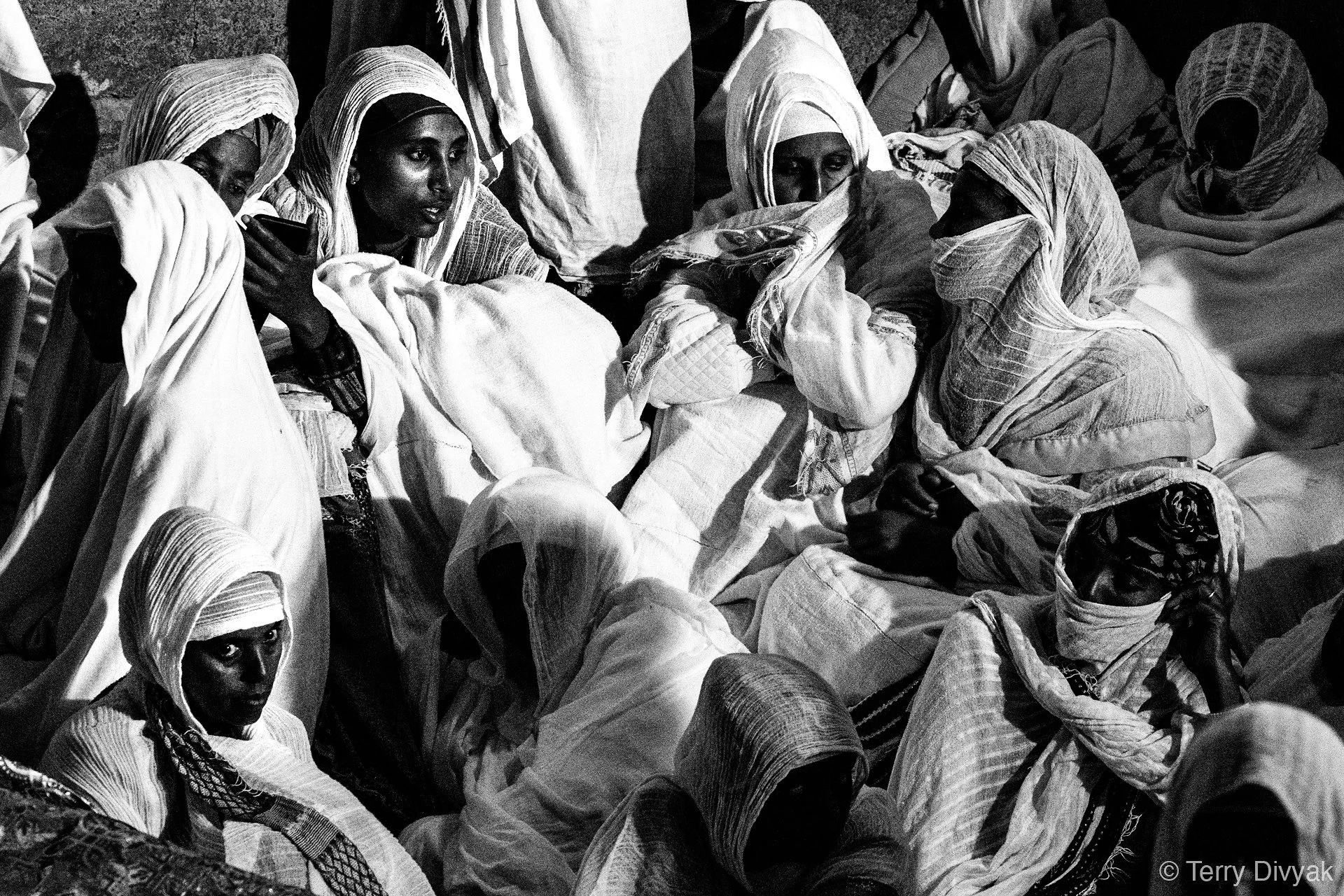
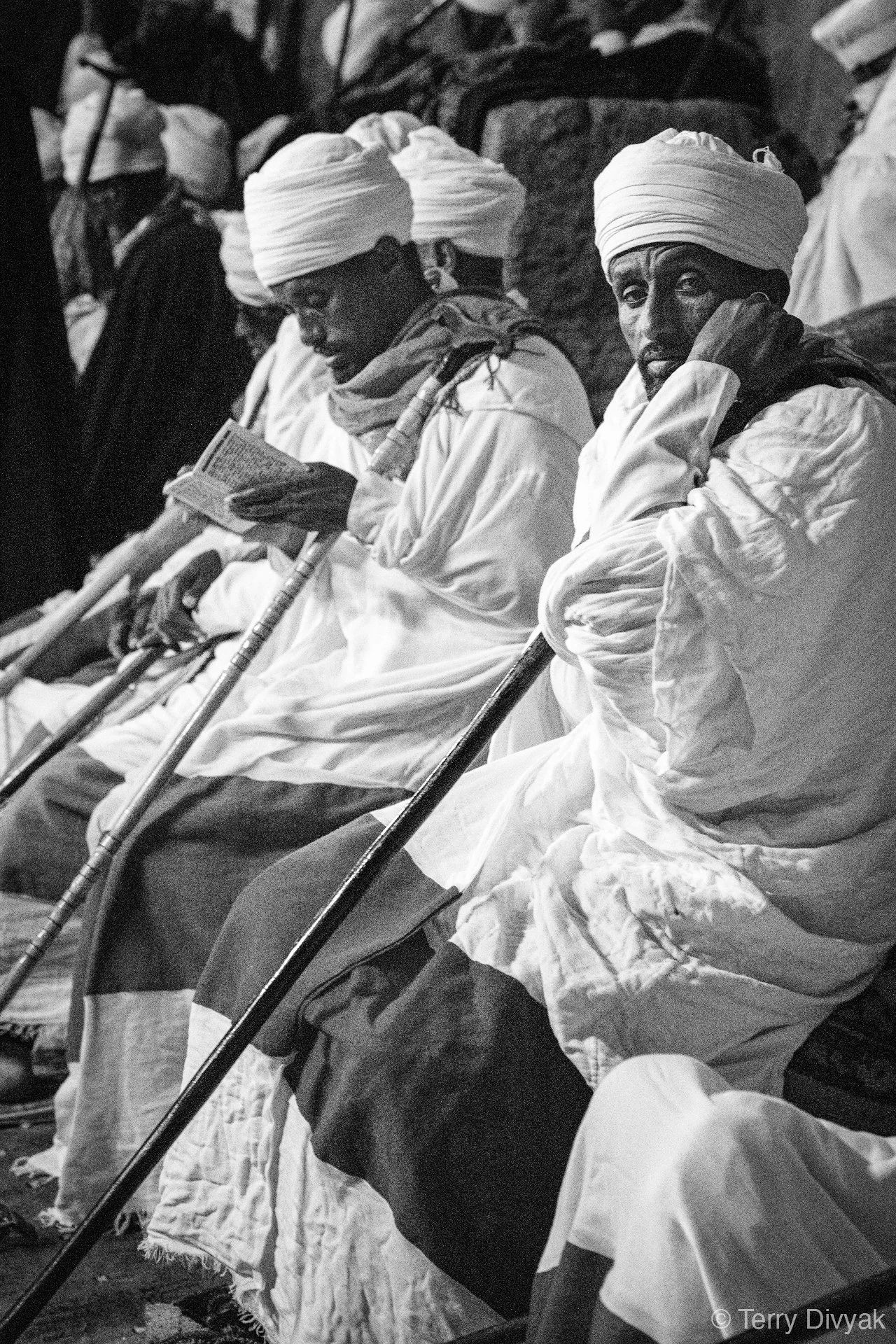
I felt that black and white images better captured the timeless, ancient atmosphere of this unforgettable visit. These are just a few of the many photo opportunities I encountered while there.

Two men having a quiet conversation in a church in Lalibela, Ethiopia.
We spent most of the day going through the rock hewn hand carved churches and around every corner there was an opportunity to photograph a place and people were time just seemed to stand still. Men sat in quiet conversation or read from scriptures, sometimes centuries old, bound in worn leather covers. Though the image below shows what appears to be a newer book, the door next to him is probably 800 years old and the old chain slowly carved out grooves as it swung back and forth through the centuries.

Elder reading scriptures in Lalibela, Ethiopia.
In Lalibela, religion felt central to daily life, and I was struck by how the traditions of worship and ritual have continued almost unchanged and uninterrupted for over 800 years. It’s not just something practiced on special days but is a true lifeblood and focus of the community. While exploring the various churches, we were required to remove our shoes out of respect for the sacred spaces we were entering.
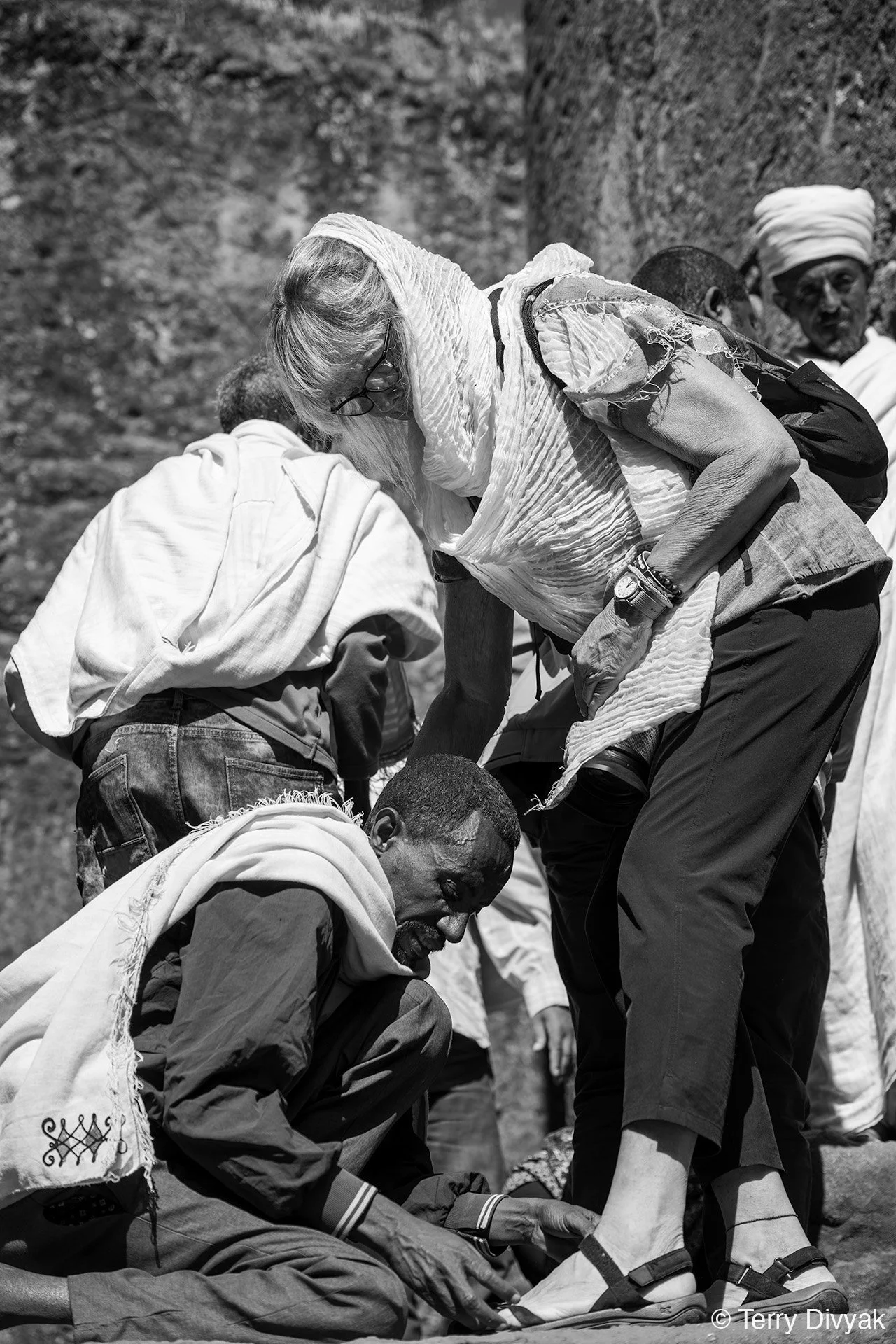
A gentleman in Lalibela kindly helped Linda with her shoes after we entered one of the churches.
I remember a gentleman who followed us around to ‘watch’ over our shoes and he took his role very seriously. It reminded me how, in many Western societies, we’ve lost a bit of that sense of reverence for sacred places. In contrast, removing one’s shoes is still a common practice in many Southeast Asian countries when entering temples or Wats, a simple part of showing respect.

Watch the video above for a look at the sights and sounds of a religious ceremony that we witnessed taking place in the Saint Maryam Rock Hewn Church in Lalibela, Ethiopia.

Finding a quiet place to read and reflect.
The architecture of the churches is quite stunning. If you look closely at some of the images in this post, you can see where the rock was expertly chiseled by hand. The sheer scale is impressive as shown in the photo of Linda and Destaw below.

Linda and Destaw in Lalibela.
Of course, my main focus was capturing the shots I had dreamed of before coming to Lalibela and with the backdrop of centuries-old churches, I wasn’t disappointed. Below are some of my favorite images, but don’t miss the ending. We attended the nighttime ceremony, and I’ve included the video above so you can hear the ancient songs and chants that have been passed down for centuries.


If you watched the video above, you’ll notice that we first observed the ceremony from above. But the most powerful experience came when, with the help of our guide Destaw, we were able to step onto the floor of the church and witness the ceremony up close. As a photographer, there are moments when you feel the need to put the camera down and simply be present and this was one of those times. Rather than keeping my lens at eye level, I wanted to soak in the atmosphere: the rhythm of the chanting, the echoes of the music, and the devotion filling the ancient stone walls. Below are some of my favorite images from that evening, captured as we stood among the worshippers on the ground level.



Director of Photography for the movie - Shooting Starr

April 21, 2026 Update: Shooting Starr has earned five “Best Western” awards along with a “Best of Festival” win across multiple film festivals. Below are some Behind the Scenes images I can now share.
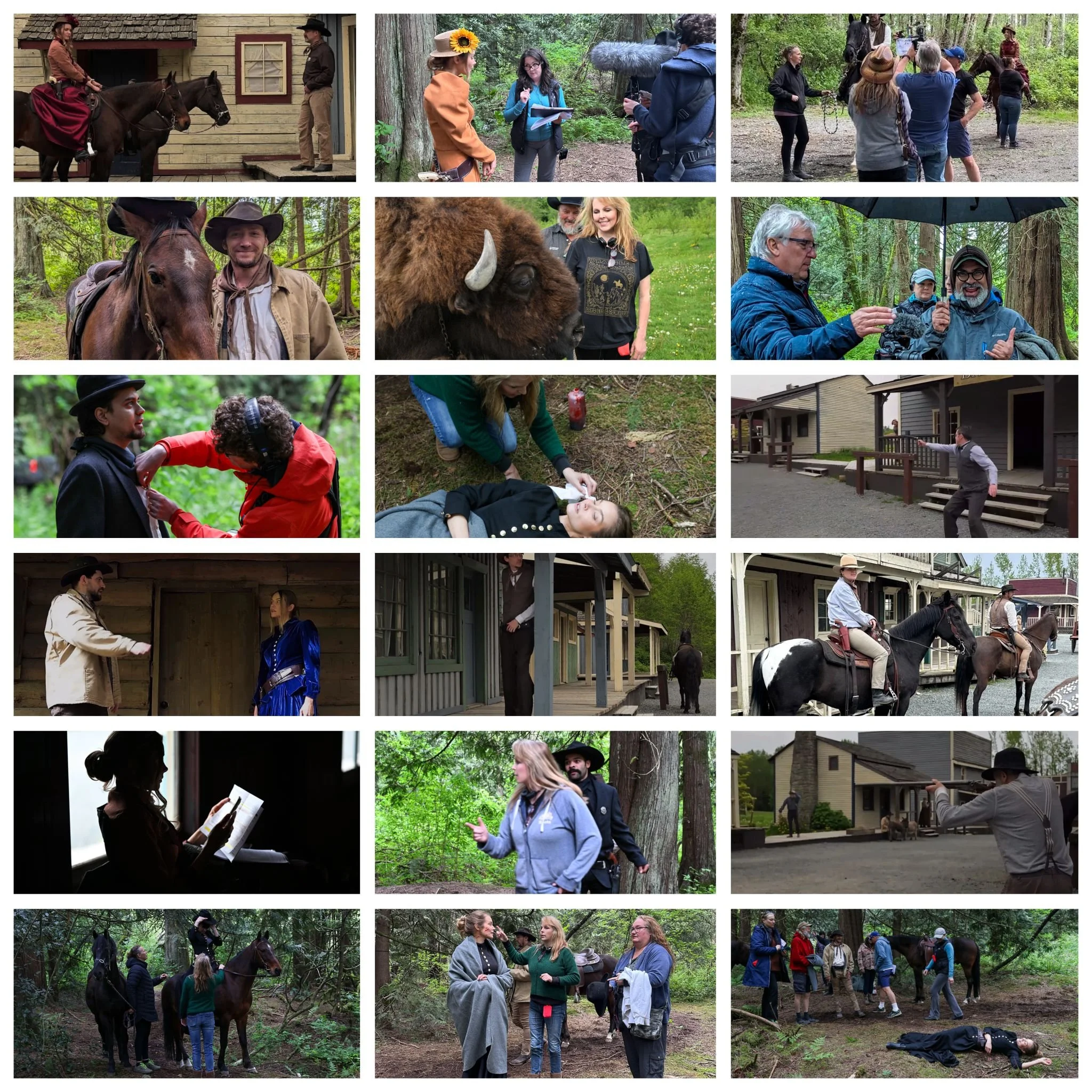
Behind the Scenes “Shooting Starr”
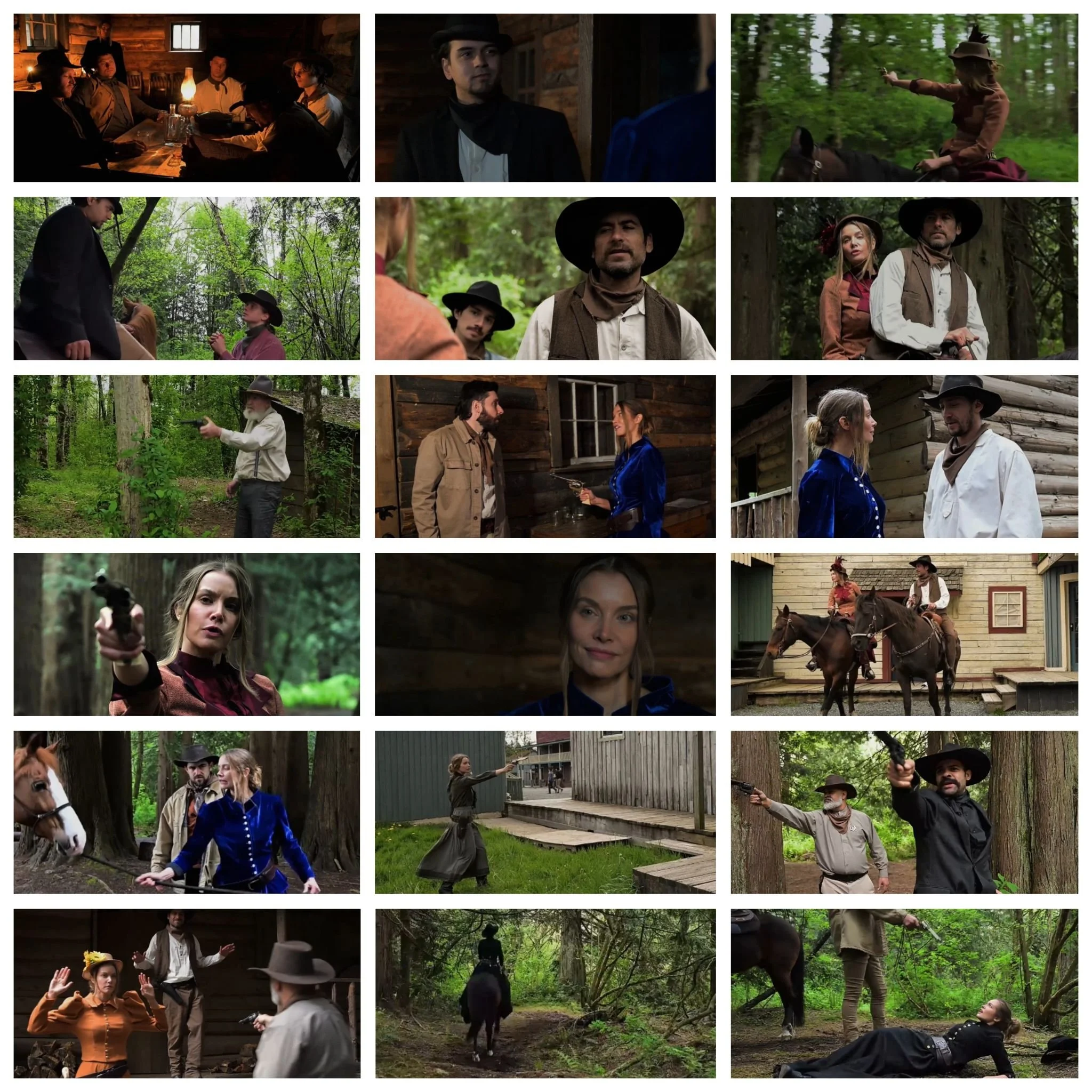
Behind the Scenes “Shooting Starr”
I just wanted to drop a quick post to share some exciting news , I recently had the incredible opportunity to work as the Director of Photography on an upcoming film titled Shooting Starr
The movie stars Emily Maddison and is both written and directed by Christa Rivington of Buttercup Film Productions. It was an amazing experience to help bring Christa’s vision to life, and I can't wait for you all to see it.
For those curious about the story, here's a quick rundown of the inspiration behind it, though don't worry, I won’t spoil the ending:
The Story Behind Shooting Starr
Belle Starr, born Myra Maybelle Shirley in 1848, was raised amid the chaos of the American Civil War. Surrounded by violence and raised among Confederate sympathizers, she grew up alongside boys who would later become legendary outlaws, like Jesse James and the Younger brothers.
After the war, Belle gravitated toward a life on the fringes of society, marrying outlaws and becoming deeply involved in horse theft, robbery, and harboring fugitives. She wasn’t just a bystander, Belle became an icon, often riding sidesaddle in velvet skirts, armed with two pistols, and commanding attention wherever she went.
Sensationalized in newspapers and dime novels, Belle Starr earned the title "Bandit Queen," embodying rebellion and fierce independence in a world dominated by men.
Shooting Starr brings a fresh, cinematic take to the story of Belle Starr, weaving together history, legend, and an unforgettable performance by Emily Maddison. I’m incredibly proud to have been part of this project, and I’ll be sharing more behind-the-scenes glimpses soon!
The movie is currently on the film festival circuit, so stay tuned for the release date and trust me, you won’t want to miss how this story comes to life on screen.
Here’s the IMDB link with the full cast and crew.
Ethiopia is rich in story telling and the drive to the Omo Valley was no exception for photo opportunities, where every image tells a story.